










































Effect of a Popular Web Drama Video Series on HIV and Other Sexually Transmitted Infection Testing Among Gay, Bisexual, and Other Men Who Have Sex With Men in Singapore: Community-Based, Pragmatic, Randomized Controlled Trial
National University of Singapore and National University Health System, Singapore (Tan, Koh, Tai, M.L. Wong, Cook); University of North Carolina Project–China (Tan); Action for AIDS Singapore (Le, Banerjee); National Skin Centre, Singapore (Chio, Chan); FHI 360 (C.M. Wong); National Centre for Infectious Diseases, Singapore (Chen, C.S. Wong)
"Overall, this pragmatic, community-based RCT found that the...People Like Us web drama series was effective in driving intentions to test regularly and prospectively for HIV and other STIs."
Unwillingness to know their HIV status, fear of a positive result, fear of sexual-orientation-related stigma or homophobia, and low perceived risk of HIV acquisition are among the factors associated with lower rates of HIV testing among young gay, bisexual, and other men who have sex with men (GBMSM). Though numerous types of interventions exist in Southeast Asia that aim to increase testing for HIV and other sexually transmitted infections (STIs) among GBMSM, such interventions have reported varying degrees of effectiveness. This study sought to evaluate an online drama series in achieving positive HIV/STI-testing-related outcomes for young GBMSM in Singapore.
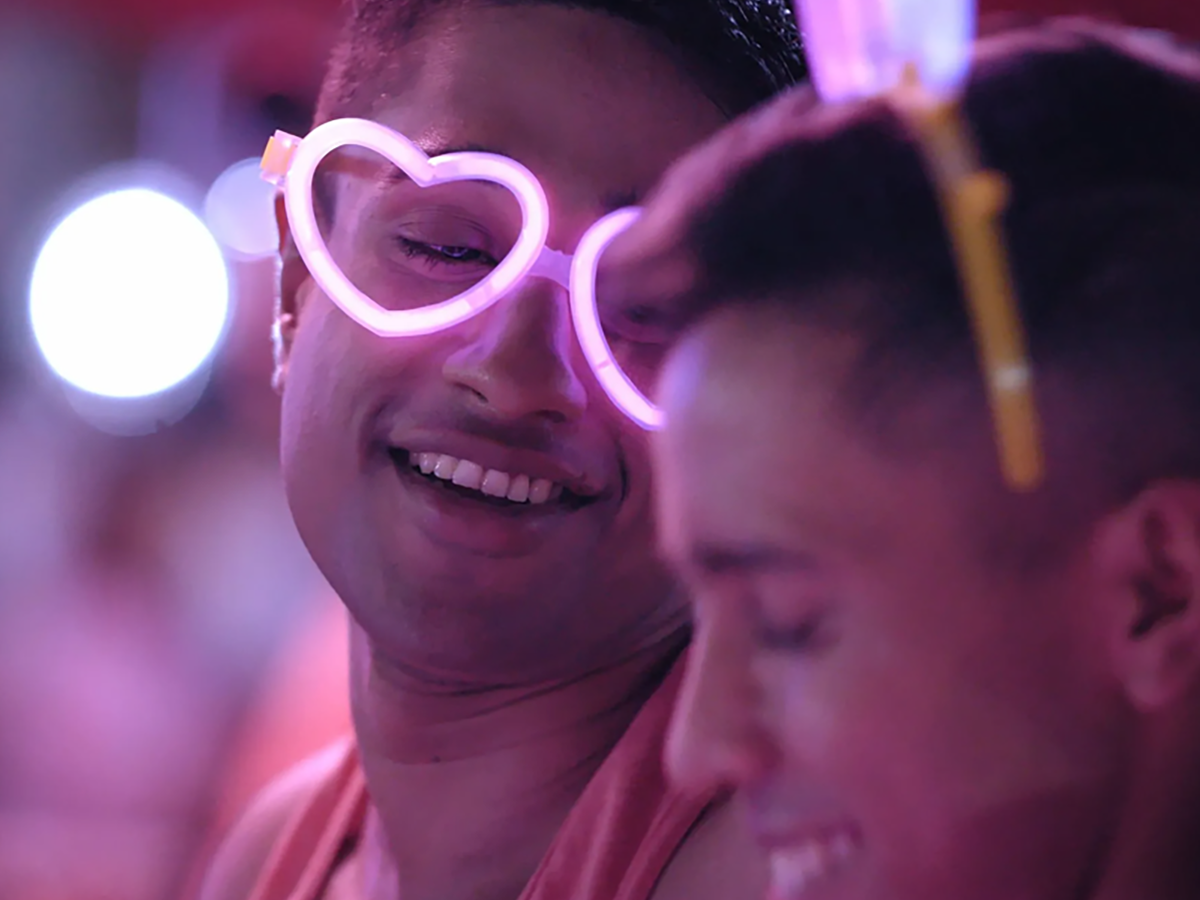
The videos used in the study form the second season of an educational and web drama miniseries, People Like Us (PLU), developed by gayhealth.sg and Action for AIDS (AFA) in 2018. The online intervention comprises a series of 6 videos, each about 10 minutes in length. The series follows the love and sex lives of 4 ethnically diverse GBMSM of varying socioeconomic backgrounds as they negotiate issues of sexual health, mental health, and relationships. The edutainment-style miniseries incorporates key sexual health messages in an effort to: (i) increase viewers' knowledge and perceptions of HIV/STI risk; (ii) address homophobia and sexual orientation disclosure; (iii) foster safer-sex negotiation self-efficacy; (iv) promote positive attitudes towards condom use and other safe-sex behaviours; (v) build skills and self-efficacy for practising safer sex; (vi) provide information on HIV/STI testing and its benefits; (vii) provide information on resources for HIV/STI testing and other mental health services; and (viii) model appropriate behaviours around practising safer sex. Each video in the 6-part series ends with an educational video segment featuring managers and volunteers from AFA and Gayhealth.sg, who provide a brief synopsis of the episode and cover key points relevant to mental and sexual health for GBMSM men.
For the pragmatic, randomised controlled trial (RCT), the researchers recruited 300 HIV-negative GBMSM men in Singapore aged 18 to 29 years old and block-randomised them. Individuals who were assigned to the intervention condition (n=150) were given a link to 6 online videos from the PLU web drama series, along with a link to an English-language online sexual health pamphlet tailored for GBMSM in Singapore. Individuals who were assigned to the control condition (n=150) received the pamphlet only, which is the standard of care for GBMSM at risk of acquiring HIV and other STIs in Singapore. Primary outcomes included changes in self-reported intention to test for, actual testing for, and regularity of testing for HIV, syphilis, chlamydia, or gonorrhoea, while secondary outcomes included changes in a variety of other knowledge-based and psychosocial measures at the end of the study period.
The researchers observed only marginal increases in recent testing for HIV, syphilis, and chlamydia or gonorrhoea in the last 6 months. However, they found improvements in self-reporting as a regular (at least yearly) tester for HIV (15.9% difference, 95% confidence interval (CI), 3.2% to 28.6%; P=.02), as well as chlamydia or gonorrhea (15.5% difference, 95% CI, 4.2% to 26.9%; P=.009), indicating that the intervention had positively impacted these outcomes compared to the control condition. They also found improvements in participants' intentions to test for HIV (16.6% difference, 95% CI, 4.3% to 28.9%; P=.009), syphilis (14.8% difference, 95% CI, 3.2% to 26.4%; P=.01), and chlamydia or gonorrhea (15.4% difference, 95% CI, 4.2% to 26.6%; P=.008), in the next 3 months, indicating that the intervention was effective in positively impacting intention for HIV and other STI testing among participants. Marginal differences in all secondary outcomes were observed.
The researchers hypothesise that the lack of a strong impact of the intervention on actual testing variables may be attributed to the following:
- The implementation of movement controls and legislation affecting social and sexual behaviours during the COVID-19 pandemic caused an overall decrease in the rates of testing during the trial period.
- While the intervention sought to potentially address individual beliefs around testing, it was not as effective in addressing complex psychosocial constructs such as perceived or internalised homophobia, self-efficacy, and social norms around testing, which were measured as secondary outcomes of the study and also serve as important constructs that underpin eventual testing behaviours. These complex and often deep-rooted psychological constructs have been successfully modified in other types of more complex interventions that typically comprise components of training and engagement, individual counselling, and peer engagement.
- The potential impact of contamination in the study is demonstrated by the fact that, at the end of the study, 13.8% (17/123) of participants in the control group had seen the PLU series and, in other words, had been exposed to the intervention prior to this study. As such, this fact may have biased the effect of the intervention toward the null. The same question was not asked among participants who were in the intervention group, so the researchers cannot ascertain if the dilution of the intervention effect might have occurred due to perhaps a high rate of exposure to the intervention prior to the study as well.
Notably, the researchers did not have an opportunity to participate in the development of the proposed intervention; thus, the intervention was not developed with a predetermined theory of behaviour change. Nonetheless, the study was conducted in recognition of the fact that PLU appears to have importance in the local context: The first season of the miniseries was screened at 10 film festivals and won several independent film awards. It also garnered more than 3 million views across various social media platforms since its launch in 2016. Thus, the study intended to evaluate the efficacy of this web drama series and to investigate the potential effectiveness of HIV and other STI prevention efforts that use online channels.
Among the recommendations are the following:
- Scale up this intervention to a wider audience through further support and funding for marketing and promotional efforts to help drive greater intentions to test among GBMSM, including those who may not be reached through traditional channels of sexual health communications and marketing.
- Roll out additional programmes alongside the marketing of the web drama series that address structural barriers to testing, such as issues of access and cost of testing, in the form of testing coupons or vouchers.
- Provide information on free and anonymous testing in the local GBMSM community by non-governmental organisations (NGOs) such as AFA Singapore.
- Offer programmes and workshops addressing deeply rooted, complex psychological constructs to participants alongside the marketing of the web drama series.
- Consider in future studies the potential impact that COVID-19 health promotion messaging, such as on vaccinations and prevention methods, may have on HIV and other STI testing promotion in the community.
The researchers conclude: "Given the viral nature of this web drama series, coupled with its vast reach among GBMSM, we believe that there are clear benefits to the promotion of such interventions in the GBMSM community. While it may not be able to address more complex constructs that underpin testing, there are clear benefits for promoting intentions to test regularly and prospectively for a wide audience; when coupled with community- or population-wide structural interventions, the overall impact on testing will be significant. [In addition...], the nature of the web drama series allows this intervention to reach GBMSM who may not have access to conventional HIV and other STI prevention messaging that have typically been implemented at sex-on-premises venues, bars, clubs, and in sexual health settings frequented by GBMSM."
Journal of Medical Internet Research (JMIR) 2022 (May 06); 24(5):e31401; and "Effect of a Web Drama Video Series on HIV and Other Sexually Transmitted Infection Testing among Gay, Bisexual and Queer Men: Study Protocol for a Community-based, Pragmatic Randomised Controlled Trial in Singapore: The People Like Us (PLU) Evaluation Study", by Rayner Kay Jin Tan, Wee Ling Koh, Daniel Le, Avin Tan, Adrian Tyler, Calvin Tan, Sumita Banerjee, Chen Seong Wong, Mee-Lian Wong, Martin Tze-Wei Chio, and Mark I-Cheng Chen. BMJ Open. 2020; 10(4): e033855. Image credit: © Action for AIDS Singapore
- Log in to post comments