










































Respect, Protect, Fulfill: Best Practices Guidance in Conducting HIV Research with Gay, Bisexual, and Other Men Who Have Sex with Men (MSM) in Rights-Constrained Environments
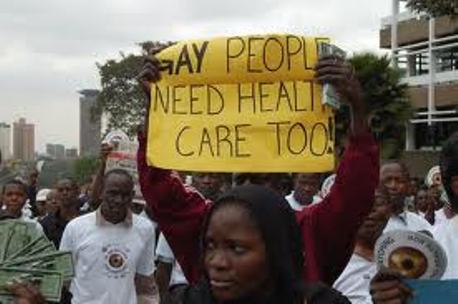
"Research for new HIV treatment and prevention interventions that involve men who have sex with men (MSM) requires improved collaboration between researchers and community-based organizations...."
The guidelines in this document offer advice on how to best engage MSM in research trials of promising HIV prevention and treatment interventions, including HIV vaccines, rectal microbicides, combination prevention, and pre-exposure prophylaxis (PrEP). The guidance aims to maximise the benefits to MSM, communities, and researchers, and to minimise negative consequences for those engaging in research.
"The guidelines were compiled through a participatory process with both researchers and MSM community leaders throughout the world, enlisting more than 20 research and advocacy organizations offering input. The effort was led by researchers at amfAR, The Foundation for AIDS Research; the International AIDS Vaccine Initiative (IAVI); The John Hopkins University - Center for Public Health and Human Rights (JHU-CPHHR); and the United Nations Development Program (UNDP), with funding from IAVI.
The document also uses five case studies to illustrate the complicated relationship among MSM, human rights, and HIV/AIDS in countries around the world. The profiled research projects include successes and challenges of conducting such research in South Africa, Kenya, Brazil, Malawi, and Ukraine. With varying degrees of tolerance toward MSM - some countries have punitive laws against same-sex sexual behavior, while others have relatively open societies - both challenges and opportunities exist as outreach workers and researchers seek to halt the spread of the epidemic and reach MSM living with HIV.
There is a wide variety of policies and attitudes about MSM, according to the guidance, and those laws and beliefs affect HIV outreach in various ways. For example, in South Africa, homosexuality is legal but stigmatized, creating a much different outreach environment than in Kenya, where homosexuality is both stigmatized and criminalized.
In addition to the case studies, each of which includes specific recommendations for action, the document includes checklists for both researchers and community organizations to help them understand the nuances of working together, as well as work to create partnerships for increased outcomes."
From the case studies, the recommendations for greater MSM/ lesbian, gay, bisexual, and transgender [LGBT] community involvement include the following:
- MSM should be engaged in all aspects of studies, from advisory committees to research staff to service delivery staff. Where there are MSM/LGBT organisations, they must be involved in research planning, field work, and discussion and dissemination of results.
- When appropriate, researchers should assist in developing the capacity of MSM-led organisations to build leadership skills for future programming.
- Researchers should take time to do formative research on current community resources. It is important to know who is who in the LGBT community, who is already working with MSM populations, and what services are already MSM-friendly in order to all stakeholders.
- Researchers should form a multidisciplinary team, for example, sensitised physicians, nurses, counselors, and community educators closely identified with the MSM community. Different skill sets and profiles allow the research centre to be responsive to the diverse needs of volunteers. Research groups must challenge themselves to move beyond their research agenda - to institute a "community capacity-building" role as a part of any research.
- Community-based organisations (CBOs) need to be fully supported in the event of local or national backlash that may arise from engaging in such research. Contingency plans should be drawn up to prepare for any homophobic response that could derail research or service delivery. Budgets should be set aside to address such a scenario, covering items such as security for project staff and participants, bail monies for staff or participants who may face legal challenges from local authorities, and related costs.
- Various advocacy activities are necessary before a study is begun, especially informing and gaining support from local leadership and society in general. Dialogue with civil society may not be essential for recruitment, but it is key for establishing the credibility and good intentions of the research team. Publicising a research project or its results needs to go beyond soundbites and must happen through establishing trust with organisations respected by the affected community.
- Projects need to have a dedicated budget for "community engagement". Donors should require community engagement plans and provide funding to support them. This should require little justification as it should be viewed as a basic element of community research. For example, linking a "gay sports league" to the project described in a case study was not initially thought to be an activity that would lower HIV risk-taking behaviour, but its presence clearly impacted uptake in the study.
- Research budgets should provide a sufficient amount for respondent remuneration - this will help reach out to most vulnerable MSM (youth, unemployed, sex workers, etc.).
- Focusing on MSM/HIV issues is a strategy to infuse human rights (including LGBT rights) into a national dialogue.
Click here to access this document in French in PDF format.
Click here to access this document in Russian in PDF format.
Click here to access this document in Spanish in PDF format.
Publishers
English, French, Russian, Spanish
28 (English, Russian, and Spanish); 32 (French)
Emails from Kent Klindera to The Communication Initiative on November 18 2011 and November 7 2013.
- Log in to post comments