










































Multisectoral Responses to Gender-based Violence in Mozambique
"Gender-based violence (GBV) is both pervasive and widely accepted in Mozambique. The complex and multifaceted structural and sociocultural factors that underlie and reinforce GBV warrant a strong multi-level and multisectoral response."
This Pathfinder International Technical Brief discusses primary and secondary prevention constructs to categorise efforts to prevent and respond to GBV in Mozambique, a country that only recently started to recognise GBV as a public health and human rights issue. In that vein, Pathfinder developed two projects, "Enhancing Reproductive Rights to Reduce Violence against Women in Gaza Province" (2010-2013), funded by the United Nations (UN) Trust Fund to End Violence against Women, and "Enhancing Sexual and Reproductive Health and Rights of Women and Youth in Mozambique: Integrating Comprehensive GBV Services and Support and Safe Abortion Care in Inhambane and Gaza Provinces" (2011-2013), funded by the Royal Norwegian Embassy. This brief offers a critical analysis of the projects' shared strategy and implementation experience and discusses lessons learned.
Occurring at the individual and interpersonal levels, primary prevention involves efforts to enhance the protective factors that prevent GBV, such as transforming gender norms toward greater equality through:
- engagement of community-based organisations (CBOs), men, activists, judges, and leaders in reflection and dialogue - Pathfinder facilitated a mapping exercise with 22 male and 14 female local leaders to identify the drivers of GBV within project catchment areas. Using information garnered from this exercise, as well as findings from a population-based baseline assessment, Pathfinder developed a training manual for CBOs, community activists, community health workers (CHWs), and CHW supervisors. It covered gender, GBV, sexual and reproductive health and rights (SRHR), relevant Mozambican GBV laws, male engagement, the role of the community in facilitating or mitigating GBV, and how and where to refer survivors for care and support. Following training, CBOs, activists, and CHWs led one-on-one and group mobilisation and sensitisation sessions with more than 75,000 individuals. Pathfinder also supported CBOs to engage male community leaders in discussion and dialogue, as well as collective and self-reflection on gender norms and GBV. Furthermore, Pathfinder engaged 161 community judges (52 from Inhambane and 109 from Gaza) in activist trainings and discussion forums in an effort to embolden community judges to speak out against gender inequality and break the silence surrounding GBV.
- capacity building of peer educators to explore gender norms within 15 secondary schools (9 in Gaza and 6 in Inhambane) by facilitating school-based prevention activities of their own design (e.g., theatre performances, video screenings, debates, health fairs, and sport competitions). Peer educators had more than 55,000 contacts with students.
Findings from the population-based endline (2013) assessment from the project in Gaza revealed that the total gender-equitable men score increased from 27.7 at baseline to 46.2 at endline (out of a range from 1 [low equity] to 72 [high equity]) and increased across all demographic variables (i.e., age, religion, marital status, education). And the proportion of women in that same evaluation who believe that a woman has a right to refuse sex, that rape can occur between a husband and wife, and that men can be held responsible for controlling their sexual behavior increased from baseline in 2011 to endline. (However, the endline study revealed a negative increase in the proportion of female respondents who believe that a man is justified in beating his wife under certain circumstances (from 51% at baseline to 62% at endline).
Secondary prevention happens at not only the individual and interpersonal levels but also at the structural level. As explained here, Pathfinder employed multisectoral approaches, which are designed to coordinate or co-locate the often disparate services that a GBV survivor may require (e.g., legal, psychosocial, health, and police services), thereby increasing the accessibility and availability of services, as well as diminishing re-victimisation by reducing the need for survivors to re-tell their experience at multiple service entry points. These interventions aim to moderate the immediate effects of GBV through, for instance, a package of clinical services including provision of post-exposure prophylaxis (PEP) for HIV and sexually transmitted infection (STI) prevention and provision of emergency contraception (EC), treatment of injuries, temporary shelter, forensic evidence collection where feasible, and psychosocial, police, and legal support. Communication elements that come into play here include:
- capacity building of community judges to apply relevant GBV laws when adjudicating cases brought before them and to refer cases to the formal court system as necessary;
- training of multisectoral actors (e.g., police, social workers, paralegals, and health workers) on: psychosocial support for GBV survivors, gender inequality issues within a human rights framework, implications of the Domestic Law on Violence against Women, and GBV case management;
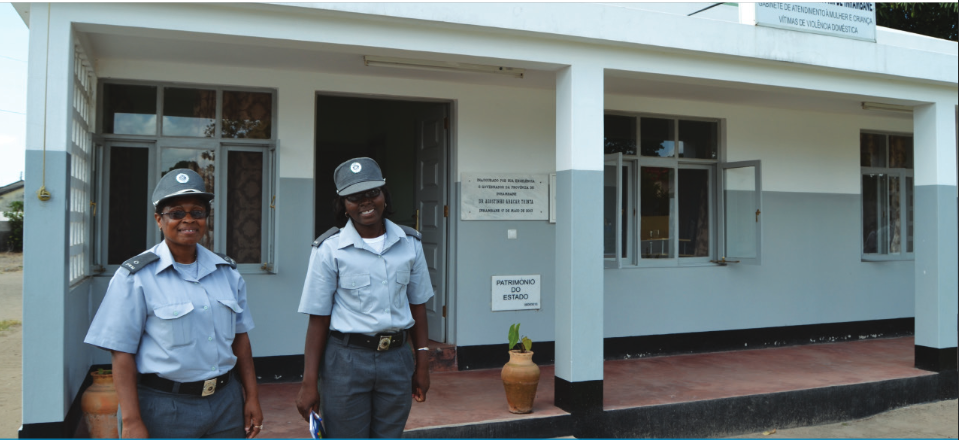
- establishment of one-stop centres (OSCs) and integrated services to: publicly signify the government's stance against GBV, meet survivor needs and fortify linkages among the health, legal, police, and social sectors; and
- creation of Multisectoral Committees to: monitor the progress of multisectoral responses to GBV, disseminate learning from project implementation, collaborate and coordinate across sectors and stakeholders, and build the knowledge base surrounding GBV laws and policies.
There is also an advocacy component that involves building the capacity of national coalitions, CBOs, and women's rights organisations to conduct sustained advocacy for a supportive and enabling environment to reinforce GBV prevention and response efforts. For instance, when project-supported CBOs reported to the Ministry of Health (MOH) that some health facilities were denying assistance to GBV survivors, the MOH sent an internal memo to clarify that health services are appropriate initial entry points for GBV survivors, regardless of whether the survivor has reported the case to the police. In addition, Pathfinder worked with the MOH to improve the accuracy of reporting by revising survivor registration cards at health facilities and OSCs to allow for reporting of specific types of GBV (moving beyond collection of data on sexual violence only). Pathfinder also successfully advocated for the addition of One-Dose Sekure (a dedicated product for emergency contraception) to the MOH's list of essential commodities. Finally, Pathfinder worked with the national Sexual and Reproductive Rights Coalition to advocate for greater access to safe abortion and to ensure recognition of women's and adolescents' rights to live lives free of violence.
The brief concludes with an exploration of lessons learned, which will inform Pathfinder's approach going forward. For instance, in the "Bolstering Multisectoral Action to Address Gender-based Violence and Advance Sexual and Reproductive Health and Rights" project (2014-2017), given underutilisation of services at OSCs in the two completed projects, Pathfinder taking steps such as assessing the feasibility of supporting additional training on violence against children for psychologists and social workers who staff the OSCs. Pathfinder is also exploring potential partnerships with organisations that support orphans and vulnerable children (OVC) to complement existing efforts to reach young survivors of violence. Recognising that a significant proportion of survivors initially access services at police cabinets, Pathfinder is also addressing access barriers to EC (laws prevent non-health providers from dispensing EC). As this project progresses, Pathfinder will routinely assess implementation experience to evaluate relevance and impact, with the goal of contributing to the global evidence base and informing GBV response and prevention efforts.
Click here for the report in English [PDF].
Click here for the report in Portuguese [PDF].
Email from Sarah Mehta to The Communication Initiative on January 14 2016.
- Log in to post comments