










































Focusing on Social Norms: A Practical Guide for Nutrition Programmers to Improve Women's and Children's Diets
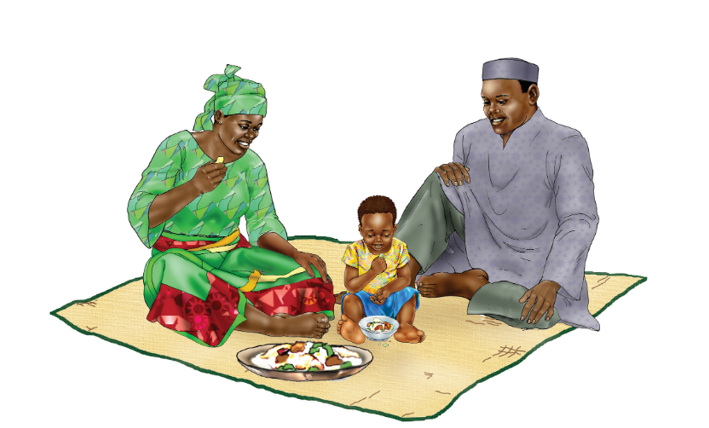
"Failure to also address social norms when designing and implementing nutrition programs results in less social and behavior change than desired."
Social norms - a person's beliefs about what they think people in their community typically do, and what they should or should not do - influence the meaning and value of food, as well as roles and expectations around eating. For example: "A good woman plans and prepares tasty meals, reserving the best for her husband." or "Fathers do not prepare food or feed their children because peers will tease them." Designed by JSI Research & Training Institute, Inc./United States Agency for International Development (USAID) Advancing Nutrition, this guide is for people who are planning norm-responsive activities within nutrition-sensitive or nutrition-specific programming. The guide includes tips and tools for identifying social norms, understanding and responding to these norms at key points in the programme cycle, and monitoring and measuring normative change.
The body of the guide is organised into five programming steps with advice to guide norms-responsive programming in social and behaviour change (SBC) throughout different stages of the project cycle. Each step offers a "considerations" overview, how-to guidance with tips and resources, and a set of prototype worksheets to help designers and implementers approach norms-responsive interventions. The five sections/steps include:
- Conduct an assessment to understand the social norms that influence women's and children's dietary practices: Develop an assessment plan, tools, and actionable findings.
- Use norms information to design an SBC strategy: Analyse priority behaviours, select activities to respond to norms, and design an efficient SBC response to social norms.
- Implement norm-responsive activities to improve women's and children's diets: Check whether interventions have norms-shifting characteristics and make use of change agents to foster norms-shifting.
- Monitor norm-responsive activities to improve women's and children's diets: Look for the critical signs of social change, choose indicators and methods to monitor changes in social norms, and pause and reflect to analyse indicators and adjust interventions.
- Evaluate norm-responsive activities to improve women's and children's diets: Ensure social norms and norms-focused outcomes are defined in theories of change to guide evaluation efforts, develop indicators to evaluate normative shifts, and choose a methodology to evaluate changes (including in projects with short timeframes.
Annexes include:
- Additional resources
- Checklist to understand and respond to social norms to improve women's and children's diets
- Programme idea box: Real-life examples of social norms influencing dietary practices
- Situating social norms in the socio-ecological model
- Glossary
Publishers
47
USAID Advancing Nutrition website, March 28 2022. Image credit: SPRING, USAID/SPRING-UNICEF IYCF Digital Image Bank
- Log in to post comments