










































Community Participation for Transformative Action on Women's, Children's and Adolescents' Health
London School of Hygiene & Tropical Medicine (Marston); Partnership for Maternal, Newborn & Child Health (Hinton); World Vision International (Kean); Health Research and Social Development Forum , or HERD (Baral); Department of Health and Family Welfare, Government of Odisha (Ahuja); World Health Organization, or WHO (Costello, Portela)
"The Global strategy for women's, children's and adolescents' health (2016-2030) recognizes that people have a central role in improving their own health. We propose that community participation, particularly communities working together with health services (co-production in health care), will be central for achieving the objectives of the global strategy."
Community participation specifically addresses the third of the key objectives of the Global Strategy for Women's, Children's and Adolescents' health (2016-2030): to transform societies so that women, children, and adolescents can realise their rights to the highest attainable standards of health and well-being. This paper examines what this implies in practice, exploring 3 interdependent areas for action towards greater participation of the public in health: improving capabilities for individual and group participation; developing and sustaining people-centred health services; and social accountability. The paper outlines challenges for implementation and provide policymakers, programme managers, and practitioners, with illustrative examples of the types of participatory approaches needed in each area to help achieve global health and development goals.
The paper discusses "externally-stimulated community participation that falls at the collaboration and shared leadership end of the participation spectrum. This is not to say the burden of resolving health issues is placed on communities. To be transformative, participatory approaches in health require power-sharing with health-service users. This is likely to mean new relationships, including a new culture in health-care institutions that supports participation....Issues of power and control should be considered, both to understand systems better and to ensure that participatory interventions do not unintentionally reinforce potentially harmful social structures..."
To elaborate further on the 3 interdependent areas for action noted above:
- Improving capabilities: Facilitated participatory learning and action cycles with women's groups have been identified as an effective way to build individual and group capabilities, to identify and prioritise problems, and to develop a plan for implementing locally feasible strategies to address these. The cycle is structured as follows: (i) identify and prioritise problems that may occur during pregnancy, childbirth, and after birth; (ii) plan activities; (iii) implement strategies to address the priority problems; and (iv) assess the activities and plan changes as needed. Freire's concept of critical consciousness (a deepened awareness of the social, political, and economic situation, including health, that leads one to understand that one can intervene and that these realities can be transformed) has also been emphasised in participatory learning. When supported to develop their own skills, individuals may voluntarily support others, for example by sharing breastfeeding techniques or setting up support groups, thereby introducing a layer of sustainability independent of the original intervention. Supportive environments, therefore, are also key determinants of good health and healthy practices (See the example given in Box 2). Unsupportive environments in society may, for example, deter young people from obtaining condoms or women from breastfeeding in public. Participatory interventions encourage dialogue and can help identify socially- and culturally-acceptable solutions.
- People-centred services: Achieving services orientated around the needs and preferences of users rather than around diseases calls for participation of service users in planning, governance, and quality improvement processes, as well as community partnerships with services. Participation by members of underserved groups may stimulate services towards more equitable provision of care. Attempts to address the needs of excluded groups have included engaging community members as mediators or employing health staff from the relevant culture, for example, to develop culturally appropriate maternity care services. Another approach is strengthening efforts to build stronger relationships and dialogue between communities, institutions, and service providers about the care required. As illustrated in Box 3, the National Health Service in England, which aims to create a culture of shared decision-making, is based on this principle: Social transformation requires the people who are in control to share their power. For example, a patient-held record called My Medication Passport was developed by and for patients. It is a patient-completed aide memoire that patients can carry this to appointments to facilitate communication with clinicians, as well as between clinical teams. As noted here, participatory health interventions require an interactive approach by health-care providers that changes the usual patient–provider dynamic. The skills of health-care providers may need to be developed to help them collaborate with service users or community members and to move from solving problems for patients, to solving problems with patients. If health-care workers appear reluctant to engage in dialogue with patients, the overall work environment needs to be examined to help understand why this is and to address any institutional barriers to health-care workers' autonomy and motivation.
- Social accountability: The World Bank identifies 4 factors vital for any social accountability programme: (i) opportunities for information exchange, dialogue, and negotiation between citizens and the state; (ii) willingness and ability of citizens and civil society to seek government accountability; (iii) willingness and ability of service providers and policymakers to support constructive engagement with citizens; and (iv) the broader environment that enables increased civic engagement (such as the policy, legal, and regulatory environment, as well as the type of political system and the values and norms of society). Common strategies for participation in accountability processes include community representation in health facility management committees, village health committees, community taskforces, or citizens' hearings. Skills are needed to achieve dialogue and to build the trust required for the different participants to plan and work together. Implementation efforts should raise awareness among individuals and communities (for example, by providing information about health services or promoting awareness of entitlements) and address aspects of the social context that might affect participation (such as fear of speaking out). Health-service managers can take first steps to gain confidence in participatory processes, such as setting up complaints or comments boxes for patients to use or publishing health-services statistics to inform and prompt discussion between health, development, and community stakeholders.
According to the paper, not all approaches described as community or participatory successfully achieve participation or transformation. Interventions can fail because of poor design and implementation. Programme managers and practitioners need to pay attention to detail in implementing participatory approaches, just as an immunisation campaign needs to pay attention to the cold-chain supply or to staff training. For example, to build awareness and mobilise the community around a specific issue, attention should be paid to how facilitators are selected and trained, who is participating in the meetings and why, whether training manuals for participants are appropriate to their experience and education, whether meetings are held at convenient times and places, whether there is adequate coverage and frequency of those meetings, and how information is shared among peers. Community members may become more committed, engaged, and motivated if they see positive results from participatory activities.
Although participation may be regarded as desirable in itself, participatory approaches are neither widely practised nor well documented. The existing literature reveals little agreement on how to evaluate the impact of participatory approaches. It is often difficult to link participatory activities to health outcomes because: (i) there are complexities associated with linking social change directly to health outcomes; (ii) participatory activities often take place within a package of interventions, and so the effects of participation cannot be separated out; and (iii) health outcomes are so strongly influenced by the performance of the health sector and other social determinants. Furthermore, health improvements and uptake of services are only part of the story; measurement of participatory approaches should also account for any resulting social change, such as changes in equitable use of services, changes in social and gender dynamics, and issues relating to sustainability. To understand the mechanisms and dimensions of participation and transformative action, it will be important to measure such factors more adequately.
Along these lines, the paper stresses that more guidance on specific community-oriented interventions is required to help inform country and donor investments. "We need to understand what works, how different approaches can work in different contexts and what factors need to be taken into account for future scaling up and sustainability of interventions." The authors continue by concluding: "We know much already about the power of participation. In a sense it is no longer a technical issue, but one of civil rights and political will. For transformative action on women's, children's and adolescents' health, participatory approaches are essential, at all levels: district, national, regional and global. Without these, we face the risk of stalled progress and persisting inequities in health."
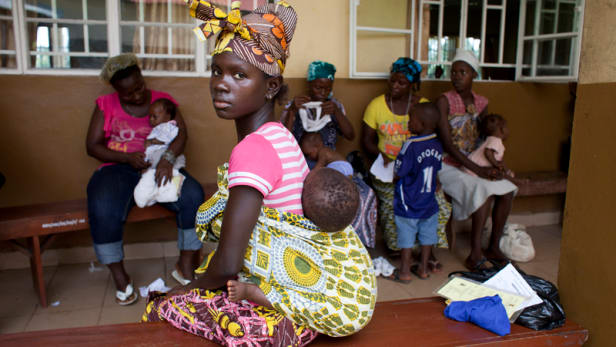
Bulletin of the World Health Organization 2016;94:376-382. doi: http://dx.doi.org/10.2471/BLT.15.168492. Image caption/credit: "A young mother waits at the Makeni Regional Hospital in Sierra Leone. Maternal and child death rates have fallen in every one of the 49 countries targeted by the Global Strategy for Women's and Children's Health, which was launched by U.N. Secretary-General Ban Ki-moon in 2010. Photo by: Abbie Trayler-Smith / H4+ Partnership / CC BY-NC-ND"
- Log in to post comments