










































Magnitude of Childhood Vaccine Hesitancy and Associated Individual/Social Group Factors among Parents in Degahbur Town, Somali Region, Ethiopia
Jigjiga University
Public concerns and a sense of uncertainty about vaccines pose a growing threat to vaccination provision, triggering people to seek alternative vaccination schedules and decisions to delay or even refuse vaccination. The magnitude of vaccine hesitancy is not well known across many parts of the world. The objective of this study was to assess the magnitude of childhood vaccine hesitancy and associated individual/social group factors among parents in Degahbur town, eastern Ethiopia.
The community-based cross-sectional study was undertaken between February and May 2017 in 422 households. A cluster sampling technique was employed to select 6 study units in Degahbur, with a structured questionnaire for data collection. Bivariate and multivariate analysis was conducted to check the associations between outcome and explanatory variables using a binary logistic regression model.
From the 412 study participants (parents/caregivers of 0- to 15-year-old children), 46 (11.2%) were labelled as hesitant about all or at least one of the childhood recommended vaccines that are administered routinely and in some cases as supplementary. Perceiving vaccination as not health beneficial (adjusted odds ratio (AOR) = 3.84, 95% confidence interval (CI) (1.2, 13.6)), beliefs in other alternatives (AOR = 4.8, 95% CI (1.5, 15.4)), beliefs that vaccination can't protect children from serious diseases (AOR = 5.82, 95% CI (1.3, 25.6)) and being a daily labourer (AOR = 12.9, 95% CI (2.6, 63.5) were predictors of vaccine hesitancy. The latter may due to the lower socio-economic status as well as relatively higher illiteracy of this social group in the community.
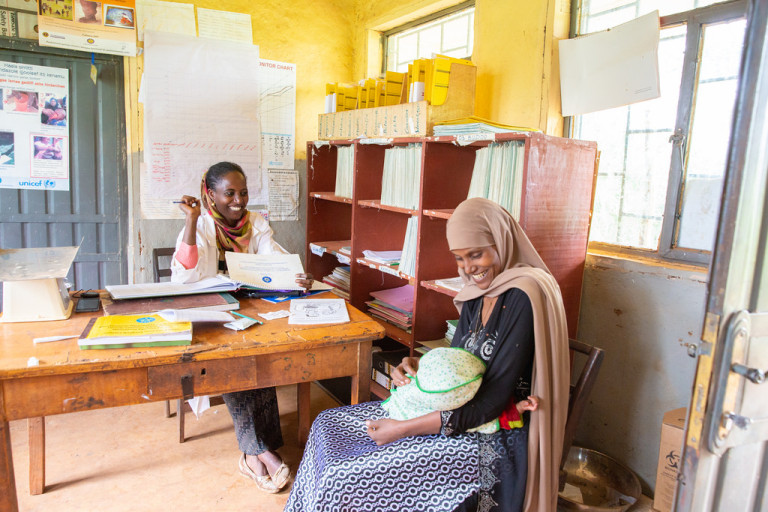
Regarding awareness/knowledge, (75%) of the respondents received vaccination information from health professionals.
In conclusion, this study found that the magnitude of childhood vaccine hesitancy in Degahbur is lower than that reported in other studies. However, to prevent its expansion, the researchers recommend that the Degahbur City Administration Health Office in collaboration with the Somali Regional Health Bureau (SRHB), the Federal Ministry of Health (FMoH), and other concerned stakeholders should: advocate community-based health education programme, engage religious and traditional medicine experts to tailor their expertise in the provision of vaccines, and develop a community-based vaccination/immunisation surveillance system that would be routinely monitored and evaluated by health extension workers. Moreover, they encourage further research on contextual and vaccine/vaccination-related determinants of vaccine hesitancy, as this study only focused on individual/social group factors.
International Journal of Sciences: Basic and Applied Research (IJSBAR) (2018) Volume 41, No 1, pp 202-212. Image credit: UNICEF Ethiopia
- Log in to post comments