










































Polio Immunization in Pakistan: Ethical Issues and Challenges
Health Services Academy
"Beliefs, practices and cultural norms overshadow public health priorities and ethics. Understanding of the context, therefore, is critical to determine the social hindrances in polio eradication and strategize thereon."
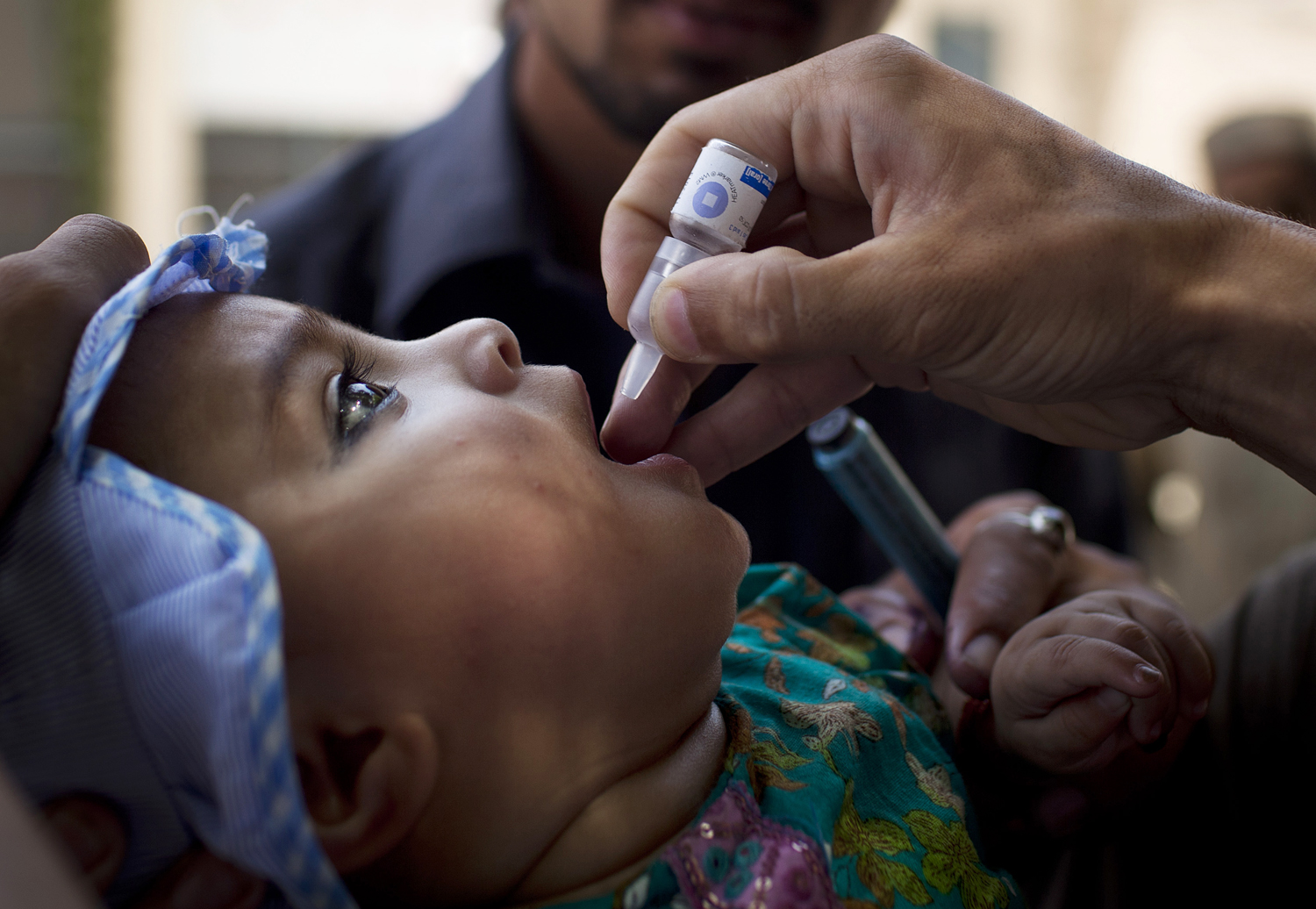
This paper attempts to review some of the literature that highlights the ethical and religious concerns surrounding polio vaccination and what approaches may be used to counter the problems faced in Pakistan. There, despite the government's efforts to increase vaccination rates by developing a variety of interventions to increase access and inform the public, the country still faces a huge challenge from certain stern pockets of uncompromising populations who resist and refuse vaccination. (Pakistan is one of only three remaining countries in the world where polio still exists; most of the resistance in Pakistan against the immunisation programme stems from the northern province of Khyber Pakhtunkhwa and parts of Balochistan.) The paper was developed through a literature review on public health and polio in Pakistan, consulting local, regional and globally published peer reviewed articles focusing on religion, culture, ethics, and public health.
The authors note that, in recent times, conflict and insecurity have been particularly damaging to polio eradication efforts. Governments and non-governmental organiations (NGOs) have been reluctant to provide humanitarian assistance to refugees and internally displaced persons unless they agreed to polio immunisation for their children; this has raised questions and ethical challenges. Does the state have the right to impose such vaccinations in instances where the serious vaccine-preventable disease could threaten local natives, health workers, and other personnel? To help establish when the moral considerations vital to public health can take precedence over other goals, scholars have proposed "justificatory conditions", such as proportionality of the activity (probable public health benefits outweigh other moral considerations), necessity of the activity, effectiveness of the activity, the extent to which the activity represents the least infringement of other moral considerations, and the ability to publicly and openly justify the activity. Since immunisation is a public health programme, it has been suggested that it falls within this ethical framework. The authors' position is: "Denying a child the vaccine and as a result putting him/her at risk of falling prey to an otherwise avoidable disease that could leave him/her disabled for life can in no way be considered to be acceptable ethically."
Some of the challenges include, among others, misconceptions about the polio vaccine (e.g., that "it causes sterility in children" or "it contains pig fat", diminished public trust in polio vaccine in the absence of just and equitable resource allocations to local health systems, and poor health communication strategies, where provincial and district health authorities in charge of vaccination resources were not on board, nor were charged to engage with the religious and community leaders to advocate for the campaign. "Global polio eradication efforts are very much dependent on Pakistan's capacity to address the wide range of obstacles to immunization, including religious, political and socioeconomic barriers, inconsistencies in vaccine coverage, a weak health infrastructure and conflict in polio-endemic regions of the country.....It has also been found that lack of education and information about the vaccine has contributed to negative attitudes and the stubborn stance against the vaccination."
In response, there are several key activities in Pakistan that are being carried out under the aegis of the National Programme for Immunization to increase vaccination rates. These include, for example, engaging with religious scholars and clergy, establishing a vaccine logistics management information system, launching public campaigns focusing on behaviour change, and widening the outreach and coverage through female health workers, who now are accompanied by security personnel because of conflict in certain border areas of Pakistan. The authors stress that the polio programme needs to reflect local value systems whilst en route to polio eradication. Recognition of the religious and cultural values as well as an understanding of the international political situation would be meaningful. Suggested here is a hybrid approach whereby goals and strategies are negotiated and formulated involving local organisations and community notables at all stages.
Furthermore, a multi-sectoral approach involving education ministries is described here as crucial. Maternal education is an established factor in ensuring positive health outcomes among children, and integrating immunisation knowledge with maternal and child health services could be critical. However, in a patriarchal society like Pakistan, where the man is the head of the household, convincing the women alone may be less effective in reducing resistance to polio immunisation. Vaccination rates tend to remain low where women are not empowered to make decisions regarding their children's health. Hence, the male heads of households will also need to be brought on board. Moreover, the perceptions that the polio vaccine is a foreign plot with some sinister intentions to harm the health of Pakistan's children ought to be dealt with through an aggressive mass educational campaign that engages celebrities and well-known public figures to endorse vaccination.
In conclusion: "In light of the complex setting encompassing polio vaccination, campaigning and eradication efforts in Pakistan, it is an opportune time to think of an indigenously developed mix of strategies. These plans of action must comply with ethical principles and dimensions. They must be culturally appropriate and feasible to engage with populations. Ensuring confidentiality, integrity and autonomy, a truly ethical system-wide approach could lead to voluntary participation of communities in polio vaccination campaigns."
Public Health Reviews (2017) 38:6 DOI 10.1186/s40985-017-0049-4. Image credit: The News International (Pakistan)
- Log in to post comments