










































Vaccine Rejection and Hesitancy: A Review and Call to Action
College of Public Health, Kent State University
"Understanding the arguments and concerns that individuals have about vaccines, and from where they originate, can allow for better communication regarding vaccines on the part of scientists."
As specialists in microbiology, immunology, and infectious diseases, scientists often lack the direct contact with individuals considering vaccination for themselves or their children that healthcare professionals have daily. Today, even many physicians have not seen a case of measles, diphtheria, or other vaccine-preventable diseases (VPDs); parents in some contexts, like the United States (US), are a generation more removed from the suffering that VPD epidemics like polio and rubella caused. In this context, the review aims to provide infectious disease experts with grounding in the current rhetoric of vaccine denial, introduce arguments and players in the US antivaccination scene, and discuss ways scientists can respond in various venues to demonstrate support of vaccines.
Some of the arguments against vaccination are summarised in Table 1. Tara C. Smith explains that "[m]ost objections to vaccination are currently cached in language that makes them highly palatable to parents and difficult for scientists to object to, using terms such as 'informed consent,' 'health freedom,' and 'vaccine safety'..." According to Smith, many of the arguments focus on areas of distrust in medical science, and others stem from misinformation regarding the immune system and vaccine response. Vaccine myths are circulated by a variety of influential individuals and organisations (see Table 2) and are read and repeated by parents and other media consumers. Smith observes that, while "far more physicians and scientists support vaccines than not - the same antivaccine individuals are interviewed for news pieces repeatedly, increasing their exposure and profile in the news media." Many of these "influencers" rely on the internet to spread their message; Smith cites some evidence regarding the effects of online misinformation on vaccination attitudes and decision making.
That said, Smith stresses, "There is wide heterogeneity in individuals who doubt vaccines..., so although understanding individuals and groups involved in antivaccine messaging is important, scientists should not assume that all individuals who express skepticism about vaccines share the same background, media consumption, or views. It should also not be assumed that individuals who question vaccines have merely absorbed antivaccine messages...in a vacuum. Both vaccine hesitancy and vaccine promotion are influenced by the social and cultural contexts in which messages are received." To that end, Smith discusses a 3-category model to capture the spectrum of vaccine skepticism, ranging from vaccine rejectors (VRj), vaccine-resistant people (VR), to vaccine-hesitant people (VH).
Scientists may have the impulse to simply educate the public, and science-based evidence about vaccination can be communicated in person (with friends or family members - particularly those with shared values), submitted to local newspapers as opinion pieces or letters to editors, and/or provided online through blog posts, social media updates, or other sites on the internet. However, Smith points out that "information alone has not been shown to increase vaccine confidence among hesitant parents....Furthermore, the frequent use of conspiracy theory thinking among antivaccine thought leaders engenders a lack of trust towards the medical and scientific communities."
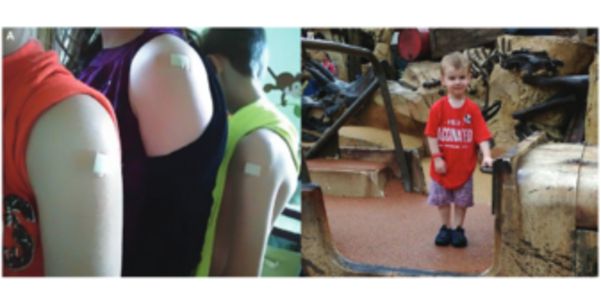
One avenue for communication that goes beyond sharing information can be vocalising the message that vaccination is "normal" and expected. Smith explains, "Although vaccine hesitancy does exist, vaccination on schedule is still the norm for the great majority of families. As a professional who accepts vaccines as a part of life for yourself and your children, conveying that information to your networks [e.g., via social media] can help to subtly shift opinion."
Another strategy Smith discusses is the engagement of parents as immunisation advocates (or "ambassadors"), an approach that has been studied in Washington State, US. Smith also presents options including scientists privately contacting their state legislators and advocating for the strengthening of vaccine exemption policies as a way to protect herd immunity, as well as academics examining vaccine policies at their own institutions.
In conclusion, Smith makes the case that scientists need to be engaged in vaccine advocacy.
Open Forum Infectious Diseases, Volume 4, Issue 3, 1 July 2017, ofx146, https://doi.org/10.1093/ofid/ofx146. Image caption/credit: "Examples of photos posted to the author's social media accounts. (A) The author (middle) and her older children after receipt of seasonal influenza vaccines. (B) The author's youngest child wearing a shirt saying 'Fully Vaccinated. You're Welcome.' Both techniques can serve as conversation-starters around vaccination." Tara C. Smith
- Log in to post comments