










































A Vaccine Against Cervical Cancer: Context for the Global Public Health Practitioner
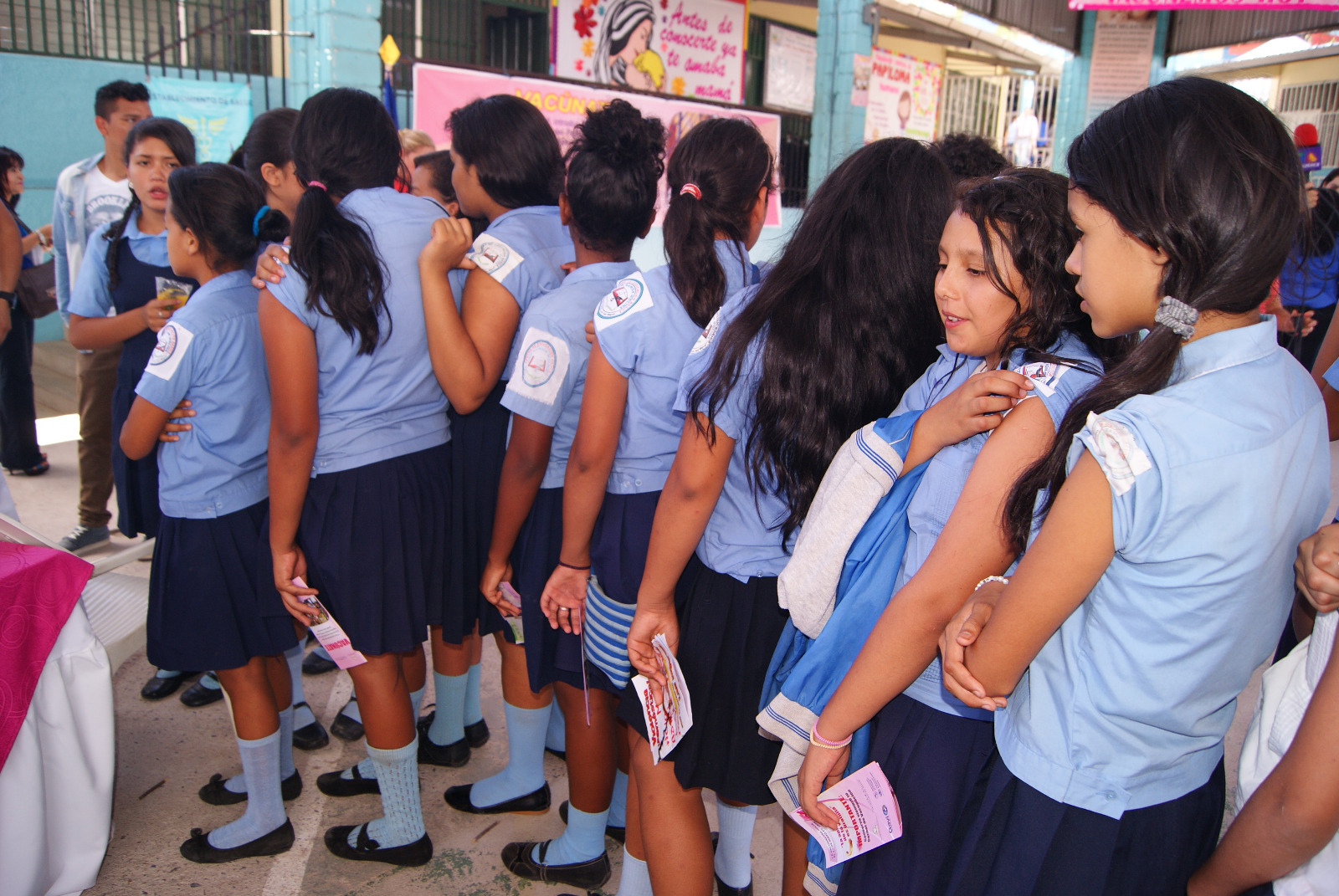
Johns Hopkins Bloomberg School of Public Health (Jennings); U.S. Centers for Disease Control and Prevention (Loharikar)
Starting in 2017, Gavi, the Vaccine Alliance shifted its focus from human papillomavirus (HPV) vaccination demonstration programmes to national introductions, aiming to scale up early lessons learned and to accelerate progress toward the goal of protecting 40 million girls from cervical cancer by 2020 in Gavi-eligible countries. This commentary is an effort to focus dialogue between and among public health practitioners and public health officials on key recent developments in the planning and implementation of HPV vaccination programmes worldwide.
Among 45 low- and middle-income countries surveyed in 2016 after having completed HPV vaccine demonstration programs or national introduction, most (87%) used primarily a school-based delivery strategy. The commentary makes the point that, unless social mobilisation efforts are undertaken to ensure enrolled girls attend school on vaccination days, vaccination coverage will likely be low. Furthermore, school-based vaccine delivery models pose an equity challenge for out-of-school youth.
The commentators stress that, "To continue to build successful HPV vaccination programs, several types of stakeholders must be engaged in the program planning process. Regardless of how and where the vaccine is delivered, education stakeholders need to be involved in program planning and communication, as the adolescent age group is largely enrolled in primary school. Other key stakeholders include adolescent and youth service providers, community service organizations, local women's groups, family planning and reproductive health advocates, cervical cancer specialists, gynecology organizations, and HIV prevention and treatment groups."
At least 11 countries around the world, including Australia and the United States (US), routinely vaccinate boys with HPV vaccine; however, achieving high coverage among girls is a more cost-effective vaccination strategy in low- and middle-income countries. "The current context of most countries focusing on vaccinating girls illuminates the importance of having a clear communication and social messaging campaign in place, with a realistic and nimble crisis communication strategy that can be activated quickly if rumors emerge....Vaccinating only girls can lead to rumors about the vaccine impacting fertility. Many countries have found that best practice is to have media, and well-trained media spokespersons, involved early in the planning, well ahead of vaccine introduction activities."
Programme evaluations and experience have shown:
- That it is important for vaccination programmes to be jointly "owned" by the immunisation programme as well as educational institutions, for consent, social mobilisation, logistics, and monitoring.
- That opt-out consent processes are generally acceptable and follow the consent format of other routine immunisations. However, opt-in consent processes can lead to rumours and misconceptions. Face-to-face communication with parents and communities can offset the risk of such challenges. Experience responding to rumours and negative stories in the media has shown that social mobilisation should happen well ahead of vaccine introduction.
- That, in early adopters such as Bhutan, country ownership, a strong public-private partnership, an evidence-based and flexible delivery strategy, leadership from schools, and a proactive approach to media engagement have been found to be effective - in Bhutan, leading to consistent complete series coverage of over 90% among 12-year-old girl cohorts, using a school-based delivery strategy.
"As national stakeholders in cancer and chronic diseases come together with immunization programs and their advisory bodies to make policy on HPV vaccination, they have an important opportunity to also inform their national policies on cervical cancer screening and surveillance programs."
Global Health: Science and Practice December 2018, 6(4):629-634; https://doi.org/10.9745/GHSP-D-18-00222. Image credit: Radio America
- Log in to post comments