










































Using Behavioral Science to Design a Peer Comparison Intervention for Postabortion Family Planning in Nepal
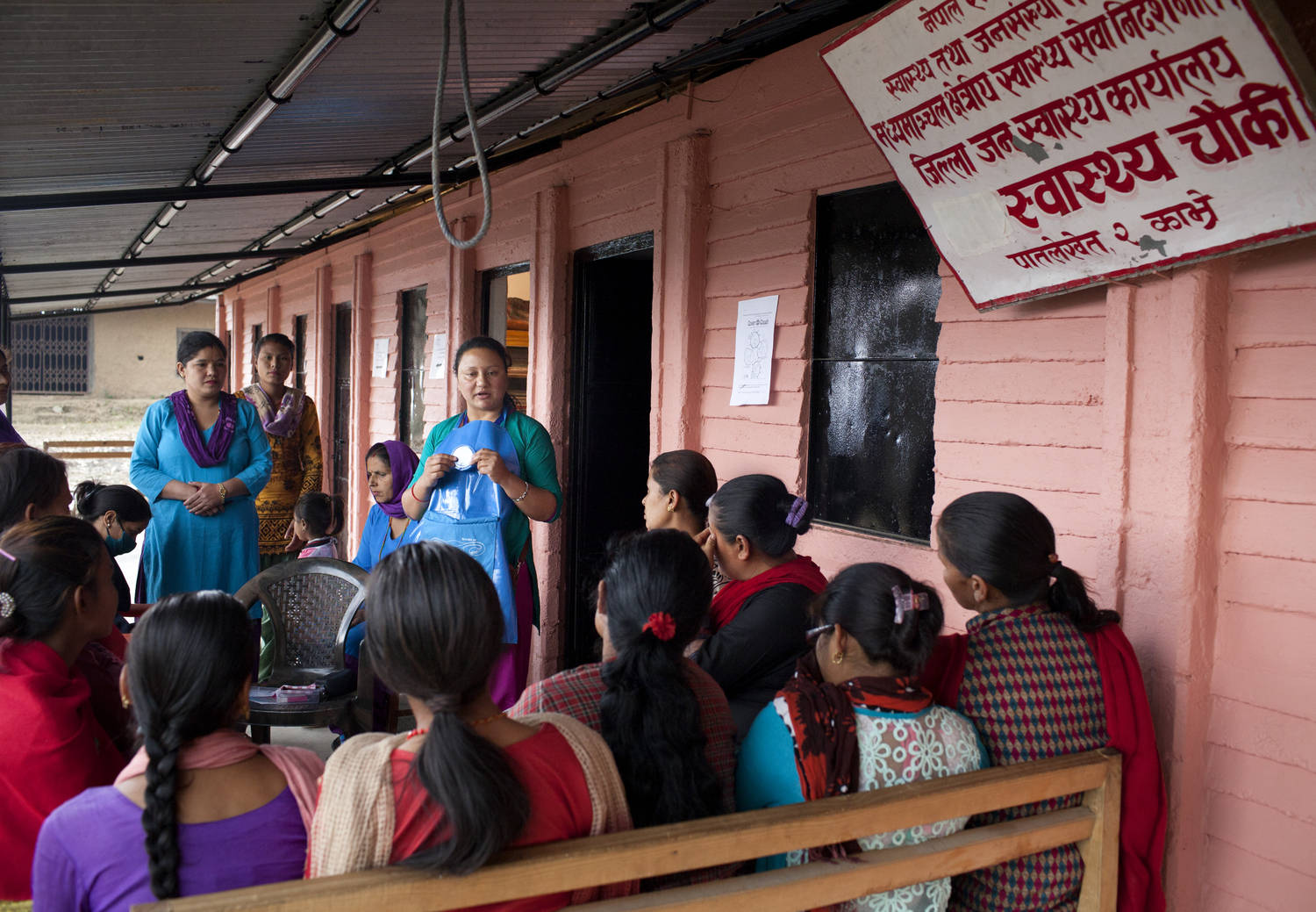
ideas42 (Spring, Datta); Marie Stopes International (Sapkota)
"In the case at hand, behavioral economics can provide effective tools to help identify barriers that may be standing in the way of strongly motivated, well-trained providers' ability to administer quality services to clients, despite their desire to do so."
This paper details the processes and results from a participatory research initiative to increase family planning uptake among women who receive abortion and postabortion services at Sunaulo Parivar Nepal (SPN), a large non-governmental sexual and reproductive health (SRH) provider in Nepal. Using a behavioural economics approach, the research focused on provider-related contextual features, behaviours, and perceptions that could be inhibiting postabortion family planning (PAFP) uptake.
As noted here, a primary cause of abortions is the unmet need for family planning, as evidenced by the reduced rate of abortion in countries following the introduction of national contraceptive programmes. Likewise, research suggests that timely access to PAFP services can prevent subsequent unintended pregnancies. Furthermore, research on PAFP in Nepal indicates that only 5% of women wanted a child within 2 years of having an abortion, and a meta-analysis of 10 studies showed that more than half of postabortion care (PAC) clients expressed an interest in using contraception; 6 of the studies included in this meta-analysis also show that only about one-quarter (27%) of postabortion clients left the SRH facility where they received an abortion with a contraceptive method.
SPN's centres are described in the paper as well-suited for the design of behaviourally focused interventions to increase PAFP uptake for several reasons. First, current uptake rates are relatively low, with average PAFP uptake rates between January 2015 and June 2015 ranging from 38% to 44%. Second, SPN has made considerable investments in counseling training. Finally, SPN's 36 centres have ready and adequate supplies of contraception, suggesting that the primary bottlenecks restricting PAFP uptake are likely behavioural rather than driven by access or infrastructure.
The researchers used a behavioural economics approach to inform the 3 stages of this research. In order to decide which problem to focus on, they compared PAFP uptake rates at SPN's centres to uptake rates at other comparable health centres. They also considered various aspects of the abortion and postabortion process and compared uptake rates for specific parts of that process. Next, they undertook a behavioural diagnosis process, charting out the decisions and actions of individuals (clients and providers) and using theories from behavioural science to identify why people might be failing to act on their intentions. This process allowed them to generate hypotheses about what might be influencing the behaviour. Finally, they designed to the contextual feature causing the identified challenge.
Specifically, through meetings, interviews, and observations with SPN's stakeholders, service providers, and clients at its 36 SRH centres, the researchers developed hypotheses about client- and provider-side barriers that may inhibit PAFP uptake. On the provider side, they found that the lack of benchmarks (such as the performance of other facilities) against which providers could compare their own performance and the lack of feedback on the performance were impeding PAFP uptake. Put another way, the key barrier standing in the way of providers administering more consistent PAFP counseling, which in turn was stymieing efforts to increase PAFP uptake, was the lack of access to information on PAFP uptake rates of other centres. Another finding was that role sharing, particularly without adequate communication, could lead to diffusing responsibility between team members. This could result in inconsistent service provision for some clients, particularly on days when client flow at centres is high.
The researchers hypothesised that monthly posters comparing centres' PAFP uptake rates would change provider behaviour by giving them the necessary information to put their performance in the context of other centres' performance. Through conversations with team members at SPN's centralised support office and service providers at SPN centres, they developed a peer-comparison tool (the monthly, centre-based PAFP comparison poster) with information to allow providers to gauge their performance and strategise ways to improve performance. In addition, it was hoped that sending this information to SPN's centres monthly, to be discussed by all team members during regular team meetings would facilitate the type of communication necessary for effective role sharing and for preventing diffusion of responsibility. Finally, through prompts on the intervention, providers would be encouraged to discuss best practices for counseling, as well as techniques to ensure every woman receives counseling. The researchers used feedback from the community of providers on the tools' usability and features to select a variant of the tool that also leverages and reinforces providers' strong intrinsic motivation to provide quality PAFP services. This variant (Version One) compared the centre's PAFP uptake to several other centers whose names were listed. The comparison was made using a bar graph and a text box cuing positive or negative reinforcement.
"The novelty of this intervention is the process that was taken to determine which intervention to use, which was highly participatory and allowed us to respond to the barriers present in this specific context."
"While the researchers believe that this intervention should improve outcomes related to PAFP uptake, especially given the iterative and participatory research and design processes, the effectiveness of the intervention will be evaluated rigorously." The intervention's effectiveness will be tested with a centre-level, stepped-wedge randomised control trial in which SPN's 36 centres will be randomly assigned to receive the intervention at 1-month intervals over a 6-month period. Existing medical record data will be used to monitor family planning uptake.
Frontiers in Public Health, Volume 4, Article 123. doi: 10.3389/fpubh.2016.00123 Image credit: Marie Stopes Nepal
- Log in to post comments