










































Knowledge, Attitudes and Perceptions towards Polio Immunization among Residents of Two Highly Affected Regions of Pakistan
UCSI University (Muhammad Umair Khan, Akram Ahmad); University of Balochistan (Aqeel, Ibrahim); University of Peshawar (Salman, Idrees); Sindh Government Hospital (Muhammad Ubaid Khan)
"Periodic evaluation of knowledge and attitudes in a population provide a basis for educational diagnosis and interventions towards changing attitudes and behaviour over time."
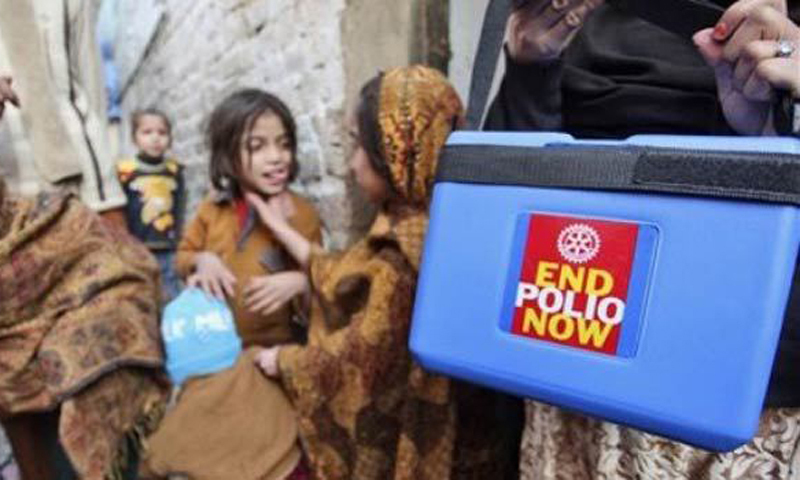
The objective of this study was to examine the knowledge, attitudes, and perceptions towards polio immunisation among residents of Quetta and Peshawar divisions in Pakistan, which is one of two remaining polio-endemic countries hampering the Global Polio Eradication Initiative (GPEI)'s quest to make the world polio free. According to the researchers, the strength of this study is that it has focused on areas where the availability of literature is limited. Inclusion of participants from areas highly affected by polio is another key feature of this study.
The descriptive, cross-sectional study was conducted for the period of 5 months from August to December 2014. Of 1,100 individuals approached during the study period, a total of 768 participants completed the questionnaire. The results showed:
- Participants were aware of the terminology of polio (79.1%), and the fact that it is caused by a virus (73.9%). In contrast, 21.7% respondents correctly answered that polio is a fatal disease. Similarly, less than one quarter (23.1%) of respondents knew that poliomyelitis is not curable. Furthermore, a large proportion of participants (74.3%) wrongly believed that polio vaccines should not be given to children with mild illnesses. Only 29% of subjects correctly answered that most patients do not develop sub-clinical symptoms. Younger participants (18–30 years) had significantly higher knowledge than older (>60 years) participants (p<0.001). Respondents with tertiary education were more knowledgeable than uneducated respondents (odds ratio (OR) = 1.84, p<0.05). Paid employees were more likely to have good knowledge of polio than unemployed respondents (OR=2.11, p<0.05). Residents of rural areas had lower knowledge than the urban population (OR=0.51, p<0.05), while residents of Quetta division were also less knowledgeable than Peshawar division (OR=0.29, p<0.001). Moreover, participants having children less than 5 years of age had higher knowledge than their respective group (OR=2.13, p<0.001). Participants who had any previous interaction with a polio patient had higher knowledge than participants with no past experience with a polio patient (OR=2.20, p<0.001).
- Of 768 participants, 651 (84.8%) showed negative attitudes towards polio immunisation. Nearly half of participants (50.3%) strongly agreed or agreed with the statement that all children should be vaccinated for polio. Similarly, 47.4% participants showed negative attitudes towards appropriate storage of polio vaccines. Only 58.4% regarded polio as severe disease, while 63.6% responded that the problem of polio is very severe in their area. Positive attitudes of participants towards polio immunisation were significantly associated with tertiary education (OR=9.14, p<0.001) and urban locality (OR=3.29, p<0.001). Respondents having children less than 5 years of age showed positive attitudes towards polio vaccination compared to their respective counterparts (OR=2.49. p<0.05). The results showed that participants with religious qualification had positive attitudes towards polio immunisation compared to participants with no formal qualification (OR=5.89, p<0.001). Paid employees had negative attitudes towards polio immunisation compared to than unemployed participants (OR=0.10, p<0.001).
- Religious beliefs (39.06%), lack of knowledge (33.7%), fear of infertility by polio vaccines (32.16%), and security issues (29.42%) were the main barriers towards polio immunisation.
The discussion section of the paper explores ramifications of these findings for the work of communication practitioners. For example, the findings of this study showed poor knowledge about polio immunisation. "It is noteworthy to mention that our study highlighted the significant association of knowledge with the age of the participants. Youngsters appeared to be more knowledgeable than older ones. The emergence of social media websites as popular health information for young adults could be the likely reason of this finding....Further studies are warranted to validate these results, and interventions should be customized accordingly. The point of concern here is that the older person in a family is also a decision maker in Pakistani society. This person has the authority to take decision relating to different aspects of life including whether or not to vaccinate children in a family. Our findings emphasize on the need to educate the head of a family as their knowledge and positive attitudes towards vaccination are essential for polio eradication." These findings might inform efforts already underway on the part of organisations such as the United Nations Children's Fund (UNICEF) to expand social mobilisation programmes in polio-affected areas by engaging community leaders, civil society organisations, and community members to ensure that polio immunisation is recognised as an essential practice to protect the health of all children. The utilisation of mass media campaigns and information dissemination approaches could also be valuable to address the challenges faced in remote areas of Pakistan.
Furthermore, a substantial proportion of participants displayed negative attitudes towards polio immunisation. One area of particular note is the negative attitudes of respondents with regard to storage of polio vaccines. "Many researchers have emphasized on the need to enhance community awareness of the cold chain maintenance of polio vaccines in Pakistan...Necessary measures should be taken to design comprehensive educational programs for the public to educate them regarding all major components of the cold chain system." In addition, the findings imply that efforts should be made to reach out to rural areas, where negative attitudes towards polio vaccination are more prevalent. "These efforts could include the identification and subsequent counselling of the leaders/decision makers of rural areas, as those people are viewed as highly respectful individuals."
Noting that religious and social beliefs appeared to be the major barrier preventing the disease from tipping over into complete eradication, the researchers explain that local religious extremists in the tribal areas of Pakistan have denounced polio vaccination as an American ploy to sterilise Muslim populations. Trypsin, a component of oral polio vaccine, is sometimes extracted from pork pancreas, which is considered as haram (prohibited) in Islam. However, trypsin is used in minute quantity in the vaccine, and according to the principles of Islam, when the quantity of water exceeds 2 qilla, the effect of impurities is negligible. "We believe that coalition campaign involving Imams, Sheikhs and other Muslim scholars could turn the tide against polio vaccines in Pakistan."
The researchers assert that their findings are important from global perspective, especially in considering what action to take in the other polio-endemic country (Afghanistan). They propose that "the transfer of knowledge from trusted sources like community leaders and religious scholars could significantly reduce the burden of polio from the affected countries. We suggest that the whole campaign should be divided into 2 domains; one should be responsible for the education and the counselling of the people, while the other domain can focus on vaccination and reaching out remote areas which are still not accessed. We would encourage the researchers to conduct studies to assess how individuals' beliefs and attitudes changes over time, the determinants of their vaccination decision, and the sources of information which strongly influences their decision. Additionally, there is also a need to evaluate the effectiveness of communication strategies between the healthcare providers and the parents."
BMC Public Health 2015 15:1100. DOI: 10.1186/s12889-015-2471-1. Image credit: The Dawn - Pakistan
- Log in to post comments