










































Afghanistan National Emergency Action Plan for Polio Eradication (NEAP) 2016-2017
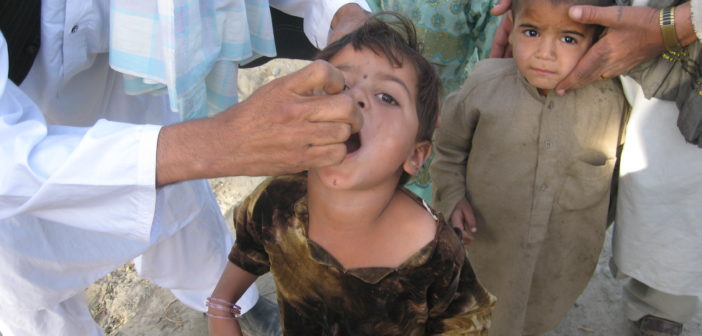
This document represents an update for the July 2016 to June 2017 period of the National Emergency Action Plan (NEAP) as developed and continually revised by the Afghanistan Polio Eradication Initiative (PEI). As the Minister of Public Health observes in the Preface, Emergency Operations Centres (EOCs) were established in late 2015 with the mission to lead and manage Afghanistan's effort to stop poliovirus transmission by ensuring every child, every time, everywhere receives polio vaccine, as set out in the NEAP. This effort involves strong coordination between government and partners, real-time use of data to drive action, and full accountability at all levels of the programme. This document is a reflection of the lessons learned in the past year, and it outlines how the programme intends to build on recent successes, reverse setbacks, measure results, create an enabling environment, and maintain neutrality.
In 2015/2016, Afghanistan implemented an intensive supplementary immunisation activity (SIA) schedule, and a number of new initiatives to further improve SIA quality were put in place during the second half of the NEAP implementation period. These initiatives included: the roll-out of a new frontline worker (FLW) training curriculum; a modified revisit strategy; the development of district profiles and district-specific plans; in-depth investigation of reasons for failed lots in Lot Quality Assurance Sampling (LQAS); strategic use of inactivated polio vaccine (IPV); and microplan validation and revision. The national polio eradication programme focused the implementation of these initiatives in the 47 very-high-risk (VHR) districts, and they are starting to translate into improvements in the quality of SIAs and the immunity profile of non-polio of acute flaccid paralysis (AFP) cases. Afghanistan's national polio eradication programme continues to enjoy strong support from the country's highest political leadership.
Having reflected on lessons learned since the last NEAP (see Related Summaries, below), such as that experience from other countries should be adapted to the local context in order to reach more children, the report discusses a number of key strategies going forward, including these and other communication-related ones:
- Improving team performance by ensuring FLWs are: carefully selected using a transparent and criteria-based approach; equipped with the appropriate skills, information, and materials to optimally perform their job; and kept motivated.
- Holding campaign coordination and review meetings during the pre-campaign phase to ensure good preparedness, during the campaign to take concurrent corrective action, and after the campaign to review the lessons learned to improve the quality of subsequent campaigns.
- Expanding the community health volunteer approach, which is being piloted in Behsud district and which deploys local female and male permanent community volunteers to conduct social mobilisation and to reach and vaccinate continuously missed children.
- Continuing use of mobile technology to fast-track data transmission.
- Scaling up PolioPlus initiatives (adding other services in conjunction with the polio vaccine, e.g., Expanded Programme on Immunization (EPI) services, outreach health services, hygiene kits, and bednets, depending on the local context and community demand) in and around inaccessible areas to respond to other felt needs in these communities where feasible, and to pull people out of inaccessible areas.
- Promoting ongoing community engagement activities, including with local elders (see below for more on this).
- Strengthening cross-border coordination with the Pakistan team at all levels through regular face-to-face meetings, video conferences, synchronisation of SIA dates, streamlined cross-notification of AFP cases, uniform communication interventions of the cross-border transit points, and information sharing on high-risk population movements, including returnee refugee populations.
- Mobilising around routine immunisation (RI) by: ensuring that during all relevant meetings with key stakeholders at the community level, information on RI, and the scheduled dates of outreach sessions are highlighted; identifying the low RI coverage areas during household visits and missed children tracking by FLWs to find areas where RI coverage is low, and informing district and provincial teams; and focusing on the tracking of newborns by the mobilisers who are part of the Immunization Communication Network (ICN) - a local, trained and flexibly deployed cadre of social mobilisers and supervisors - informing the parents and family members of all newborns about RI vaccines and giving them the details of the EPI fixed centres, vaccinator contacts, and dates of outreach.
More specifically, addressing the unsupportive social context rooting refusals and children not available in Afghanistan, and in particular in Southern Region, will be the number one priority of the communication focus in the coming year. Afghanistan's polio communication framework identifies the main strategic objectives, principles, and approaches that will guide all communications work, including media and advocacy, social mobilisation and household and community engagement, partnerships with religious leaders and medical professionals, the development of education and edutainment materials, and the training and empowerment of FLWs and civil society. By bringing all communication interventions under one strategic umbrella, the programme seeks to ensure that they are integrated, complementary, and mutually supportive of the operational strategies to reduce the number of missed children in Afghanistan.
Understanding that building trust is the cornerstone of successful community engagement, the main strategic thrust is to create an enabling environment to facilitate acceptance of the vaccine during and between campaigns. Communication activities aim to shape an environment where continuous vaccination against polio is embraced and accepted as an important social and individual goal by all community stakeholders. Key activities include:
- focusing on reducing chronically missed children through strengthened household and community engagement approaches that include:
- developing an evidence-based communication plan as part of the specific plan in every VHR district, including a focus on activities in high-risk clusters to address the locally-specific reasons for missed children;
- including social elements as part of the integrated microplan as prioritised in the VHR districts;
- spearheading household and community engagement by the over 8,000 members of the ICN, and conducting field work by fully trusted, capable, and professional FLWs to mobilise caregivers, religious and community leaders, and key influencers to understand, accept, and support the work of vaccinators and uptake of oral polio vaccine (OPV); this engagement will not only happen during vaccination days, but will be an ongoing conversation with the community that feeds back into making the programme even more effective (the ICN will not be deployed in areas that are implementing the community health volunteer strategy and vice versa);
- assessing the impact of ICN on reduction of missed children following the October campaign and onwards;
- following up on the register of all missed children during and between campaigns by members of the ICN, and ensuring vaccination in coordination with the local health facility; and
- conducting detailed analysis of children missed due to "not available", particularly in Kandahar.
- strengthening partnerships with key influencers, including religious leaders, health workers, and other stakeholders, to help overcome issues of mistrust and suspicion at the local level by:
- in 2016/2017, placing focus on expanding the engagement of religious leaders at all levels in a more systematic way, particularly at the local level in the VHR districts, building on the National Islamic Ulama Group platform that was established in early 2016;
- mapping and including local scholars in the district-specific plans, with district focal persons, ensuring the engagement of key religious leaders across the district;
- holding workshops at the national and provincial levels to ensure the consistent engagement of key religious leaders;
- continuing to disseminate programme information and guidance to inform religious leaders about the importance of immunisation. Through their Islamic teachings, religious influencers will facilitate broader support for polio and child health;
- strategically incorporating the voices of key religious influencers into mass media content and platforms to expand the public narrative on immunisation; and
- organising workshops to seek the support of doctors and other health workers in the programme at all levels.
- improving external relations and partnerships to promote an environment of trust by:
- creating partnerships with media and other stakeholders to strengthen communication and media interaction to ensure a better understanding of polio eradication and facilitating improved partnerships with media by: (i) holding regular media briefings and trainings, ensuring regular interactions with key reporters, editors, and talk show hosts; and (ii) engaging editors of religious publications in social mobilisation and advocacy for polio vaccination in high-risk areas to complement the engagement of religious leaders and institutions in advocacy and community engagement;
- developing and disseminating awareness-raising materials for print and electronic media platforms to encourage increased public trust and support for local health-service delivery, during and between campaigns;
- placing increased emphasis on creating a truly national programme that incorporates other sectors, stakeholders and voices, including medical professionals, as well as the Ministries of Education and of Rural Development; efforts will focus on ensuring full support of these and other sectors, including non-governmental organisations (NGOs); and
- focusing on ensuring the participation of community influencers, including medical doctors, religious scholars, community elders, and polio survivors and their families.
The document concludes by noting that, although Afghanistan remains polio endemic, it is important that the country start planning for the transition of polio assets to support other basic public health functions. One key action will be identifying a focal person within the national EPI to manage the development of the transition plan and ensure that a work plan is in place by the first quarter of 2017.
Image credit: CIDA/ACDI / Sharif Azami / Flickr
- Log in to post comments