










































The Role of Online/Social Media in Countering Violent Extremism in East Africa
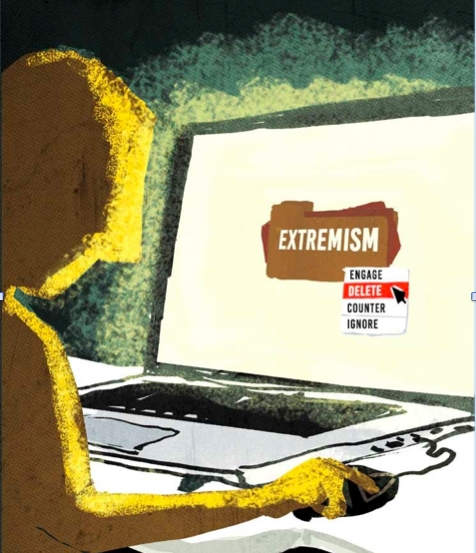
“Countering violent extremism (CVE) is a broad umbrella phrase that covers a wide array of possible approaches to dealing with radicalisation to extremist violence.”
This Governance and Social Development Resource Centre (GSDRC) Helpdesk rapid review draws on academic and grey literature to provide an overview of the role of online/social media in countering violent extremism in East Africa. It includes brief regional examples from Uganda and Kenya, and other international case studies from countering violent extremism (CVE) initiatives that use online/social media.
As stated in the report, “There is growing recognition amongst academics and policy makers that de-radicalisation and countering violent extremism programmes can be a more effective way of tackling extremism than purely militaristic approaches. Online and social media are useful in the dissemination of counter narratives in multiple languages, and to reach a broad, geographically diverse audience.”
The paper explains how online CVE programmes can be divided into positive and negative measures. “Positive CVE strategies produce counter-content that seeks to challenge extremist narratives and propaganda, while negative CVE strategies are designed to block, filter, take-down or censor extremist content.” Positive CVE strategies include the use of "alternative narratives" and counter narratives, which refer to the use of on- and offline communication activities which directly or indirectly challenge extremist propaganda in different types of fora, such as face-to-face fora using testimonials, blogs and chatrooms, and social media websites.
The paper makes the point that online and social media are particularly useful in the dissemination of counter-narratives in multiple languages, to reach a broad, geographically diverse audience. However, the paper also makes the point that the appropriateness of the content of the message, who delivers it (the credibility and trust worthiness of the individual, group, or institution), and how it is delivered to the intended audience are essential to the effectiveness of implementing online counter-narratives. For example, Mullahs, imams, and Muslims in general are best equipped to engage in religion-based counter-narratives.
The report also makes the point that "By themselves, alternative narratives may not interrupt the radicalisation process or may not de-radicalise individuals, but they can deconstruct extremist messages for individuals at risk. Online alternative narratives should also go hand-in-hand with offline counter-measures, such as school based education programmes."
Looking at the role of online/social media in countering violent extremism in East Africa, the report notes that the evidence base is limited, with few empirical studies that explore the impact of either online/social media campaigns or counter narratives. Despite this limited evidence base, various organisations are seeking to promote and utilise online/social media to counter violent extremism. The Intergovernmental Authority on Development (IGAD) Security Sector Program (SSP), in partnership with the Global Center on Cooperative Security, is convening discussions which will inform the establishment and development of the Horn and Eastern African Counter Violent Extremism Center of Excellence and Counter-Messaging Hub in Djibouti. IGAD believes that strategies should go beyond traditional platforms (like radio) to include social media and peer-to-peer communication, such as WhatsApp, where appropriate, particularly when reaching out to youth vulnerable to radicalisation.
The report provides two brief examples of projects that utilise social media to a lesser or greater extent. They are:
- Kenya Community Support Centre (KECOSCE) - This project aims to empower communities to prevent and contest radicalisation on the Coast of Kenya. KECOSCE uses multimedia such as billboards, LED screens, radio commercials, and social media to reach wider communities and create awareness of the negative impact of radicalisation and violent extremism.
- Uganda Muslim Youth Development Forum (UMYDF) - they advocate zero tolerance for extremist narratives, and, as one component of their strategy, engage Imams in social media.
The paper also identifies a number of international best practice examples of programmes and approaches that tackle extremism (in a variety of forms) that involve a social media component. These include:
- Web constables - These are police officers who work on social media. They participate in discussions across different social media networks (Facebook, Twitter, etc.) in order to, among other things, identify people at risk of becoming victims of violence or to counter (predominantly right-wing) youth radicalisation.
- Identity, Belonging and Extremism (IBE) - This media content-based project is delivered in schools, tailored to local needs, and created in consultation with students. IBE seeks to engage students on issues relating to the online world with an offline engagement medium. Its themes are generic but crucial to understanding radicalisation and extremism, and it targets both mindset and behaviour. The programme is based on the premise that the majority of extremist narratives offer three simple modes of engagement and understanding: a sense of identity; a sense of belonging; and a sense of loyalty/duty. IBE discusses racism, Islamism, islamophobia, stereotypes, and social media to tackle these narratives.
- HOPE Not Hate (HNH) - This programme uses counter-narratives to challenge extremism (for instance, the #wearethemany hashtag). The programme provides accurate, research-based analysis of extremist groups in order to empower communities to challenge hatred/violent extremism when it presents itself and undermine the credibility of extremist campaigns.
- Against Violent Extremism (AVE) - This network aims to provide a platform for former violent extremists and survivors of violence to connect with each other to share ideas, collaborate, and identify relevant and related partners, projects, and resources that can help amplify their initiatives and bring them to a wider audience.
- Al-Sakina - This independent, non-governmental organisation was initiated to engage in online dialogue as a way to combat online radicalisation. The Sakinah Campaign promotes a one-on-one engagement strategy designed to counter the appeal of violent extremist ideologies online. Volunteers include religious scholars, psychologists and psychiatrists, sociologists, and academics.
(The GSDRC Research Helpdesk provides rapid syntheses of key literature and of expert thinking in response to specific questions on governance, social development, humanitarian and conflict issues. The concise reports draw on a selection of the best recent literature available and on input from international experts.)
GSDRC website on September 15 2016.
- Log in to post comments