










































Tikambe (Let's Talk) Project
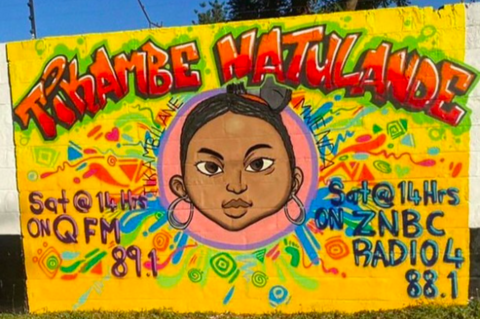
Tikambe (Let's Talk) is a joint project by BBC Media Action and Restless Development in Zambia that uses media and interpersonal communication to encourage young people to talk openly about their sexual reproductive health and rights (SRHR) issues and experiences. Launched in 2014, the project uses radio, television, and online media, as well as a network of peer educators, to help young people improve their reproductive health and rights knowledge and to empower them to claim their right to access youth-friendly sexual and reproductive health (SRH) services. The project has been implemented in three phases across four provinces: Lusaka, Central, Northern, and Copperbelt provinces. Phase 1 took place from 2014 to 2017, Phase 2 ran from 2017 to 2019, and Phase 3 is running from 2020 to 2024.
Working at national, provincial, district and community levels, Tikambe uses two main approaches that build on the strengths of the two implementing partners:
- Strengthening the technical capacity of radio stations to produce engaging quality programmes and public service announcements (PSAs) on SRHR that stimulate discussions that can pave the way for change in attitude and behaviour - This aspect of the project is the responsibility of BBC Media Action. Partner radio stations produce their own programmes with guidance and oversight from BBC Media Action. Capacity building included foundational training provided by BBC MA London staff to project staff of all implementing partners and on-site mentoring of stations at a rate of one week per month.
- Interpersonal communication through young volunteers who engage in peer-to-peer education, community awareness-raising activities, the delivery of youth-friendly services (YFS) in health clinics and the teaching of comprehensive sexual education (CSE) in schools - This component is being implemented by Restless Development. Their work builds on a model that engages and develops the capacity of young volunteers to deliver activities to other young people and to their communities. Volunteers are responsible for the planning, implementation, and monitoring of activities in schools, clinics, and communities. They take shifts in schools to disseminate CSE modules in classes and at youth-friendly corners in clinics to facilitate the delivery of YFS.
Across all media platforms (more information below), Tikambe programming seeks to provide accurate, practical, and relevant information about SRH, including around:
- Sex and decision-making in relationships;
- Access to affordable contraception methods for young people;
- HIV and sexually transmitted infection (STI) prevention and treatment;
- SRHR and gender equality; and
- Youth-friendly SRHR services, including mental health support.
Tikambe's media content and outreach activities work in line with the CSE curriculum and are tailored to one of two age groups: those aged 14-19 or 20-24. For example, on the use of contraception, content intended for the younger age group covered what a condom is and how to use it, while content for the older group covered themes around deciding to use condoms and negotiating contraceptive use in relationships.
Both Tikambe media and outreach activities seek to create awareness about youth-friendly facilities and encourage young people to use them by reassuring them of healthcare workers' professionalism and highlighting that fellow young people are points of contact at these centres. When needed, the project also puts in place a system to refer young people from schools to YFS.
Specific communication activities:
Media (radio, television, and social media)
Tikambe Natulande is a weekly radio phone-in and debate show put together by young production teams and journalists in partnership with BBC Media Action. The programme seeks to encourage open conversations about various SRHR topics that are typically considered taboo. By engaging audience members and incorporating their views each week, the show is designed to give young people a sense of ownership and opportunities to make their voices heard. Drama segments are also used to promote conversations among young people on the taboo themes of sexuality, relationships, pregnancy, and access to SRH health services, as well as parent-child health discussions. PSAs were also developed by the radio stations, which were broadcast on various platforms alerting young people to the availability of SRH services, including youth-friendly centres.
The Tikambe TV series is broadcast on national television and features interviews with young people who shared their personal experiences about SRHR-related topics such as teenage pregnancy, child abuse, alcohol abuse, and living with HIV.
In addition to radio and television, the project includes a large social media component, using Facebook, Instagram, and WhatsApp, generating dialogue, and providing further platforms for audiences to discuss the issues that matter to them.
Outreach activities
Restless Development peer educators do not just work in schools and health centres, but they also conduct outreach activities and community dialogues to promote broader family and community discussions on SRHR. Outreach activities include SRHR clubs at youth-friendly spaces, where topics relating to life skills, social and gender norms, SRHR, and cultural beliefs are discussed.
National Youth Dialogue Days are also organised to provide opportunities for young people to engage with government ministers, healthcare providers, parents, and teachers about their SRHR. Radio programmes are sometimes broadcast live from these youth events, which are held at schools, youth clubs, and in communities.
Listening groups
Through listening groups, the project seeks to address the evolving needs of the intended audience over the course of the project. These groups focused on getting listener feedback and input on programme content to ensure they remained relevant to young people. Young people can suggest topics, the type of language that is suitable, and the guests they would like on the shows. Local journalists - who form a vital link between the population and local radio stations - manage some listening groups to ensure the relevance of their programmes. These journalists received training through Restless Development's Community Volunteers programme and regular mentoring and training from BBC Media Action.
Ensuring wider community support
Some parents and community elders who participated in project activities such as community dialogues and listening groups serve as ambassadors for young people by engaging in open conversations with young people about SRHR services, including contraceptives and voluntary counselling and testing services. They also encourage interactions between parents and children on SRH issues and increased networking between traditional leaders, religious leaders, and counsellors in their area to ensure that issues affecting young people are addressed holistically.
Policy engagement and advocacy
In Phase 1 of the project, Restless Development also ran policy engagement events that involved debates with decision-makers around key issues that affect young people like YFS provision in communities. Policies that affect youth were pinpointed and reviewed and key issues identified that require change. The overall objective was to increase the number of institutions formally consulting with young people in their strategies, plans, and budgets. These activities were led by a group of trained young Advocates4Action (A4A). The A4As mainly worked at building the capacity of young people so they could have the skills to hold local and central government accountable for improved youth-friendly health service delivery.
Sexual and Reproductive Health, Youth, Gender, Media Development
The following statistics reflected the situation in Zambia around SRHR at the time the project was launched in 2014 (from End of Project Evaluation of the BBC Media Action Radio Waves and Tikambe Projects in Zambia, 2019 [PDF]):
- Young people in Zambia represent approximately 25% of the total population.
- The country has the fifth-highest adolescent birth rate in sub Saharan Africa, which is one of the highest in the world.
- Despite a conservative context, young people in Zambia have sexual relations early in their lives. 12.4% of girls and 18.9% of boys have had sexual relations by the age of 15. 61% are sexually active by the age of 18 years.
- Child marriage is still prevalent in Zambia, primarily affecting girls in rural areas. Almost one in five adolescent girls is married compared to one in 100 adolescent boys aged 15-19 years old. National data indicate the prevalence of early pregnancies. with one out of every four girls aged 17 years and six out of every 10 girls aged 19 years having been pregnant.
- Between 2007 and 2014, 120,024 in-school girls became pregnant and dropped out of school. 86% of these pregnancies happened in primary school. While Zambia has a re-entry policy, only 38% and 59% of primary and secondary school girls, respectively, returned to school.
- Contraceptive use among young people aged 15 to 19 years is low at 10.6%.
- Condom use is also low, standing at 4.4% among married adolescents and at 8.7% among unmarried sexually active females.
- Comprehensive knowledge among adolescents about HIV is significantly below the 90% target recommended by international standards. Young people aged 15-19 years old are those whose awareness is lowest with regard to knowledge about transmission risks and testing services.
For evaluation results of Phase 1 and Phase 3, see Related Summaries, below.
BBC Media Action and Restless Development, with funding from the Embassy of Sweden and the Swedish International Development Cooperation Agency (SIDA). Media partners: QFM in Lusaka Province, Radio Mkushi and Power FM Radio in Central Province, YAR FM, SUN FM and Radio Chimwemwe in the Copperbelt Province, and Radio Mano in Northern Province, as well as the state broadcaster Zambia National Broadcasting Corporation (ZNBC).
BBC Media Action website, Restless Development website, and We Are Restless Blog site - all accessed on September 1 2016; and How is Media Content and Outreach Supporting Young Zambians to Make Sexual and Reproductive Health Decisions? July 2024 [PDF] and End of Project Evaluation of the BBC Media Action Radio Waves and Tikambe Projects in Zambia, 2019 [PDF] - all accessed on August 22 2024. Image credit: BBC Media Action and Restless Development
- Log in to post comments