










































Community Dialogues for Child Health: Results from a Process Evaluation in Three Countries
Malaria Consortium
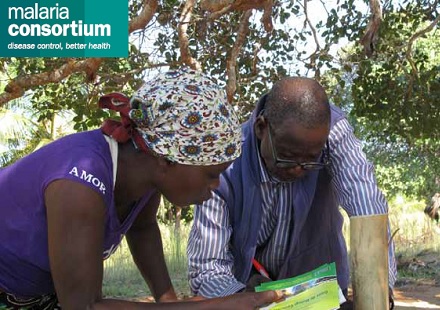
"The use of visual tools and local languages enables community-based facilitators, who receive a two-day basic training, to generate participatory discussions through sharing of testimonies among participants."
This 4-page learning brief discusses the experience of the Malaria Consortium in using a community dialogue (CD) approach as part of integrated community case management (iCCM) to prevent and respond to pneumonia, diarrhoea, and malaria infections in children in Mozambique, Uganda, and Zambia. The iCCM approach includes training, equipping, and supervising community health workers (CHWs), and the dialogues were used to raise awareness, support, and use of these new iCCM services. A process evaluation found that the dialogues successfully contributed to increased awareness and understanding of the three childhood diseases, as well as built confidence in the CHWs.
According to the brief, the CD approach is simple to implement. CHWs and other community members received training and simple visual tools and then were tasked with leading discussions within their communities around the new community-based services and the three childhood illnesses. The community-based facilitators take the community members through a ten-step process that explores issues, identifies and prioritises specific areas of concern, and allows for collective agreement on actions.
After one year of implementation, a process evaluation was conducted to assess the efficiency and relevance of the CD intervention. "Participants and facilitators indicated that they appreciated the CD intervention. They highlighted that the CD format has made learning easier and allows communities to identify solutions which are relevant to their context." Participants enjoyed the interaction of the dialogues, noting that they were more engaging than typical health education sessions. The evaluation found that the dialogues contributed to increased awareness and understanding related to diarrhoea and malaria, but not as much of pneumonia, which the CHWs did not raise as often. The findings also showed that the collective, public decision-making that occurs as part of the dialogues is a successful planning tool for identifying doable actions.
Overall, the brief outlines the following as key findings of the evaluation:
- "The CD approach is effective for filling health information gaps among community members, identifying issues and helping communities make collective decisions for improved health practices.
- Regular CDs contribute to the formation of new habits, particularly in relation to seeking timely care in case of child sickness.
- The CD model has potential to assist communities move in the direction of positive change around prevention practices and management of childhood illnesses."
Malaria Consortium website on September 25 2014; and email from Sandrine Martin to The Communication Initiative on October 17 2014.
- Log in to post comments