










































Economic Empowerment Strategies for Adolescent Girls
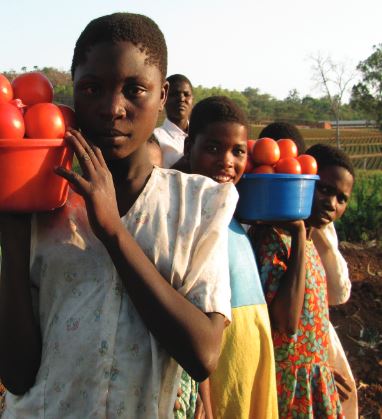
The Adolescent Girls' Advocacy and Leadership Initiative (AGALI)
"Adolescent girls are among the most economically vulnerable groups, significantly more so than adult women or adolescent boys. Adolescent girls typically lack access to financial capital and have more limited opportunities to gain the education, knowledge, and skills that can lead to economic advancement."
This strategy document on adolescent girls and finance is based upon programmes of the Adolescent Girls' Advocacy and Leadership Initiative (AGALI) in Guatemala, Honduras, Liberia, Malawi, and Ethiopia. From the Executive Summary: "This research investigates economic empowerment strategies for adolescent girls, analyzing data from a wide array of initiatives. This report identifies key findings from the field and develops recommendations to inform future program development for civil society organizations and funders working in the field of adolescent girls' economic empowerment.
....Economic empowerment can be a critical lever for change in adolescent girls' lives, helping them to gain financial independence, establish good saving habits, and improve their future prospects for participation in the labor force. It can also provide girls with more mobility, promote their confidence, strengthen their social networks, and improve their health outcomes. As adolescent girls’ lives improve, so does the well-being of their families and communities."
Economic empowerment programmes serving adolescent girls utilise three main approaches: financial services strategies, employment strategies, and strategies that promote girls' life-skills and social supports. Programmes must be evidence-based for effectiveness, customised to the participants, and integrated to improve human, social, and physical capital along with financial capital, while advocating for girls in order to improve social norms and institutional practices.
Organisations need to assess their audience for ages [aged 12-25], capacities, and interests, while establishing goals, including savings goals, that are appropriate for the socio-economic context. Financial literacy workshops can build a foundation of skills and knowledge in the areas of budgeting, financial planning, and the access and use of financial services and can connect adolescent girls with existing savings programmes. Organisations can work with financial institutions to design appropriate savings opportunities where none exist. Microcredit strategies for older adolescents and young women need to incorporate social support and reduce exposure to health and safety risks that can be created by jobs taken due to payment responsibilities.
Programmes need to link with thriving industries through communication with employers on skill needs and hiring partnerships and then design skill training for girls and adaptive skill training for special needs participants. Further, they need to garner community support and investment, identify safe spaces for meetings with girls, train female youth mentors from the community to deliver financial service and employment information along with life-skills training and reproductive health information. A specialised curriculum should be developed for vulnerable populations.
In design and implementation phases, programmes need to monitor and evaluate implementation and outcomes and track long-term impact into participants' adulthood.
The paper recommends that programmes "must address the intersection of social, economic, and political forces that shape girls' lives. Initiatives should leverage data from existing evaluations, and conduct ongoing program monitoring and evaluation, to maximize their own impact and build the field's knowledge of diverse approaches to foster girls' economic empowerment."
The Adolescent Girls’ Advocacy and Leadership Initiative (AGALI) website, September 11 2013.
- Log in to post comments