










































Action Group for Health Human Rights and HIV/AIDS (AGHA)
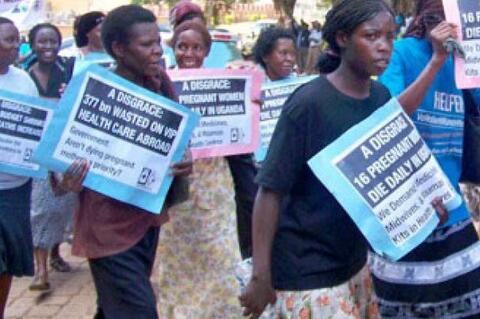
The Action Group for Health Human Rights and HIV/AIDS (AGHA) is a health rights advocacy organisation operating across Uganda that uses community radio and other tools for civic education and the promotion of dialogue between health experts, the government, and civil society. Founded in 2003 by a group of concerned health professionals, AGHA has mobilised members and fostered local and national networks. AGHA has also conducted health, human rights, and advocacy trainings and worked to bring human rights awareness to health and policymaking bodies.
Grounded in a rights-based approach, AGHA mobilises health professionals, in collaboration with communities, to be health rights advocates promoting equity and social justice for all Ugandans, with a particular focus on marginalised and vulnerable populations. AGHA has been implementing its organisational mandate through 4 mechanisms:
- Conducting research on human rights violations that impair the population's health and well-being - This programme is tasked with enhancing communication and information sharing with AGHA stakeholders. This is being done through sieving information and packaging it for use - in the process supporting programme areas such as networking and advocacy to produce relevant health rights information for their use. In addition, the programme is helping AGHA stakeholders generate human rights information for programme improvement. This has involved establishing an online resource base/library, website, e-forums, a bi-annual newsletter, and technical support (for example, developing standardised tools for health rights information gathering and sharing and supporting programmes in producing materials for media campaigns.)
- Providing trainings to educate health providers, public officials, and civil society organisations (CSOs), and the communities they serve on advocacy and the relationship between health and human rights - AGHA trains health management committees at the grassroots level about their responsibilities. AGHA also implements capacity support interventions where interns have been placed in service delivery points, especially in underserved communities, to enable integration of rights-based approaches at that level. For example, AGHA initiated Students for Equity in Health Care (SEHC) as a means of exposing young health professionals during their pre-service training careers to the linkages between health and human rights. AGHA is further strengthening its strategy of training both in-service and pre-service health workers in the rights based approached for improved service delivery. AGHA has defined and promoted the action it takes throughout the capacity development cycle (i.e., from the development of curricula through to addressing the results of monitoring and evaluation - M&E) to assure the quality of capacity-building efforts and products. Periodic Training Needs Assessments (TNA) have been conducted to ensure that AGHA keeps abreast of changing training and capacity development needs among CSOs in Uganda. TNA results have been used to identify new areas of human rights support.
- Taking action to raise awareness and influence policy through the media, public campaigns, and high-level meetings - For example, spearheaded by AGHA, the Adolescent Sexual Reproductive Health Advocacy Project (ASRHAP), together with youth-focused non-governmental organisations (NGOs) in Kamuli and Mityana Districts, aims to promote adolescent sexual reproductive health rights in the two districts through sensitising in- and out-of-school adolescents to understand the reproductive health rights and services available for them so that they can demand and utilise these services. The project involves district policymakers, service providers, cultural and religious leaders, among others; AGHA has sensitised the district stakeholders to prioritise ASRHAP services. To cite another example, to combat stigma and discrimination in healthcare settings, AGHA's Anti-Stigma Campaign has involved training 50 trainers and holding over 10 member-led stigma trainings for healthcare workers in 4 districts (Rakai, Tororo, Mbarara, and Kampala), reaching over 200 health workers and community members.
- Networking and collaborating with other public and private entities and organisations to advocate for rights-based health policies and programmes.
Based on the observation that, in Uganda, radio is a very influential tool for empowering citizens to learn about their health human rights and demand better health services, AGHA has integrated community radio into their work in an effort to help bridge the gap between the people at the grassroots level and the leaders. Health experts, local leaders, and village health team representatives are invited to AGHA's radio talk shows to discuss health issues and complaints gathered from the communities. During the shows, listeners can call in or text, asking questions or sharing their opinions on air. These interactive talk shows are designed to give ordinary citizens, including the rural economically poor, a chance to engage policymakers on access to healthcare. "Some of the patients didn't know that they could get certain services at our hospitals. AGHA's work has helped to link HIV and AIDS clients to the health centers," says Dr. Godfrey Mulekwa, a district health officer in Pallisa.
Health, Rights, HIV/AIDS
Supported by the Open Society Foundations.
"In Uganda, Grassroots Radio Bridges Health Care Gaps", by Javie Ssozi, Open Society Foundations Public Health Program Grantee Spotlight, July 9 2013; and AGHA website, July 17 2013.
- Log in to post comments