










































Impact Evaluation of Ruka Juu: An Entertainment Education Initiative in Entrepreneurship and Financial Education in Tanzania
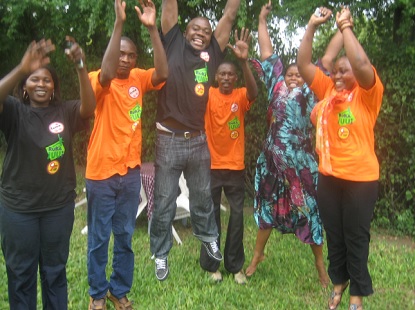
This 41-page report shares finding of an evaluation of Ruka Juu (Jump Up), a television show produced by Femina HIP in Tanzania, which revolves around economic empowerment of youth through entrepreneurship, business skills, and financial literacy. Ruka Juu is a reality-based television entrepreneurship competition, which was broadcast on three TV stations between March and May 2011. The evaluation found that Ruka Juu is a powerful medium to inspire and contribute to mindset change. The contestants are seen as role models who have, by the power of example, educated and inspired the audience to do business, save, improve customer care, mobilise capital, and to be trustworthy. The audience has obtained a general understanding of key components of business and finance rather than detailed facts.
The report explains that Femina HIP has provided information and provoked discussions about sexual and reproductive health, HIV/AIDS, and healthy lifestyles during the past 11 years. However, although young people have appreciated their magazines, TV programmes, and other products for the sexual and reproductive health messages, common feedback from the audience has been that there is a clear demand for jobs and income. Since then, Femina HIP has developed the concept of "Combination Prevention" where economic empowerment, gender equality, and citizen engagement are seen as a prerequisite for healthy lifestyles.
The responses from the viewers who interacted with Ruka Juu by SMS were received through Femina’s SMS platform (Sema na Fema), which was first activated through Ruka Juu. By the end of the Ruka Juu season, about 22,000 SMSes had been received. Among these, about 10,000 were votes (for the contestants). The TV viewers were also encouraged to enter the weekly “Question of the week” competition. Every week, three winners were awarded a prize and the names of the winners were announced by the presenter, Dada Bahati (Sister Bahati). Each question called for creativity and critical thinking around entrepreneurship, and related to themes such as marketing, business plans, customer care, savings, and risk. Among the 22,000 SMSs received, 12,000 were responses to "the question of the week". The responses from the audience helped Femina HIP to determine the audience’s general understandings of entrepreneurship and whether or not the viewers have grasped the messages that have been put across through the themes and challenges of the show.
The evaluation found that Ruka Juu has been both inspirational and educative but the results are clearly gendered and vary depending on educational circumstances. While more female students watched the show than male students, the out-of-school girls who participated in the study had not watched the show at all, despite having been incentivised to do so. And while male students have been able to transfer the information from the show to specific entrepreneurial knowledge, the lab experiment shows inspirational effect has been greater on women. The use of role models and the power of the example is an effective way to convey messages around entrepreneurship and finance, as shown in the focus group discussions (FGDs) among females as well as males, while fact boxes and the format of the boot camp had not worked so well. The training was shown in fragments and therefore had not been so meaningful for the audience while it had been very useful for the contestants.
The frequent power cuts due to electricity rationing in Tanzania, which were particularly severe during the broadcasting of Ruka Juu was a major obstacle for the audience. However, despite this, the media survey TAMPS showed that Ruka Juu had more than 3 million viewers. Therefore, given the fact that the electricity situation has already stabilized, future seasons of Ruka Juu have the potential of an even larger viewership and a more regular viewing of the show. Another barrier to viewership was lack of access to TV, or rather, lack of power over the TV. If people with more power over the medium (adults, for example) are watching something else or want to watch something else, it is not easy for those with less power to have their way. This typically affects the younger generation. This finding points in two directions - firstly to market Ruka Juu more strongly as a family programme where the adult audience is seen as just as important as youth, and secondly there is need for a radio version of Ruka Juu to air alongside the TV version.
The evaluation found that none of the out-of-school girls from the focus groups had watched Ruka Juu, despite being informed about the show and encouraged to watch. This finding indicates that specific effort is needed to reach this important group. As mentioned in the FGDs, they tend to spend a lot of time at home but are busy with family members and visitors during the weekend. They cannot just leave the house and go and watch the programme somewhere else, while this is more feasible during the weekday afternoons when nobody is at home. Daytime repeats are therefore valuable for this group and need to be marketed more strongly.
Furthermore, the evaluation found that there was a demand from youth for modern farming and this was considered in season 2 of Ruka Juu, which had the theme "Ruka Juu: Young farmers in Business. In addition, there was a suggestion from youth for a radio version of Ruka Juu, which was also considered in season 2 when Femina launched its first radio programme, Fema Radio Show: Young Farmers in Business.
Second season of Ruka Juu: Young Farmers in Business was aired between March and May 2013.
Femina HIP website on May 31 2013.
- Log in to post comments