










































Country Planning for Health Interventions under Development: Lessons from the Malaria Vaccine Decision-Making Framework and Implications for Other New Interventions
PATH Malaria Vaccine Initiative (Brooks, Ba-Nguz); Swiss Tropical and Public Health (Brooks)
A series of country consultations in Africa led to the development of a guide, building on existing World Health Organization (WHO) guides, to assist countries in preparing their malaria vaccine decision-making frameworks. Reflecting on that process, this paper discusses the opportunities and challenges to early planning for country decision-making - from the potential for timely, evidence-informed decisions to the risks of over-promising around an intervention still under development.
The decision-making framework guide was developed through an iterative process from 2005 to 2008. A series of 10 consultations, each between 1 to 2 days, were convened in African countries with up to 50 participants at each. The consultations included plenary presentations allowing African scientists and immunisation, malaria, other government and partner staff, and participants to discuss their shared experiences with making decisions on the adoption of malaria interventions, vaccines, and/or other public health interventions. Participants were also provided with briefing papers on issues related to vaccine development, the adoption of malaria control interventions, and new vaccines.
An initial step identified during country consultations was to establish national technical working groups with local experts to work on the framework for malaria vaccines prior to availability of data from the phase 3 study of the efficacy, safety, and immunogenicity of candidate malaria vaccine and licensure. When the vaccine is licensed and a decision is being made, such groups will issue advice to inform the government's policy decision. Other steps during pre-licensure outlined here include developing communications plans, advocacy, and engagement with local private sector partners. Country experts identified the need for data on community knowledge, attitudes, and practice (KAP) related to vaccines and malaria before the introduction of the vaccine, but it became critical during the introduction period. Activities during the actual licensure period are detailed, such as: update the communication plan for implementation and engage the media. The framework also identifies processes to take place at the global level, such as global advocacy to fundraise for malaria vaccines starting prior to licensure.
Participants gave high marks for the development process for the decision-making framework guide, with 90% indicating that the guide will be extremely or very useful for the preparation process prior to vaccine licensure, while 88% indicated it would be extremely or very useful for making decisions after a vaccine is licensed. In addition, 77% indicated it would be extremely or very useful when considering the decision-making process for other vaccines; 79% felt that the meeting facilitators were neutral (neither promoting nor discouraging introduction of a malaria vaccine).
In conclusion, the researchers assert that it is possible to plan for national decision-making for a new intervention and that African health officials value this process. The research also shows that developers, partners, and countries should begin to consider requirements for decisions at least 3 to 5 years before an intervention is anticipated to be approved by the appropriate regulatory authorities. "...[S]uch an approach holds promise for better public health decisions and greater public health impact through accelerated and informed decisions on the use of a new intervention once available."
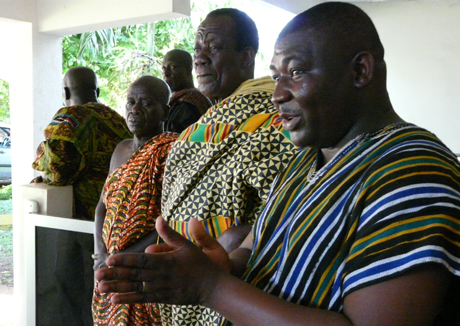
Health Policy and Planning. (2012) 27(suppl 2): ii50-ii61. Image credit: David Poland, PATH Malaria Vaccine Initiative
- Log in to post comments