










































Video Advocacy and the Women’s Initiatives for Gender Justice
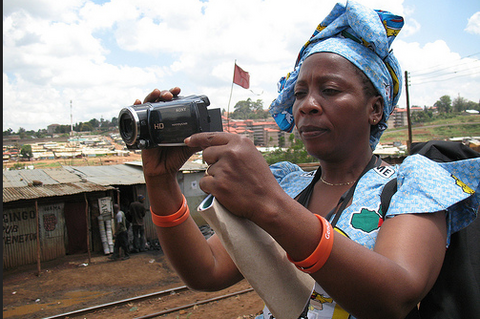
WITNESS is working in partnership with the Women’s Initiatives for Gender Justice and their grassroots partners in the Central African Republic, Democratic Republic of Congo, Kenya, and Uganda in a campaign focused on ending gender-based violence in armed conflict and post conflict situations and on increasing access to justice for survivors in countries under investigation by the International Criminal Court (ICC). WITNESS, an organisation specialising in video advocacy for human rights, is supporting partners through training and production assistance, to use video to tell the stories of women who have experienced gender-based violence and now seek to make their voices heard throughout the justice and peace processes.
In Uganda, Witness partnered with the Greater North Women’s Voices for Peace Network (GNWVPN), a network of women activists and organisations from various communities across the North and North Eastern region of Uganda that originally came together to voice their concerns that women's voices and needs were not being included nor adequately represented during the 2006-2008 Juba Peace Talks. The GNWVPN incorporated video into its campaign which focused on how the insufficient implementation of Uganda’s recovery plan for the Greater North affects women on the ground.
After receiving training, GNWVPN members went to communities to conduct pre-production activities(securing interviewees, getting required permissions, and scouting filming locations), and then conducted interviews. The testimonies they collected were used in videos directed at the President of Uganda and other officials to push for budgeting for the livelihood and psycho-social support programmes of the Peace, Recovery and Development Plan for Northern Uganda (PRDP) PRDP.
In April 2011, WITNESS and Women’s Initiatives for Gender Justice brought activists from several countries together for a 10-day training. The group represented a diverse range of advocacy initiatives, including projects working to reform Sudan’s oppressive Rape law; projects addressing systematic rape as a weapon of war in the eastern Democratic Republic of Congo and the Central African Republic; initiatives calling for the government of Kyrgyzstan to implement existing laws to address bride kidnapping, which is happening at epidemic levels; and initiatives addressing gender-based violence in Kawangware, a large settlement here in Nairobi. The 10-day training was designed to teach video advocacy to partners, helping them access how best to integrate video into their advocacy campaigns.
Click here to view the video "No Longer Silent" from the Uganda project.
Gender-based Violence
The Peace, Recovery and Development Plan for Northern Uganda (PRDP) is a plan of action created by the Government of Uganda to rehabilitate the Greater North region from the lasting effects of the 20+ years of internal conflict that the region has faced. The conflict resulted in mass internal displacement and subsequent extreme poverty; widespread human rights violations including sexual violence; and the forced abductions of men, women, and children by the Lord’s Resistance Army (LRA). The PRDP aims to address these lingering effects of the conflict through 14 programme areas that range in focus from police enhancement to the return and resettlement of Internally Displaced Persons (IDPs).
In evaluating the effectiveness of the PRDP on the ground, the GNWVPN found two specific gaps in how the plan is currently being implemented at the local level in communities in the Greater North. The first identified gap is the lack of livelihood support programmes (part of the Community Empowerment and Development Programme) and the second being psycho-social support for those affected by the conflict (part of the Public Information and Counselling Programme).
Women’s Initiative for Gender Justice, Witness, Greater North Women’s Voices for Peace Network
Witness website on May 12 2012.
- Log in to post comments