










































Window of Opportunity
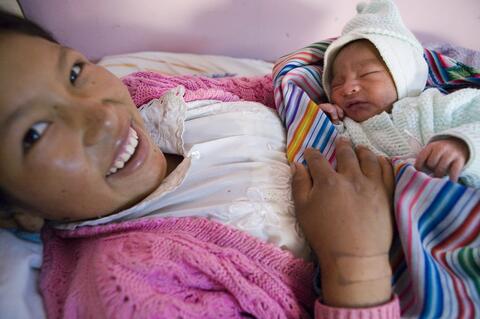
According to CARE, maternal and child nutrition during the first 1,000 days - from conception through the age of two - shapes a child's future. During this critical period, nutrition can have a measurable lasting impact on growth and brain development and prevent disease. CARE’s Window of Opportunity project (2008 - 2012) focuses on this time, using social and behaviour change communication (SBCC) activities as part of its strategic approach to bring about improvements in maternal dietary and infant and young child feeding practices. Programming is being supported through a central grant to CARE USA (United States) which provides resources to these countries: Bangladesh, Indonesia, Nicaragua, Peru, and Sierra Leone.
SBCC activities are an essential component of the Window of Opportunity project. SBCC is the term used to describe the use of communication activities to bring about change - changes in individual behaviour, related social norms, collective actions and for creating an enabling environment. The Window of Opportunity’s SBCC approach is largely based on the socio-ecological model for change. This model describes how individual behaviours are influenced by multiple interdependent individual, social, and environmental factors, emphasising the need for programmes to implement strategic complementary communication activities using a wide variety of mutually reinforcing communication channels. Window uses targeted and tailored communication interventions to facilitate change, address barriers, and reinforce key messages at each level: caregiver, household, community, and facility. Window’s SBCC activities include a mix of mass media, traditional or folk media, and interpersonal communication activities, with the mix being different for each of the five countries.
CARE explains that the success of public health programmes - especially those that promote behaviour change - rests on effective communication. Communication in health programming is effective when it is well planned, the audience characteristics are studied, the knowledge and skills being offered are responsive to the needs of the intended audience, and activities are being monitored so that improvements can be made. Before project implementation, each Window country utilised a systematic planning process, defining optimal practices and behaviours and identifying audiences and communication activities at each level. Window’s monitoring and evaluation approaches measure both communication process indicators (e.g., number of materials produced and/or distributed) and behaviour indicators (e.g., indicators for assessing infant and young child feeding practices). In order to monitor progress, Window developed and uses observation checklists, supervision tools, and reporting forms. According to CARE, Window’s monitoring approaches have proven to be easy to use and widely accepted by country staff. Preliminary results from Window's final evaluations indicate significant improvements in maternal dietary and infant and young child feeding practices and nutrition.
Children, Health, Nutrition.
According to CARE, SBCC activities are an essential programme component for improving maternal, infant, and young child nutrition. Improving key practices requires change at the individual, household, and community levels, and in services for mothers and families - all of which must be supported by an enabling environment. The Window of Opportunity project works to ensure that consistent, locally adapted, actionable messages are reinforced at each level in order for interventions to be more likely to result in significant improvements in the short term and sustainable progress in the long term.
For more information or project resources, click here or see the contact information, below.
Emails from Allison Prather and Lenette Golding to The Communication Initiative on June 14 2011 and April 17 2012, respectively; and Window of Opportunity website, June 28 2011.
- Log in to post comments