










































Why We Use Media for Development: BBC Media Action Microsite for Development and Media Practitioners
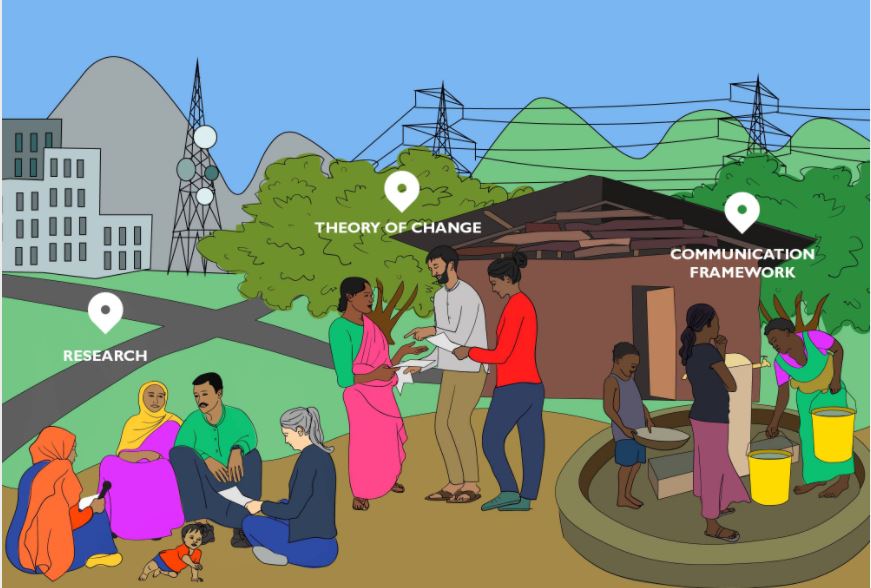
This BBC Media Action micro website "...outlines our approach to media for development projects and uses examples of our work around the world to show how media is vital in enabling people hold power to account, improving public health and helping communities prepare for and deal with major emergencies."
This website is a digital guide for development and media practitioners that enables the organisation to offer advice on "designing and delivering projects that will have a lasting impact by using the power of media to reach millions of people." It is structured with three sections outlining their approach, describing samples of their work, and sharing resources.
The approach section describes: research to establish the issue and the focus audience, find out about the needs and media use of the audience, and set up a feedback loop. It describes fundamental questions to help tailor a theory of change to establish: how and why the project will make a difference, how media can be most effective, and who might be the project partners. It then describes establishing the communication framework and connects to the BBC Media Action data portal of reports and survey data from five years of research.
The "Our Work" section links to project examples within the four themes of health, governance, resilience, and humanitarian work. For example, the humanitarian section describes a project in radio established in the aftermath of the Nepal earthquake of April 25 2015 and a project begun in 2014 to provide information to Syrian refugees in the Middle East, particularly in Lebanon. The resilience section uses examples of Radio Tanzania programming to help farmers with changing weather patterns and reality TV in Bangladesh that helps people figure out how to cope with recurring extreme weather.
The resources include links to: projects; resources on how media and communication create change; what BBC Media Action has learned; and online courses and resources. The section BBC Media Action Learning combines video and links to research papers discussing results of their project research and evaluation. The change section offers a group of videos on media and behaviour change, working with local partners, making health communication effective, engaging influencers, creating safe space for political discussions, curbing corruption, influencing politics in "fragile" countries, and helping hold leaders to account.
Online courses and resources includes, for example: a link to the iLearn site that that has a radio managers guide to mentoring; a link a toolkit for advice on gender in media for project managers and programme makers "to equip users to challenge gender stereotypes and serve both men and women equally"; and a link to The Pulse, a toolkit for health communication and another to Lifeline Training for delivering "essential information effectively in humanitarian crises."
Publishers
Email from Caroline Howie to The Communication Initiative on July 31 2017.
- Log in to post comments