










































Why We Post
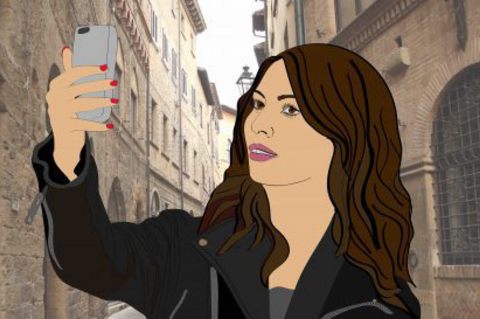
Why do we post on social media? Is it true that we are replacing face-to-face relationships with on-screen life? Can we assume that social media is the same for a female factory worker in China as a male information technology (IT) professional in south India?
Completed in 2017, Why We Post was a 5-year global anthropological research project on the uses and consequences of social media. A team of 9 anthropologists were assembled at the department of anthropology at University College London (UCL), each of whom then spent 15 months carrying out an ethnography in a small town site. These included a factory town and a rural town in China, a town on the Syrian-Turkish border, low-income settlements in Brazil and Chile, an IT complex set between villages in South India, and small towns in England, Italy and Trinidad. The idea is that long-term ethnography and participant observation enables researchers to build deep relationships with the people they study, providing access to intimate areas of life such as private spheres of social media, understood in the full context of offline life.
As part of this process, the research team developed theoretical ideas and original insights for understanding social media, including "Scalable Sociality" as a new definition of social media. By this, they mean that social media provides greater control in communication over both the degree of privacy and size of group, when compared with previous forms of communications media. They applied the theory of Polymedia, which describes how media choice has become more of a social and moral issue instead of one of cost and access. Finally, they extended our understanding of what it means to be human with the Theory of Attainment, which includes all the things we have the capacity to be in the future. So a new technology such as social media simply allows us to attain something of that capacity, which was already latent in merely being human.
The team tried to bring balance to debates that reduce analysis of social media to whether it is a "good" or "bad" thing by showing how developments are almost invariably contradictory, such as being both good and bad for education, or representing movement towards and away from individualism. These discoveries are detailed on the Why We Post website, which shows how the cross-cultural scholarship make those contradictions clear.
As part of the project's dissemination plan, the research team sought to find new ways of turning global research into global education. Namely:
Based on their work, the team created a free 5-week online course, which explores the impact of social media on a wide range of topics including politics, education, gender, commerce, privacy, and equality. The course offers a new definition of social media which concentrates on the content posted, not just the capabilities of platforms. It examines the increasing importance of images in communication and the reasons why people post memes, selfies, and photographs. The Why We Post course on FutureLearn runs three times per year. Translations of this course can be found on UCLeXtend in the following languages: Chinese, Italian, Hindi, Portuguese, Spanish, Tamil and Turkish.
Titles in the Why We Post series, available as free PDF downloads and in low-cost print versions, include:
- How the World Changed Social Media - a comparative book about all the findings
- Social Media in an English Village
- Social Media in Southeast Turkey
- Social Media in Northern Chile
- Social Media in Industrial China
- Social Media in Rural China
- Social Media in Southeast Italy
- Social Media in South India
- Visualising Facebook - a book that contrasts the visuals that people post on Facebook in the English field site with those on the Trinidadian field site
- Social Media in Northeast Brazil (coming soon)
- Social Media in Trinidad (coming soon)
Many videos are available on the Why We Post's YouTube channel. See also Why We Post on Facebook.
Technology, Education
Funded by the European Research Council.
Why We Post website, UCL Press website, Why We Post blog, Why We Post's YouTube channel, Why We Post on Facebook - all accessed on June 28 2017. Image credit: Why We Post
- Log in to post comments