










































Wazazi Nipendeni Safe Motherhood Campaign
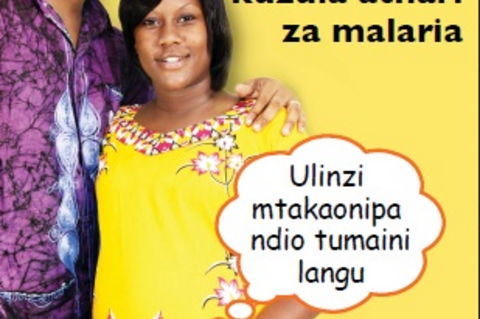
Launched in November 2012, the Wazazi Nipendeni (Love Me, Parents) Safe Motherhood Campaign seeks to empower pregnant women and their partners to take steps to achieve a healthy pregnancy and safe delivery. Through a mix of mass media, community, and interpersonal communication channels, the campaign promotes key behaviours needed to work towards the Campaign on Accelerated Reduction of Maternal Mortality in Africa (CARMMA), an African-Union initiated programme working towards safer motherhood. Wazazi Nipendeni is led by the Ministry of Health and Social Welfare Reproductive and Child Health Section, in collaboration with a wide range of partners, and was developed by the Johns Hopkins Bloomberg School of Public Health Center for Communication Programs (JHUCCP).
Wazazi Nipendeni integrates all safe motherhood health areas under one platform, including early and complete ante-natal care (ANC) attendance, malaria prevention, the prevention of mother to child transmission of HIV (PMTCT), individual birth planning, and safe delivery. Key channels include radio and television spots and programmes on national and regional stations, clinic posters, client materials, billboards, and other outdoor and promotional materials.
Wazazi Nipendeni emphasises the following key behaviours:
- Attend ANC within the first 16 weeks of pregnancy
- Attend ANC at least four times during pregnancy
- Test for HIV together with their partner
- Enrol in PMTCT services if HIV positive
- Receive 2 doses of sulfadoxine-pyrimethamine (SP) for the prevention of malaria in pregnancy
- Sleep under a treated net every night
- Make an individual birth plan
- Deliver at a health facility with a skilled provider.
An SMS component is an integral part of the Wazazi Nipendeni campaign. Pregnant women, mothers with babies up to 16 weeks, and their supporters can send the word "mtoto" to the number 15001 free of charge. After registering, users receive a range of free messages covering all aspects of safe pregnancy and early child care. All messages have been approved by the Ministry of Health and Social Welfare and match the specific month or week of pregnancy or age of the baby. The service offers the registrants time sensitive reminders for ANC visits, SP doses for prevention of malaria in pregnancy, as well as information on testing for HIV, nutrition, individual birth planning, and much more.
The campaign has also produced a song that is being aired on stations nationwide.
Visit the Johns Hopkins Bloomberg School of Public Health Center for Communication Programs (JHUCCP) website to download posters and watch television spots.
Maternal and Child Health
According to Johns Hopkins Bloomberg School of Public Health Center for Communication Programs, while maternal, newborn, and child health (MNCH) has seen improvements in Tanzania in the last few decades, Tanzanian women still face an unacceptably high risk of preventable morbidity and mortality during their reproductive years. Tanzania's maternal mortality ratio remains high at 454 deaths per 100,000 lives births, as does its infant mortality rate, at 51 deaths per 1,000 live births. Tanzania has committed to improving MNCH through the Campaign on Accelerated Reduction of Maternal Mortality in Africa in Tanzania (CARMMAT), which recognises the importance of social and behaviour change communication in its efforts to save the lives of Tanzania's women and children.
The Campaign on Accelerated Reduction of Maternal Mortality in Africa (CARMMA) was launched in May 2009 by the African Union to trigger concerted and increased action towards improving maternal and newborn health and survival across the continent. The main objective of CARMMA is to expand the availability and use of universally accessible quality health services, including those related to sexual and reproductive health that are critical for the reduction of maternal mortality. The focus is not to develop new strategies and plans, but to ensure coordination and effective implementation of existing ones.
Ministry of Health and Social Welfare Reproductive and Child Health Section; National Malaria Control Program (NMCP); the National AIDS Control Program (NACP); the Health Promotion and Education Section; mHealth Tanzania Public Private Partnership; United States (US) Agency for International Development (USAID); the US President’s Malaria Initiative (PMI); the US President’s Emergency Plan for AIDS Relief (PEPFAR); Centers for Disease Control and Prevention (CDC); Johns Hopkins Bloomberg School of Public Health Center for Communication Programs (JHU·CCP); mHealth Tanzania Public Private Partnership; Jhpiego; Elizabeth Glaser Pediatric AIDS Foundation (EGPAF); Mwanzo Bora program; FHI360; Catholic Relief Services (CRS); CCBRT; Deloitte - Tunajali project; PLAN International; and Aga Khan Health Services.
- Log in to post comments