










































Trust, Equity and Local Action - Lessons from the COVID-19 Pandemic to Avert the Next Global Crisis
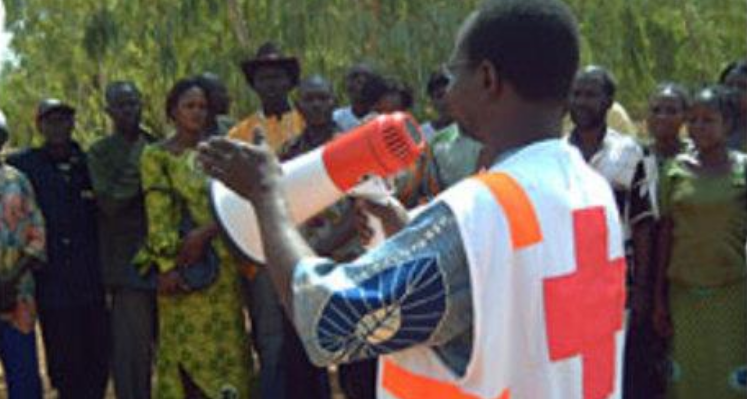
"The IFRC's experience with community health systems, including preparedness and community engagement, illustrates the vital importance of working at the local level and how effective community-based interventions were often the most effective during the COVID-19 pandemic."
No earthquake, drought, or hurricane in recorded history has claimed more lives than the COVID-19 pandemic, according to the International Federation of Red Cross and Red Crescent Societies (IFRC). A theme that emerged repeatedly was the importance of trust. When people trusted safety messages, they were willing to comply with public health measures; similarly, it was only possible to vaccinate millions of people in record time when most of them trusted that the vaccines were safe and effective. But the premise of this report is the IFRC and anyone responding to crises cannot wait until the next time to build trust. It must be cultivated through genuinely two-way communication, proximity, and consistent support over time. The report offers a variety of suggested actions to prepare more effectively for future public health emergencies.
Sources for the report included: multiple reports and case studies by IFRC and National Red Cross Red Crescent Societies; analyses by major health, development, and humanitarian actors; and academic research in fields including public health, disaster risk management, development, and humanitarianism.
This report explores the many ways in which preparedness ahead of COVID-19 was inadequate. For example, Chapter 2 in the report, which focuses on engagement of communities and local actors, takes a critical look at the fact that, during COVID-19, communities that needed help often did not get it. A key failure of preparedness was the limited capacity for community-based surveillance, which is known to be an effective way of detecting new disease outbreaks quickly but which had been under-resourced. There was also a lack of clear mechanisms for local actors to coordinate with local authorities and national health systems. Local actors were neglected in that they were not integrated into policy frameworks. With regard to the "risk communication" aspect of community engagement, responders have often failed to establish genuine two-way dialogues with communities. Centrally designed and rather anonymous messages about face masks, social distancing, and vaccination tend to be one-way and impersonal and can therefore easily miss core fears or misperceptions among communities. Furthermore, according to the report, when feedback has been elicited from communities, it has often been dismissed or ignored.
Case studies and analysis shared in this chapter highlight the need to:
- Integrate recognised and trained local actors into health systems;
- Include local actors in national health emergency preparedness plans for prevention, early action, and response;
- Work with communities to design, implement, and monitor health emergency preparedness plans for prevention, early action and response; and
- Develop meaningful two-way dialogues with communities about their health needs and concerns.
Lessons like these from the COVID-19 pandemic replicate and build on the lessons of epidemics like Zika and Ebola. In the case of the former, successful responses demanded very careful risk communication around sexual and reproductive health risks, an intense local approach to care and support, and intense mental health and psychosocial support. For instance, Cuba harnessed active community participation to help control the outbreak. The Ebola epidemic highlighted the importance of risk communication, contact tracing, and safe and dignified burials done by local actors. A 2020 review of Ebola outbreaks in Africa highlighted the importance of addressing socioeconomic and cultural factors if progress is to be made. In the COVID-19 pandemic, these elements were amplified and made more complex by the global scale of the emergency and by the many movement restrictions. Nevertheless, the lessons were similar, and actors like the IFRC network progressed in their understanding of these core lessons.
Overall, the report's chapters address 6 key activities that contribute to building preparedness:
- Strengthening prevention and preparedness at the local level;
- Leveraging the roles and capacities of communities and local actors through integrated community health systems;
- Building global solidarity mechanisms to ensure that pandemic response products reach all communities;
- Protecting communities against the socioeconomic impacts of public health emergencies;
- Collecting local data (e.g., social data) and harnessing it to take action (see chapter 5); and
- Strengthening legal preparedness for public health emergencies.
In the context of these activities, the report underscores the importance of the following elements in preparing more effectively for future public health emergencies:
- Trust, because pandemic countermeasures, including vaccines, public health information, and isolation measures, will not be accepted unless there is trust. Top-down social control measures like lockdowns and vaccine passports, when implemented without trust and transparency, often lead to polarisation and resistance. A narrow focus on increasing communication campaigns and countering misinformation may even backfire in situations of political and social unrest, or discrimination. Trust can only be built through:
- Proximity: People trust people they know, such as local actors.
- Education: People trust what they understand, via health literacy programmes.
- Listening: People trust those who listen to them and act on their concerns, such as trained community engagement specialists who gather feedback and analyse it.
- Access to services: People trust those who address their needs, including their basic health and social protection needs.
- Ownership: People trust measures they feel are "theirs" and that they are consulted on.
To that end, the report urges governments to promote:
- Community ownership of emergency preparedness plans: Design, implement and monitor whole-of-society and whole-of-government preparedness plans that leverage the capacities and knowledge of local actors and communities.
- Active listening and community engagement: Create or scale up meaningful, two-way community feedback mechanisms that record community concerns, needs, and suggestions, and collect and analyse them to adapt public health measures when possible and as needed.
- Access to services and education through stronger community health systems that include all the actors, infrastructures, and services that promote community health, including programmes that address the social determinants of health.
- Equity, because pandemics thrive on and aggravate inequity and cannot be controlled until access to services and critical products, including vaccines, is guaranteed in law and available in practice. True preparedness requires helping everyone in society. It is therefore essential to bolster social protection programmes, foster inclusion, and achieve universal health coverage. Developing the supply side of pandemic response products, without addressing the demand side, undermines access and uptake, especially among the most vulnerable and hard to reach. There are many concrete, critical measures beyond access to pandemic response products that can help address inequities in pandemic preparedness by addressing the drivers of disease outbreaks and their differentiated impacts. The report urges the international community and domestic authorities to promote equitable access to information, to cite only one example.
- Local action, because governments need to leverage and support local action to build resilience, trust, and agile health systems. Local action harnesses the collective knowledge and actions of a community - for example, people often know their neighbours and are conscious of who is most vulnerable. Local actors are on the front line, meaning they are well placed to achieve real change. Domestic authorities can leverage and support local knowledge and capacities by:
- Integrating recognised and trained local actors into domestic emergency and health systems (e.g., through task shifting - the transfer of non- medical but health-related tasks to trained local actors);
- Providing trained and recognised local actors with the legal protections and facilities they will need to carry out their tasks; and
- Working with communities to design, implement, and monitor domestic emergency preparedness plans for prevention, early action, and response.
As reported here, key aspects of these concepts are being missed in policy discussions. For example: "There is insufficient focus on what is required to build trust: not just more communication from health systems and governments but true two-way communication with communities. Discussions of equity are too narrowly focused on access to vaccines and other pandemic response products, neglecting access to other services such as social protection. Finally, there is insufficient understanding of the key roles local actors can play in health emergencies and the forms of support they require in order to do so. While some countries have started to re-examine their legal and policy frameworks for pandemic prevention, preparedness and response, many more should be doing so to ensure that the COVID-19 experience - and other disasters - never happens again."
"The world is not ready for the next pandemic, warns the IFRC", January 30 2023 - accessed on February 17 2023. Image credit: IFRC
- Log in to post comments