










































Solidarity and Survival: The Story of South Asia - South Asia Press Freedom Report 2021-22
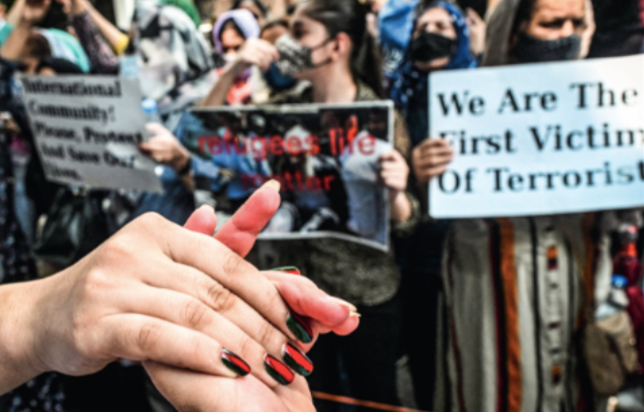
"The media in South Asia has borne witness to some watershed moments in history, taking severe beatings but also standing strong to speak truth to power."
The South Asia Press Freedom Report (SAPFR) for 2021-2022 offers an analysis of the situation of press freedom and freedom of expression in eight countries in the South Asian region: Afghanistan, Bangladesh, Bhutan, India, Maldives, Nepal, Pakistan, and Sri Lanka. Published annually and in its 20th year as of 2022, the report examines the working conditions of journalists and is designed to function as an advocacy tool for media rights and freedom of expression in the region. In particular, the 2021-22 report highlights issues of sustainability, the stories of journalists in exile, and the battle being waged to maintain digital freedom as the media landscape transforms in the wake of the COVID-19 pandemic and due to political unrest in the region. The report is published by the International Federation of Journalists (IFJ) on behalf of the South Asia Media Solidarity Network (SAMSN) with support from the United Nations Educational, Scientific and Cultural Organisation (UNESCO), European Union (EU), Norsk Journalistlag (NJ), and the National Endowment for Democracy (NED).
The report, which is available in summary format and as an extended interactive online version, offers an overview of press freedom in the region, as well as the following separate country reports:
- Afghanistan [PDF]
- Bangladesh [PDF]
- Bhutan [PDF]
- India [PDF]
- Maldives [PDF]
- Nepal [PDF]
- Pakistan [PDF]
- Sri Lanka [PDF]
Three special sections analyse the following dominant themes across all countries:
- Media Sustainability: Sink or Swim
- Away From Home: Journalism in Exile
- The Battle for South Asia’s Cyber Space
Overall, the report for 2021-22 captures a period of major political and economic upheaval, from the takeover of Afghanistan by the Taliban in August 2021 to the democratic protests against the Sri Lankan government in April 2022. The country chapters also highlight rising issues of impunity for crimes against journalists, the introduction of stringent media laws, and challenges related to media sustainability, digitalisation, and gender-based violence in the media. The report also shows that, despite these challenges, the strong and consistent work of unions and press freedom organisations across South Asia has resulted in a number of positive achievements that have worked to better protect the safety of journalists and their rights at work. The latter is highlighted in the online version through interviews with leaders of media unions and associations, who share their experiences and key learnings from the year under review.
The online version also contains a full list of jailed and detained journalists in South Asia and an IFJ mapping of media rights violations across the region by UNESCO Journalists' Safety Indicators (JSIs). In brief, a total of 210 cases of media rights violations were recorded in the period covered by the report, including 23 journalist lives lost. 131 media workers were detained or jailed in South Asia, a dramatic increase on the 63 arrests recorded this time last year and evidence of authorities' increasing propensity to silence critical reportage through intimidation, interrogation, and detention.
28 (PDF summary report)
UNESCO website and Reliefweb website on July 19 2022. Image credit: Sajjad Hussain/AFP
- Log in to post comments