










































A Social and Behavioral Research Agenda to Facilitate COVID-19 Vaccine Uptake in the United States
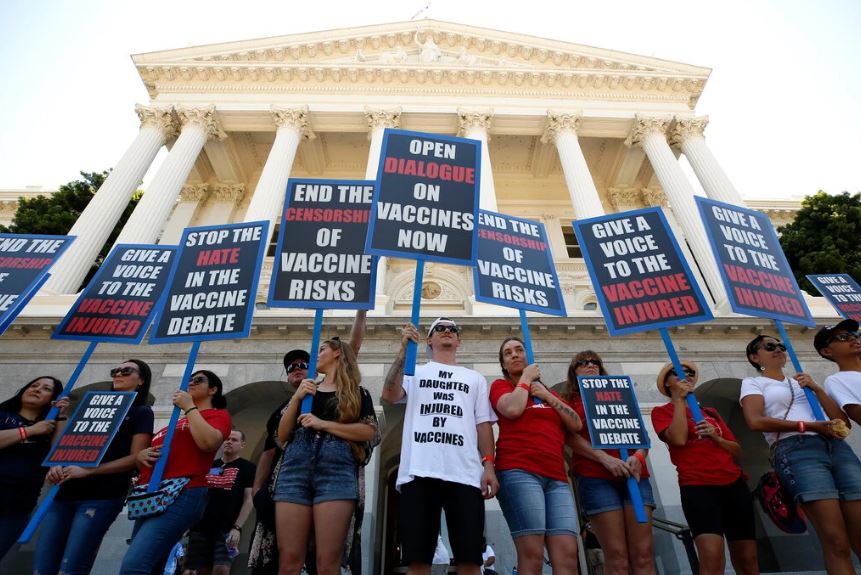
Texas State University (Brunson); Johns Hopkins Center for Health Security (Schoch-Spana)
"Apart from scientific facts (eg, immunity), what alternate reasoning could prompt vaccination? Being free to return to work or worship more quickly? Adhering to social and cultural norms (eg, altruism, collective obligation)? Lowering risk for vulnerable loved ones?"
To facilitate the development and dissemination of a vaccine to help bring an end to the COVID-19 pandemic, the United States (US) government has committed over US$10 billion for Operation Warp Speed, a public-private partnership. However, past vaccination experience in routine and crisis contexts demonstrates that the assumption that developing a safe and effective vaccine is sufficient for eradication of a disease is flawed: Not all segments of the public may accept a vaccine; uneven access to vaccines could amplify social and economic disparities and concerns about racial bias; and anti-vaccination (anti-vax) sentiment could be exacerbated. Thus, in April 2020, principal investigators from the Johns Hopkins Center for Health Security and the Texas State University Department of Anthropology convened the 22-person Working Group on Readying Populations for COVID-19 Vaccine, with support from the National Science Foundation-funded CONVERGE Initiative. One of the key products of this group was a research-setting agenda that is meant to identify key ethical, empirical, and methodological gaps related to COVID-19 vaccine uptake. This article summarises the agenda.
The agenda was developed through: literature reviews on vaccination, pandemic planning, and health crisis communication; an assessment of current news and social media trends about COVID-19 vaccines; and interviews with each working group member focused on their expertise in areas such as anthropology, bioethics, bioinformatics, communication, disaster medicine, epidemiology, history, political science, public health, sociology, and vaccinology.
As the working group notes, readying the US population for COVID-19 vaccination is a complicated task, posing communication-related and social and behavioural challenges to future COVID-19 vaccination campaigns:
- Many technological uncertainties exist that complicate planning efforts and explanation to the public.
- Communication challenges related to vaccine production and safety are made even more difficult by the pandemic situation. For example, pressures to make COVID-19 vaccines widely available on an accelerated basis may raise concerns about safety and effectiveness.
- The pandemic is occurring in a social moment in the US where partisan, racial, and other divisions run deep. For example, inconsistent messaging about COVID-19 risk and its mitigation have fostered highly divergent threat perceptions that are further exacerbated by disinformation and misinformation.
In consideration of these challenges, this research-setting agenda proposes the following lines of inquiry to improve 3 core components of COVID-19 vaccination planning while adding a cross-cutting objective: advancing equity and solidarity:
- Allocate: Facilitate community engagement in prioritisation - Access to COVID-19 vaccines will likely be limited at first, and consequently prioritised for certain groups such as essential workers. Lack of vaccine access was a concern during the 2014-16 Ebola outbreak in West Africa; preexisting socioeconomic inequalities and inequalities in healthcare access can further exacerbate such concerns. According to the working group, community input on allocation decisions can foster greater trust in authorities and feelings of ownership and understanding of decisions - ultimately strengthening the intent to vaccinate. In listening to communities around allocation, questions need to be asked, such as: "How can traditionally face-to-face public engagement methods (eg, people-centered design, deliberative democracy, principled pluralism) be modified to work in an environment of physical distancing and uneven access to communication technologies so that they remain inclusive and retain known positive effects?"
- Deploy: Meet people "where they are" - Because governmental health and human service delivery that responds to community priorities and needs has been shown to increase vaccine acceptance, the working group suggests that personnel working toward a comprehensive, inclusive COVID-19 delivery plan ask and seek to answer the following:
- How have local health agencies previously overcome vaccine hesitancy in crisis contexts, especially among medically and socially vulnerable persons?
- Can embedding COVID-19 vaccine access within a broader system of services (e.g., food security), trusted institutions, or familiar places that people frequent strengthen acceptance and/or reduce barriers for subsequent doses?
- Can less trained, yet trusted personnel deliver vaccines successfully to groups wary of authority figures?
- Which partnerships with mid-level entities (e.g., United Farm Workers) can reach non-healthcare essential workers, many of whom are from disproportionately affected communities?
- What would individuals and groups seeking out COVID-19 vaccination perceive as "safe" places (e.g., absence of immigration officials)?
- Which partnerships with national organisations representing racial/ethnic minorities can provide input and collaboration?
- Communicate: Inform communities and build trust - Novel vaccine technology, particularly that which uses fast-tracked research and development, risks fueling public concern. Likewise, erroneous associations between adverse events and vaccination and longstanding mistrust between communities - especially marginalised communities - and medical/public health authorities could complicate the public's perceptions of COVID-19 vaccines' safety. In that light, setting public and provider expectations could involve, for example, readying people for reports of potential adverse effects while educating them that not all observed effects are attributable to the vaccine. In general, health communicators face the challenge of engaging, educating, and empowering audiences with diverse beliefs and life circumstances. Speaking meaningfully about vaccines is particularly difficult, and yet important, considering that vaccine misinformation abounds in social media. There, users encounter disproportionate negative reports and images and can be moved more by personal stories of adverse effects than scientific facts. In this context, the working group stresses the need to listen to and learn about specific COVID-19 vaccine-related hopes and worries, and to track these sentiments over time and within particular communities. Such a strategy could enable tailored messaging that addresses specific aspirations and fears, especially of marginalised groups. Authorities are also advised to identify and work with trusted national, state, and community spokespersons (e.g., religious leaders, popular personalities) to counteract the inadvertent or deliberate misinformation common in social media.
In conclusion, the working group calls on researchers to get to work on the topics and questions presented in this article. "Unless this critical social and behavioral research is completed before COVID-19 vaccines are produced, we fear that the subsequent vaccination campaign will be less than hoped for and perhaps insufficient to stop the disease and allow a return to routine social and economic activities."
Health Security, Volume 18, Number 4, 2020. DOI: 10.1089/hs.2020.0106. Image credit: Pedroncelli/Associated Press
- Log in to post comments