










































SBCC Summit 2016 CommTalk: Using Serial Dramas To Face Ebola
“In public, people did not know who to trust, people did not know who was safe, and who wasn’t safe. The messages we were getting initially were a lot and very confusing…”
This CommTalk took place at the First International SBCC (Social and Behaviour Change Communication) Summit in February 2016 in Addis Ababa, Ethiopia. The CommTalks at the Summit were 10-minute "TED Talk" like presentations that focused on experiences from the field, and presented an opportunity for organisations to share their innovations, successes, challenges, and lessons learned. In this video recording of one of the CommTalks, speaker Hassan Arouni, Senior Production Manager at BBC Media Action, Sierra Leone, talks about the use of serial dramas to address Ebola.
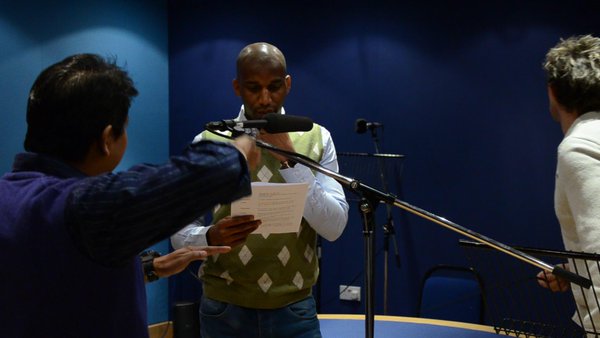
Hassan Arouni specifically talks about the mini drama, Mr Plan-Plan and the Pepo-oh, which was designed to affect behaviour change related to the Ebola outbreak in Sierra Leone. Aourni explains that as there was a lot of fear within communities, as well as conflicting messages, there was a need to come up with something simple, that resonated with the people, and that entertained and reflected the real situation. In addition, instead of telling people what to do, the programme aimed to inspire people to come up with their own plans on how to deal with Ebola. The programme achieved this by offering information and by encouraging people to discuss, plan, and take action to protect themselves and their families.
The drama series did this by introducing a central character called Mr Plan-Plan, a trader who goes around selling ideas for plans and giving information about Ebola. The CommTalk highlights how the radio drama was broadcast on radio and was taken into communities by religious leaders and social mobilisers to help facilitate difficult conversations around Ebola prevention. Radio producers were also trained to facilitate discussions within communities which could then be broadcast in order to stimulate more discussion and ideas.
Arouni explains that BBC Media Action did a survey following the first weeks after the drama was rolled out. It showed that mindsets had changed - people were not just giving in and succumbing to Ebola, instead they were discussing their plans and taking action.
Based on this experience, Arouni offers the following key message for SBCC practitioners:
- Allow people to come up with a plan on their own as this empowers them to take action.
- In order to bring about change, it is important to make a drama that can be further used and appropriated by the community. This can be applied to all health issues such as breastfeeding, malaria, or diseases like HIV.
The International SBCC Summit titled “Elevating the Science and Art of SBCC” was organised by the Health Communication Capacity Collaborative (HC3) and the Federal Ministry of Health of Ethiopia and focused on topics, such as HIV, tuberculosis, malaria, family planning/reproductive health, water, sanitation, the environment, gender and more.
Click here to listen to an episode of Mr Plan-Plan and the Pepo-oh.
Youtube website on April 22 2016.
- Log in to post comments