










































Reporting the Climate Crisis: A Handbook for Caribbean Journalists
"...it is the responsibility of journalists to make sure that the findings which emanate from the science community gain traction in the broader public and that climate change gets the coverage it deserves." Saadia Sanchez-Vegas, Director, United Nations Educational, Scientific and Cultural Organization (UNESCO) Cluster Office for the Caribbean
The purpose of this publication is to improve the quality and quantity of climate change coverage across the Caribbean. Designed to equip journalists with the necessary information on climate change in the sub-region, the handbook proposes possible strategies and angles to convey the magnitude of the climate challenges facing the Caribbean Small Island Developing States (SIDS).
In particular, it seeks to improve the knowledge and skills of journalists to explain and disseminate information on the science behind climate change and the measures that need to be taken to mitigate and adapt to climate change and increase resilience. The handbook, therefore, focuses on the science of climate change, international and regional policies, the impacts on key sectors of the economy, and the broad developmental challenges that climate change will pose in the region. It offers information to allow journalists to understand the severity of the issue and to track climate-change-related trends over a sustained period of time.
The handbook includes the following sections:
- Preamble: Key Definitions: offers definitions of key terms such as mitigation, adaptation and climate variability.
- Chapter 1: Global Consensus - Causes and Manifestations of Climate Change: examines the various natural and man-made causes of climate change and offers six primary manifestations of climate change, including changes in climate, sea-level rise, and melting sea ice.
- Chapter 2: Caribbean Climate - The Past, Present and Future: looks at past trends and changes in rainfall patterns, temperature, sea-level rise, and extreme weather conditions caused by climate change (hurricanes, floods, etc.) to allow for the tracking of trends and future comparisons.
- Chapter 3: Coverage of Hazards - From Phenomena to Disasters: covers modern approaches to managing disasters, such as incorporating disaster risk management (DRM), building resilience, promoting local solutions, and fostering inclusion.
- Chapter 4: Socio-Economic Impact: discusses inherent circumstances that make the Caribbean particularly vulnerable to climate change, such as limited size and isolation, limited natural resources, and low economic resilience. In addition, it looks at the impact climate change will have on different economic sectors, such as agriculture, transportation, manufacturing, tourism/hospitality, etc.
- Chapter 5: Global Responses: outlines different global organisations and agreements that are in place to offer support in preventing and responding to the impacts of climate change. These include the Global Framework for Climate Services (GFCS), the Global Environmental Facility (GEF), and the Paris Climate Agreement.
- Chapter 6: Regional Responses - Key Agencies and Services: describes regional agencies that work to support the Caribbean islands in their climate response work, such as the Caribbean Community Climate Change Centre (CCCCC) and the Climate Studies Group, Mona (CSGM).
- Frequently Asked Questions (FAQs): lists questions and answers to help clarify some of the main issues around climate change.
The creation of this handbook was funded by UNESCO.
Publishers
52
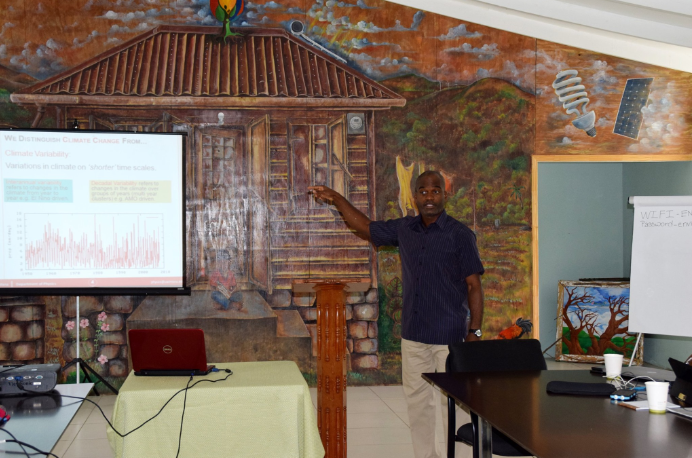
Submission from Wesley Gibbings to The Communication Initiative on February 18 2021. Image credit: Association of Caribbean Media Workers via Facebook
- Log in to post comments