










































Reporter's Guide to the Millennium Development Goals
"...[J]ournalism has the power to change lives. So the decision to commission this book was critical given the urgency with which the media must re-engage with social aspects of development."
This guide for journalists and editors writing about human development shares advice on how to report effectively on development-related issues. These include core Millennium Development Goals (MDGs) themes - such as poverty, gender equality, and education - and newly acknowledged roadblocks to progress, such as corruption and lack of government transparency. Twenty-one journalists across 6 continents contributed to this International Press Institute (IPI) guide.
In Part One, journalists will find an overview of the history and structure of the MDGs, in addition to a list of the MDGs. Part Two contains contributions from all 5 UN (United Nations) Regional Commissions, describing the current state of the MDGs in their respective region and offering advice as to how the press can improve coverage. Concrete advice for covering a range of MDG-related topics can be found in Part Three, written by journalists with experience covering stories that impact communities across the globe. In Part Four, the Organization of the Petroleum Exporting Countries (OPEC) Fund for International Development explains why the organisation considers "energy poverty" to be the missing MDG, and the United Nations Development Programme (UNDP) discusses the future of the MDG agenda. Journalists will find in Part Five examples of award-winning development coverage to serve as inspiration when crafting their own stories. Finally, in Part Six, 4 journalists from developing countries narrate their personal experiences and challenges in reporting on the MDGs and express why such work is critical to societal progress.
"While the guide comes just at the right time to inspire stories with the 2015 date in mind, it will also provide invaluable for the post-2015 development agenda as well."
Altogether, this guide is intended to inspire and encourage reporters and their editors to give development stories higher priority on newspaper pages, airwaves, and the internet.
Publishers
English, French, Portuguese, Spanish
191
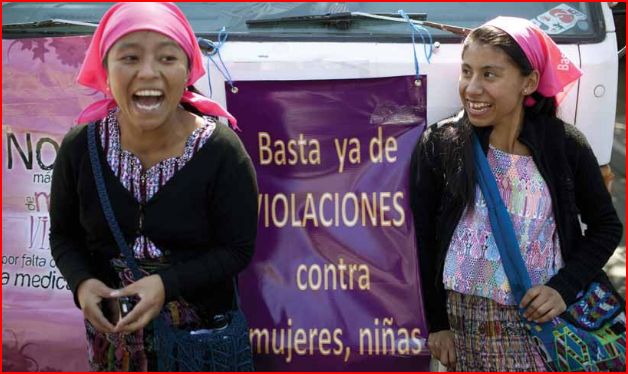
TRRAACE Electronic Newsletter N° 183, February 22 2014; and email from Helena Soares to The Communication Initiative on March 18 2014. Image caption/credit: Indigenous women laugh during a march to commemorate International Women's Day in Guatemala City, Guatemala in March 2013. The sign reads, "Stop attacks against women." EFE/Saúl Martínez
- Log in to post comments