










































Polio Eradication and Endgame Strategic Plan 2013-2018
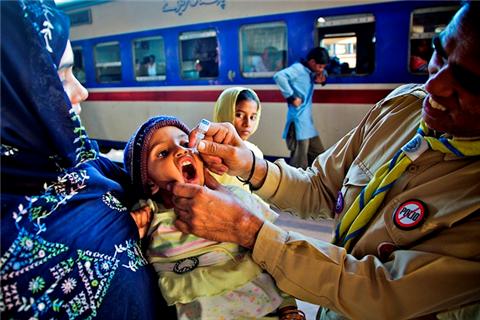
The Polio Eradication and Endgame Strategic Plan 2013-2018 is a comprehensive, long-term strategy that addresses what is needed to deliver a polio-free world by 2018. The plan addresses the eradication of all polio disease, whether caused by wild poliovirus (WPV) or circulating vaccine-derived poliovirus, while planning for the backbone of the polio effort to be used for delivering other health services to the world's most vulnerable children. It was developed by the Global Polio Eradication Initiative (GPEI) in consultation with national health authorities, global health initiatives, scientific experts, donors, and other stakeholders in response to a directive of the World Health Assembly (WHA).
These consultations led to the following strategic lessons:
- While the core principles of eradication are global, and the vast majority of polio-endemic countries stopped transmission within 2-3 years of starting oral polio vaccine (OPV) campaigns, the tactics needed in the remaining countries must be carefully tailored to adapt to a range of factors (such as has been reflected in the emergency action plans being implemented in each endemic country).
- Technological innovation cannot overcome gaps in programme management and community engagement: Some areas, such as India and Egypt, pose challenges to stopping poliovirus transmission due to high population density, poor sanitation, and a very high rate of infection. "The new monovalent OPV proved sufficient to quickly stop transmission in Egypt. However, the broader application of this new technology did not suffice in the other endemic reservoirs, which faced challenges in basic management and community engagement."
- A combination of innovations tailored to the country context can deliver success in even the most challenging conditions: India's success highlighted the combination of best practices to ensure polio vaccination campaigns of the highest quality to stop transmission in the remaining reservoirs. One element was a "massive and well-managed social mobilization effort", as well as "a mass increase in human resources at the district and sub-district levels."
It is noted that the most serious implementation risk is the inability to operate and reach children in areas of insecurity, such as in Pakistan and Nigeria - where the GPEI experienced tragic losses of life (on the part of vaccinators); this "poses a new and real threat to the programme as of 2013. However, the leaders of Afghanistan, Nigeria and Pakistan remain fully committed at all levels to stop the transmission of polio in their respective countries, and efforts are under way to address the security challenges. The GPEI has developed an overarching framework for insecure areas that is being tailored to each setting." Basic elements of the framework include:
- Reduce the exposure of the programme and vaccinators to potential threats by holding campaigns that are of shorter duration or lower profile.
- Enhance coordination between civilian and security services to inform local risk assessments, integrate these into operations plans and, where necessary, provide security to improve the physical safety of vaccinators and facilities.
- Improve local community demand to increase access to vaccination and basic health services through a combination of awareness-raising activities related to the disease, its consequences and its prevention, and, where helpful, by coupling OPV with the delivery of other services/interventions.
- Step up advocacy by international, national, and local Islamic leaders to build ownership and solidarity for polio eradication across the Islamic world, including for the protection of children against polio, the sanctity of health workers, and the neutrality of health services.
- Reduce the spread risk from insecure areas through measures such as intensive vaccination in surrounding areas and the vaccination of travellers.
This framework will be regularly assessed, and further measures will be introduced in any areas with continued transmission after the end-2014 working target date of stopping transmission.
Looking forward, it is noted that "[c]areful planning is essential to ensure that lessons learnt during polio eradication, as well as the assets and infrastructure built in support of the effort, are transitioned responsibly to benefit other development goals and global health priorities."
Click here to download the 96-page report in English in PDF format.
Click here in order to access a fact file and executive summary in various languages, as well as related resources.
Click here to read an analysis piece on the plan, published in The Lancet.
GPEI website, May 28 2013. Image credit: United Nations Children's Fund (UNICEF)
- Log in to post comments