










































Living Conditions: The Influence on Young Children's Health - Early Childhood Matters No. 118
Image
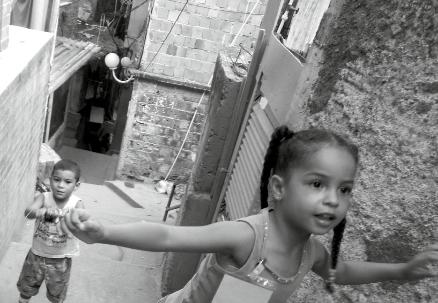
SummaryText
This edition of Early Childhood Matters looks at the link between children's living conditions and their health and development and works to identify what can be done. It includes studies done in: Uganda, Israel, Brazil, Peru, India, and Europe and projects on advocacy, community construction, community participation, clean air conventions and initiatives, and play space creation.
Some communication-related aspects of these articles include the following:
- In "Recognising the importance of the living conditions children grow up in", Selim Iltus lists the following as reasons the links from living conditions to child health and development outcomes are unrecognised: 1) "children’s well-being is usually assessed through established sectors such as education and health..."; 2) "there seems to be no global organisation or network that specifically focuses on children’s physical environments..."; 3) "the lack of a coordinated effort to communicate the impact of physical factors on children’s health and development in an organised and holistic way." Community assessment through the Child Friendly Cities Self-Assessment tools can support community advocacy for children.
- In "Working meaningfully with communities to improve children’s physical environments in Uganda", Betty N. Walakira and Nalule Sarah describe how community-based projects can affect the health of children, and they emphasise collaboration between communities and government (local and central).
- In "How physical conditions in Israel’s unrecognised villages affect children’s health", Amny Athamny discusses the situation of children in "unrecognised villages" of Bedouins in Negev, Israel.
- In "Challenges and opportunities for new urban imaginations", Sudeshna Chatterjee presents, through the example of an intervention that did not improve the lives of slum dwelling children, the need for communication with parents and children when authorities intervene through slum development or rehabilitation projects.
- In "Household air pollution: a cause of lung disease among children", Ruth A. Etzel describers polluted air from cigarette smoke and solid fuel use as a threat to children at home. She names a number of conventions and guidance documents on tobacco use, a "Clean Cookstoves" initiative, and some World Health Organization evaluative initiatives as efforts towards protection, including the health of young children.
- In "Avoidable accidents: children’s injuries and their links to the social and family environment" Martín Benavides cites evidence on overcrowding and lack of supervision, as well as domestic violence, as sources of injury of children. "There are several clear policy implication from these studies. They show, for example, the importance of efforts to tackle overcrowded housing; improve regulations on use of public roads; clean up public spaces; address the effects of domestic violence and mental illness on mothers’ caregiving capacity; and improve supervision of children when their primary carers are otherwise engaged."
- In "A research and social mobilisation experience in a low-income Brazilian community", Alexandre Barbara Soares and Claudia Cabral describe a process of community mapping and surveys close to Rio de Janeiro, Brazil, and show how this process can lead to physical change through strengthening communities’ relationship with local authorities.
- In "Working with youth to improve the built environment for young children", Tim Cross details the organisation YouthBuild International, which, while working to improve community physical environment through construction, also trains young people from economically poor neighbourhoods to gain skills that make them employable in the construction industry.
- In this interview of Alexandros Tsolakis, "Improving living conditions for the Roma minority in Europe", Tsolakis emphasises "the importance of moving past a mindset of seeing the Roma as beneficiaries of a charitable process and instead looking for ways to use the housing issue to engage Roma communities in an economic process, creating opportunities for families to participate in the mainstream economy."
- In "Child-friendly cities - sustainable cities", Pia Björklid and Maria Nordström approach children’s access to public spaces and natural environments and state that it is critical for children to have a say in the decisions that shape their outdoor environments.
- In "The importance of access to nature for young children", Louise Chawla points out that even very small natural places with trees, grass, water, and soil can have a major impact.
Publishers
Publication Date
Number of Pages
29
Source
The Bernard van Leer Foundation website, July 18 2012. Image credit: Children of the Favela Santa Marta, Rio de Janeiro, Brazil
- Log in to post comments