










































Juvenile Justice Project
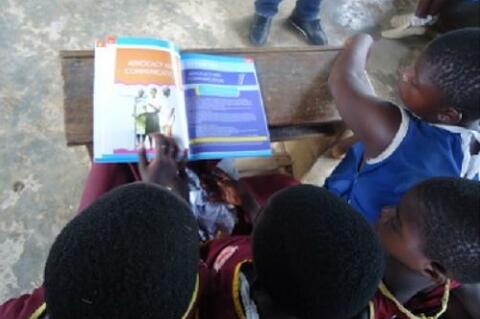
The Juvenile Justice Project was launched in 2011 by Child's Rights International (CRI), in collaboration with PLAN Ghana and the Ghana National Education Campaign Coalition to counteract injustices faced by juveniles and to protect the rights of children in conflict with the law. Activities include: training Child’s Rights Clubs on juvenile justice; development of a checklist based on national and international standards to assess juvenile institutions; establishment of child-friendly reporting systems at the community level; and sensitisation of the media.
According to CRI, the Juvenile Justice Act 554 of Ghana states that "the welfare of the juvenile shall be paramount in any matter concerned with the juvenile". However, this principle of welfare has not been clearly defined. This in turn has led to serious insufficiencies within the criminal justice arena in Ghana in relation to the enforcement of laws and regulations in relation to professional practices and service to children in conflict with the law.
As part of the project, in 2012 trainers were sent to visit schools and conduct sessions with previously established Child Rights Clubs, about juvenile justice.
Child rights clubs are child-led organisations established by CRI that aim to equip children with knowledge about their rights and responsibilities, provide children with a platform to realise their right to participate and address issues that affect them, and empower children to make a positive difference in their schools and adopted communities by doing service activities. The work on juvenile justice involved training the students on the contents and importance of national and international legal documents. The three focus documents were the United Nations Convention on the Rights of the Child (UNCRC), the Children’s Act 560 and the Juvenile Justice Act (2003). The participants examined the relevant content of these documents and discussed how this could affect them and their peers. The participants were able to apply their knowledge through a role-play activity in which they were able to act out real-life scenarios and see how this legislation, and implementation of this legislation can affect juveniles.
As a follow-up to the training on the Juvenile Justice Act, two-day workshops were held to train students on media engagement and participatory advocacy skills. This training was under the theme of "Preventing and Combating all Forms of Violence against Children and Youth in Juvenile Justice Institutions". The purpose of this training was to uncover the children’s skills and talents to enable to them to effectively advocate for their rights and rights of juveniles in justice institutions.
As part of the implementation of monitoring and accountable systems within justice institutions, a checklist for assessing the institutions was developed together with key stakeholders based on national and international standards. This checklist is primarily based on the contents of the Juvenile Justice Act 653 and the Children's Act 560 of Ghana as well as the United Nations Convention on the Rights of the Child. The checklist is to be used as the benchmark for periodic assessment of juvenile justice institutions such as the junior correctional centres and the remand homes.
To assist in the eventual implementation of juvenile-friendly reporting systems within juvenile correctional centres of Ghana, systems were first tested at the community level. The reporting system at the community level includes a locked metal box with Child’s Rights Club members voting on a safe and inviting position for the box. The children also elect an adult which they trust with the key to the box. The intention of these boxes is to collect the complaints of children concerning any observations, allegations, or suspicions of rights being violated within their community and household. The adult elected by the children is expected to read and respond to the reports brought forth by the children.
Four training sessions were conducted with journalists to encourage the protection and promotion of the rights of children and children in conflict with the law. Though there are professional codes of conduct that guide professionals in the media, little has been done in the area of child protection. To improve the content produced by journalists, they were trained about children's and juvenile's rights; issues of violations of children's and juvenile's rights and their consequences; the role of the media in protecting and promoting the rights of children and juveniles; and practical guidelines on how to report on children's issues.
Children's Rights
According to CRI, the rights of children are endangered throughout their entire contact with the law including their arrest, remand, court hearing, as well as their detention. CRI along with its collaborators has begun to counteract injustices faced by juveniles and protect the rights of children in conflict with the law. Lack of special training in child development and children’s rights combined with overworked staff often result in violent measures to maintain discipline. Children in justice institutions in Ghana are also vulnerable to violence due to the lack of segregation along the lines of age, size, and sex.
Child's Rights International , PLAN Ghana, and Ghana National Education Campaign Coalition
CRI-Ghana website and CRI-Ghana website on October 30 2013.
- Log in to post comments