










































Just Budgets Toolkit: Budgeting for Gender Equality and Women's Empowerment
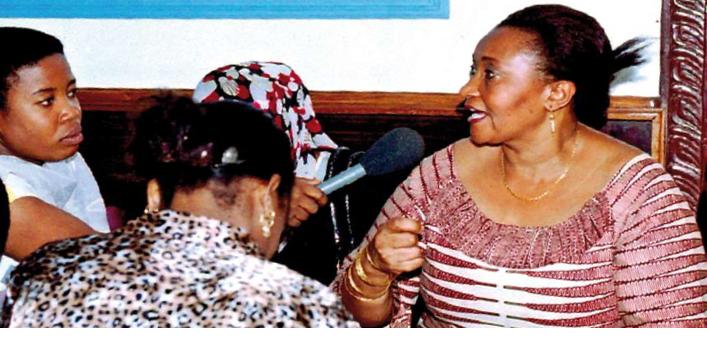
"GRB [gender-responsive budgeting] can play an important role in enabling women and other poor citizens to exercise their human rights and to increase government accountability to citizens. It can also help to ensure that development co-operation, increasingly flowing into partner countries as general budget support, responds to gender inequalities in society."
Developed by One World Action (which ceased operations at the end of October 2011) and made available in Spanish by Women In Development Europe (WIDE), this toolkit provides practical guidance to donors, governments, and civil society on strengthening accountability and gender-sensitive orientation within budget processes. Using a generic budget planning cycle, the resource identifies key questions that need to be tackled in order to put policy commitments into action.
In a chart-like format, the resource outlines the following stages - with specific questions and recommendations for each of these groups: donors, government, and women's organisations:
- Stage 1: Identification and Budget Preparation - Gender Aware Policy Appraisal and Gender Disaggregated Beneficiary Assessment [e.g., one recommendation for women's organisations: "Citizen-state engagement is key to effective gender budgeting. Be informed, participate and influence."]
- Stage 2: Commitment and Enactment - Gender Disaggregated Public Expenditure Analysis [e.g., one recommendation for women's organisations: "Identify key points of entry at various fora where donor commitment are discussed such as donor working groups."]
- Stage 3: Implementation and Monitoring - Gender Disaggregated Analysis of Impact [e.g., one recommendation for donors: "Regular consultation with social development advisors and gender working groups."]
- Stage 4: Audit and Assessment - Gender Aware Appraisal and Gender Responsive Budgeting [e.g., one question that government groups could ask: "Is there a framework/ process for consulting with civil society organisations for feedback?"]
This publication is a result of the workshop Just Budgets: Increasing Accountability and Aid Effectiveness through Gender Responsive Budgeting held in Johannesburg, South Africa, in March 2008. One World Action's work in Mozambique, South Africa, Tanzania, and Uganda showed that there are 4 essentials for achieving GRB: political will, Parliamentary oversight, technical capacity, and vibrant women's organisations.
Click here to access the resource in English in PDF format.
Click here to access the resource in Spanish in PDF format.
Publishers
English, Spanish
2
Emails from Natalie Giorgadze and David Fletcher to The Communication Initiative on July 26 2011 and January 9 2012, respectively.
- Log in to post comments