










































Jumping Hurdles: Access to HIV Health Services for Young Men Who Have Sex with Men and Young Transgender Persons in Asia and the Pacific
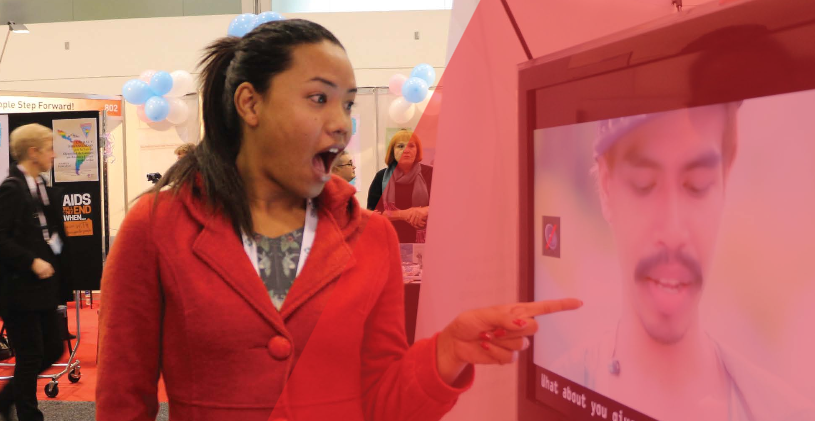
This discussion paper with accompanying video lays out some of the key ingredients for a comprehensive youth friendly healthcare package tailored to the context of countries in Asia and the Pacific region that is accessible and affordable to young men who have sex with men (MSM) and young transgender persons. Information in this paper was directly provided by 26 young MSM and young transgender women who participated in the Youth Voices Count (YVC) Third Regional Consultation in Bangkok, Thailand, in 2013. (More information about the youth-led YVC network is available under Related Summaries, below.) Participants in the consultation, whilst acknowledging the availability of HIV testing infrastructure in their countries, recognised that by and large this infrastructure is not poised to create a welcoming environment specifically for young MSM and young transgender persons to voluntarily access the services they offer. The barriers that prevent them from accessing services were discussed in detail, with the ultimate goal of providing recommendations to increase service uptake among young MSM and young transgender persons in the Asia-Pacific region.
Participants asserted that a health service friendly to young MSM and young transgender persons must offer a holistic approach to healthcare including a combination of physical and psychological spaces that are accessible, informative, sensitive, and welcoming of young MSM and young transgender persons in terms of 3 significant dimensions: availability of information, environment, and counseling. (On top of these, they expressed a demand for more community-based services that are youth friendly in the region.) The paper is organised into these 3 dimensions. In sum:
- Absence of information, especially about the testing service, was identified as a significant barrier that prevents young MSM and young transgender persons from accessing health services, irrespective of the fact whether they are friendly or not. Availability of information refers to detailed information about the service that could be easily accessed on different platforms prior to coming to the service. Availability of information with regard to the healthcare centre should include specific details on location, directions, maps, landmarks, nearest bus and train stations, and the different services it provides, including HIV testing. Information should be available online as well as at various locations where young people tend to gather. It is crucial that brochures or leaflets are not labeled with sexual orientation and gender identity but only imply that the health service providers welcome people of diverse gender and sexuality. Health service providers should implement different options to make an appointment with the healthcare centre, such as an online tool that can be used for chat, self-risk assessment, and making appointments to increase accessibility to young MSM and young transgender persons. However, since many may not have access to the internet, other mechanisms such as appointments via telephone or text messages should be made possible. Social media such as Facebook and Twitter could be strategically utilised to reach young MSM and young transgender persons with information.
- Environment is twofold: physical environment and psychological environment, both of which need to be interlinked to dispel fear and anxiety and create an inviting ambience. Many elements are discussed in the report. To cite only one example: The language that is used at the healthcare centre should be friendly to young MSM and young transgender persons. Certain terminology could be stigmatising and discriminatory; therefore, the staff should be regularly trained and updated. Proper personal pronouns should be used when addressing young MSM and young transgender individuals, since recognition would encourage them to be more involved in the process. Assumptions on one's gender identity and sexual orientation should be avoided. It is indispensable that the clients should be asked how they prefer to be addressed.
- Counseling, which is mainly divided into pre-test counseling and post-test counseling, also has two alternatives depending on the positive or negative test result of the client, providing a more comprehensive and practical approach following testing. Various suggestions are offered. For instance, ideally, a trained peer counselor who can identify and empathise with the client, that is, a MSM counselor for a young MSM client or a transgender counselor for a young transgender client, should conduct the pre-test session. Ideally, the young clients should be able to select their preferred counselor. In the case that counselors are not in the age range of the young clients, the counselors who conduct the sessions should at least have extensive experience working with young people of diverse gender and sexuality. Counselors who are more senior than the clients should be reminded not to lecture the clients and must not express judgmental attitudes towards young people engaging in risky behaviours or young people with gender non-conforming expressions.
Recommendations include:
For policymakers:
- "Remove the parental consent for young people, regardless of their age, marital status, sexual orientation, and gender identity, when accessing health services;
- Decriminalize consensual sex between two men;
- Decriminalize gender non-conforming and transgressed behaviors and expressions;
- Ensure that free and voluntary HIV testing and counseling, prevention, treatment, care and support services are provided to young men who have sex with men and young transgender persons at public healthcare centers that are free of stigma and discrimination by imbedding regular staff training, monitoring and evaluation of testing facilities into policies;
- Outlaw discriminatory practices on the ground of sexual orientation and behavior, gender identity and expression, and HIV status, especially at healthcare centers, youth centers, and homeless shelters;
- Implement programs that provide space and opportunity for young men who have sex with men and young transgender persons to associate with one another to discuss issues that affect them;
- Implement programs that build capacities on leadership and advocacy for young men who have sex with men and young transgender persons;
- Engage young men who have sex with men and young transgender persons meaningfully throughout policymaking processes from consultation to drafting stages;
- Include gender and sexual diversity, HIV, sexual and reproductive health and rights in comprehensive sex education provided at school.
For programmers:
- Engage young men who have sex with men and young transgender persons and incorporate their opinions in design and implementation of HIV testing, prevention, treatment, care and support services and related projects;
- Address sexual pleasures and condom use in HIV prevention programs through introducing techniques to enhance sexual pleasure while using condoms and lubricants and other practices that can minimize the risks of HIV transmission;
- Ensure that a holistic and inclusive health package is offered to young men who have sex with men and young transgender persons at the healthcare centers;
- Support studies that provide baseline data and information about young men who have sex with men and young transgender persons."
Named after the discussion paper, Jumping Hurdle is a video (see below) that visualises issues faced by young gay, bisexual, and transgender individuals in accessing HIV responses, followed by a series of recommendations on how healthcare settings can make their HIV services inclusive towards young clients. Aimed to be utilised as an additional advocacy tool to influence policymakers and health practitioners in the region, the animation was produced in collaboration with the Asia-Pacific Coalition for Male Sexual Health (APCOM). "The hectic, short-lived nature of knowledge exchange on online platform means that there are times, including for the advocacy effort, when we only have a brief opportunity to catch our target audience's attention. Producing the video version of [Jumping Hurdles] as an addition to its advocacy paper will dramatically leverage our commitment to increase the uptake of HIV testing among young gay and transgender people," explained Executive Director Midnight Poonkasetwattana.
YVC website, December 5 2016. Image caption/credit: "Youth Voices Count member at the International AIDS Conference 2014 in Melbourne, Australia". Lieu Anh Vu
- Log in to post comments