










































Implementing Effective Knowledge Management in Emergencies: A Case Study from Somalia WASH Cluster
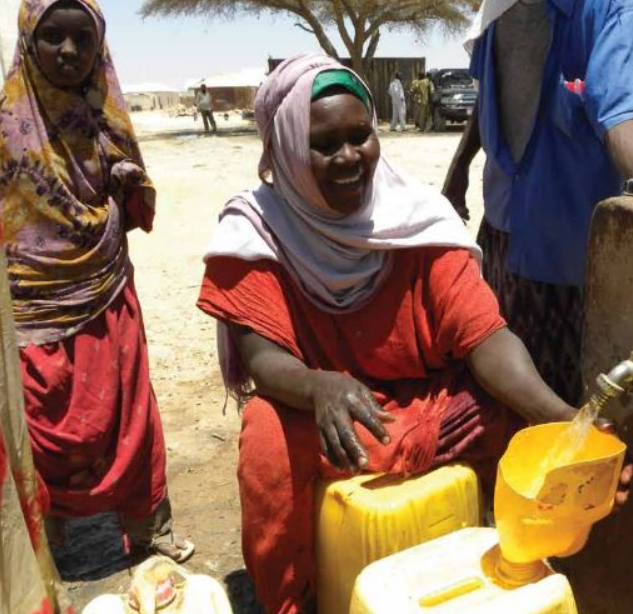
This 16-page learning paper by the Regional Emergency Cluster Advisor (RECA) project discusses the experience of the Somalia water, sanitation, and hygiene (WASH) Cluster and draws lessons on how an effective knowledge management system can be developed and implemented. The paper was produced to provide an example framework of a successful knowledge management system that can be adapted by other national WASH Clusters to support a predictable, effective, timely, and coherent WASH emergency preparedness and response. The paper concludes that practical knowledge management provides information, support, and clarity to field-level WASH practitioners and enhances the impact and effectiveness of humanitarian response.
According to the report, an effective knowledge management system makes key information available to all, regardless of the attendance of training, physical location, or time spent in the position. It provides transparency within the Cluster operation and retains information within the Cluster when turnover of members occurs. The knowledge management system of the Somalia WASH Cluster encompassed the following basic steps:
- establish a structure to provide transparent, representative decision-making on strategic issues and empower local decision-making for fast appropriate response;
- facilitate agencies and individuals to learn from each other at as local a level as possible and reach agreement on good practice;
- collate the agreed good practice into short and simple guides, relevant for use by the intended audience (generally, field-level WASH practitioners);
- disseminate the latest good practice documents by ensuring their easy access, regardless of the location of users;
- establish a clear version control (document management) system to support continual improvement of processes and their respective documents; and
- put mechanisms in place to receive feedback from users to maintain the relevance and usefulness.
By establishing this system, the Cluster ensured that relevant information was available to all stakeholders whenever and wherever needed in a transparent manner, promoting greater predictability and accountability while strengthening partnerships.
Some key challenges faced and points of action are as follows:
- Challenge 1: Somalia is a chronic humanitarian crisis, rather than a rapid onset emergency; however, the response was largely focused on short-term action. The plan of action included a Strategic Advisory Group (SAG) being formed that identified the main issues preventing WASH agencies from achieving "effective sustainable humanitarian WASH action". These were then used to develop a three-year rolling plan, along with actions to improve the WASH response over time. The multi-year time frame allowed for changes in focus and/or in key staff, whilst maintaining the overall direction of the Cluster.
- Challenge 2: Limited capacity of members, limited physical access, and high turnover of staff. Points of action included agreed good practices, which were collated into simple, short, relevant, and useful documents for practical use and were easily accessible on the country WASH Cluster website. As restricted access also limited the ability to conduct needs assessments, District Focal Points were established and tasked to report any change of needs at the start of each Regional Cluster meeting.
- Challenge 3: Acute watery diarrhoea (AWD)/Cholera preparation, prevention, and response to avoid escalation in infant mortality and in those weakened by famine. The capacity of District Focal Points for AWD/Cholera and flooding was strengthened to report on preparedness, response, and gaps by using a standard format and to provide local knowledge to other WASH agencies on outbreaks as required. To reduce AWD/Cholera outbreaks following flooding events, a flood response guide was developed in an effort to empower agencies to report floods directly to SWALIM (Somalia Water and Land Information Management) Flood Risk and Response Management Information System. It also documented the agreed WASH Cluster flood response process in one page, including responsibilities.
Through continual dialogue between the National Cluster and its members, the Somalia WASH Cluster captured new knowledge in a number of "simple, short, relevant and useful" guides for use by field-level WASH practitioners. These documents were accessible by all WASH agencies in the country.
Some of the key lessons learnt in this project were:
- Facilitate learning between organisations and individuals and decision-making at local level: It is pivotal to listen to members and facilitate efficient workshops/meetings to agree on standards and recommended good practice. Technical working groups (TWGs) were held as locally as possible to best understand the actual challenges and have the right people decide on the best practice to be recommended by the Cluster. The SAG was a representative group of WASH experts from United Nations (UN), Red Crescent/International Committee of the Red Cross (ICRC), and international and local non-governmental organisations (NGOs), including Somalia-based technical experts, and reflected the needs and experience of the Cluster partners at all levels. It guided the strategic direction of the WASH Cluster in Somalia. A SAG guide transparently shared the terms of reference (ToR), agreed-upon selection mechanism, and initial meeting agendas with the rest of the Cluster members. Decision-making at sub-national level led to a more effective and timely response. This was supported by democratic elections for Regional Focal Points, clear ToRs, a recommended agenda for sub-national cluster meetings, and a feedback mechanism to national (Nairobi) level.
- Collate agreements and make them easily available to all WASH Cluster members: Somalia-specific guidelines, standards, and plans were collated into a number of short practical guides, relevant to the intended users (i.e., field WASH practitioners). These documents helped all new, existing, and remote WASH Cluster members to reduce the need to reinvent the wheel and improve the overall response. Utilisation was kept at the heart of the development of these documents. This also created a transparent operation of the Cluster in its coordination function. Documents should be stored and shared in a manner that facilitates easy access for all. The Cluster website was the main source for many users. The Cluster also effectively used other access/communication points such as email and meetings, as well as a common hard drive for the National Cluster team.
- Share a clear transparent vision and plan and produce useful products for decision-making: The Somalia WASH Cluster developed a three-year rolling plan to achieve "effective, sustainable humanitarian WASH action". The plan formed a transparent platform for advocacy and input into the annual Consolidated Appeal Process (CAP) and Cluster direction. It also helped maintain the direction when there was a change in the Cluster Coordinator or other key personnel within the Cluster. The Somalia Cluster created a small but sufficient number of indicators to provide a clear picture for decision-making by Cluster partners - for example, indicators for temporary water interventions (e.g., water trucking, water access by voucher) versus sustained water interventions. The consolidated products must demonstrate the value to agencies to regularly submit information.
- Facilitate continual improvement through feedback and knowledge updates: Feedback mechanisms were critical to identify gaps in knowledge and response. The Somalia WASH Cluster institutionalised this in various ways. Firstly, an agenda item in sub-national Cluster meetings was set to identify challenges and achievements to be presented to the National Cluster, then another agenda item in National Cluster meetings to review and address these issues as well as any other highlights from the sub-national meeting minutes. Other feedback mechanisms included group or individual meetings, correspondence with National Cluster team members, SAG or TWGs, and District Focal Points. In the constantly changing nature of emergency, the management system needs to be kept up-to-date with new, and step improvements, in knowledge. In other words, the WASH Cluster team should monitor how standards, guidelines, and other tools are being used on a regular basis and improve on the content, format, and/or accessibility, as necessary.
Drawing on the lessons learned in Somalia, it is recommended that a knowledge management system be implemented in all national WASH Clusters. Practical knowledge management provides information, support, and clarity to field-level WASH practitioners and enhances the impact and effectiveness of humanitarian response.
WSSCC Website on August 1 2013.
Image credit: UNICEF WASH Somalia.
- Log in to post comments