










































ICT4D Effects: Youth, ICTs and Agriculture
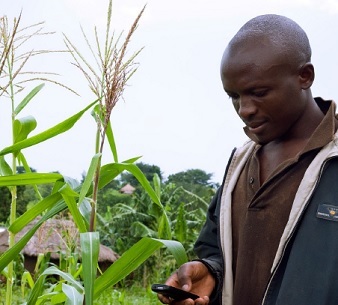
Published by the International Institute for Communication and Development (IICD), this 16-page report shares insights gained from three projects implemented under the Connect4Change (C4C) Economic Development programme located in western Kenya, which deal with the links between the introduction and use of information and communication technology (ICT) in farming and the interest of youth in farming and value chain development. It was found that ICTs can enhance access to market information, production techniques, new technologies, and financing opportunities, which can help encourage young people's uptake of farming as a career.
Connect4Change is a consortium of five Dutch development organisations (Akvo, Cordaid, Edukans, ICCO, IICD, and preferred partner Text to Change), which is working towards enhancing agricultural productivity and access to markets through ICTS. Five farmer-ICT-hubs were set up near existing markets or where farmers frequented, offering farmers and community members training, internet access, and a variety of support and information services to support farmers in obtaining information about good farming practices and market price information, and to use multimedia and video for participatory recording and screening of production techniques. The report notes that the centres had significant impact. "The five ICT centres have drastically increased the physical presence and accessibility of ICT in the communities where the organisations work. Tools and resources mentioned by the respondents show that they use a combination of resources, accessed both via computers at the centres as well as via mobile phones."
The report discusses the importance of attracting youth into farming, both in terms of sustaining agriculture and the rural economy into the future and as a possibility for youth employment. "Efforts should be aimed at further fostering youth involvement in agricultural activities and decision-making processes. These efforts can seize on the youth’s affinity for using ICTs, their capacity to innovate and their propensity for taking higher entrepreneurial risks." Factors that can determine whether young people make use of ICTS are varied, but overall "the current context - in terms of market situation, access to ICTs, and social norms – appears to offer favourable external conditions for the application of ICT in farming by young farmers." There is a strong urban demand for products and crops from rural areas, and the study found that ICTS can provide opportunities for young people to respond to these demands.
The experience in Western Kenya showed that most farmers, especially youth, are interested to learn. Formal education level appeared not to be barrier, but rather interest and the ability to read and write were considered the most important pre-requisites. A key motivating factor for young farmers to continue to use ICTS, and for others to take them up, was that "those young farmers who applied the ICT tools and skills to their farms increased their social status and generated higher yields and income." These young people also played important roles in their communities as they passed their new knowledge and skills on to other farmers.
The study also investigated gender considerations, noting that research showed "the majority of the young farmers that applied their newly acquired information and skills to farming to be male." The initiative experimented with different approaches, such as mobile ICT clinics, to bring equipment to places where it is easier and more convenient for women to access at appropriate times of the day. When offered this opportunity, women are often the most curious and motivated to learn.
The study concluded that both perceptions and practice are positively conducive for ICTS to improve the farming practices among young farmers.
Based on the research, the study offers a number of recommendations:
- "focus on young smallholder families who already made a conscious choice for farming and are likely to apply ICTs to their farming activities;
- differentiate and tailor ICT training approaches and user support on the basis of age, marital status, gender, and ownership of or access to land;
- pay attention to removing obstacles that prohibit young women from fully participating in, and taking advantage of, ICT-related activities;
- furnish ICT centres as learning spaces to support informal exchanges and networking by young farmers (male and female);
- encourage the emergence of diverse early adopters and role models to inspire diverse profiles and groups of youths to follow suit;
- consider strategies to diffuse integration of ICT from specific value chain crops to diverse crops and activities; and
- include ongoing monitoring, evaluation and learning activities as part of the programmes to identify unintended negative effects and undertake corrective action when necessary."
International Institute for Communication and Development website on September 2 2014.
- Log in to post comments