










































How can media and communication address violence against women and girls?
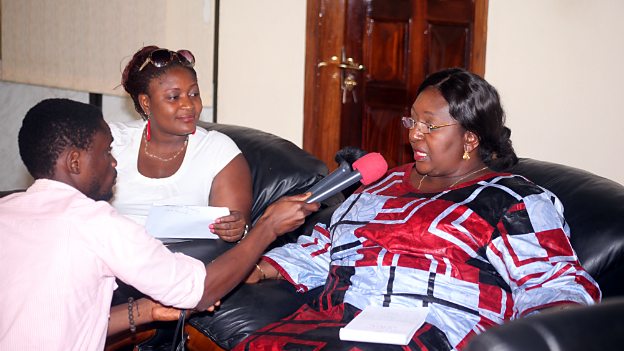
Authors: BBC Media Action Gender advisors Kanwal Ahluwalia and Elanor Jackson, originally posted November 30 2017 - We are often asked what a gender transformative project looks like.
A gender transformative approach explicitly tackles social norms around gender discrimination, power and violence, as well as broader ideas about male superiority and what it is to be a "real man" or "real woman" in the eyes of society. It means addressing systemic change by looking beyond individuals and focusing on unequal power relations between women and men, girls and boys.
It means asking women and girls themselves what is important and to identify issues, opportunities and barriers. And because social norms around gender equality, power and violence are adhered to by men and women and boys and girls, it is critical to include both sexes in gender transformative projects.
So why is it useful? Take violence against women and girls. Evidence suggests that interventions that address discriminatory gender norms, and challenge dominant notions of masculinity linked to controlling and aggressive behaviour, are more effective at reducing violence against women and girls, than interventions that don’t address underlying power structures.
Can media be gender transformative? Yes – with the right planning and programme content. In our review of Leh Wi Know (Let us know), a BBC Media Action project in Sierra Leone, we found it raised awareness in the whole community about violence against women and girls, including what drives violence and its consequences. It reached 15% of adults (40% of whom were women) through national and local radio programmes delivered in Krio and local languages. There was an increase in people reporting violence, as well as improvements within the judicial system, including the reinstating of Saturday courts where gender-based violence cases are heard, and critically, greater support by men and women for a reduction in violence. Leh Wi Know provides useful pointers for those looking to make gender transformative programming:
Include stories and voices from across the country. Leh Wi Know broadcast vox pops, interviews and packages commissioned from local correspondents. The use of vox pops was a successful strategy for enabling women’s voices to be heard.
Build relationships with those in power. The production team built relationships with traditional rulers, many of whom appeared as panellists on the radio programmes. Their support helped to create a more enabling environment in which women could exercise their rights and seek justice. Staff felt the project was able to challenge existing norms and attitudes by asking men tough questions about issues such as domestic violence, rape and FGM and by highlighting the legislation that protects women.
Invite female and male experts into studio discussions – these subject matter specialists could talk with authority about the issues.
Engage directly with communities. An international partner, Restless Development, and 16 local civil society partners gave out radio sets and facilitated listening groups and discussion about issues raised in the programme. Specially designed playing cards helped peer educators work with young women and men to identify different ways in which survivors of violence could seek help. Ordinary women were able to take part in these discussions, giving them an opportunity to talk about issues that would rarely be raised.
Create strong, female characters. Female characters in the radio drama found the courage to report violence, even in a highly patriarchal context where women are conditioned to be submissive. These actions were considered by project stakeholders to have the potential to inspire female listeners to report violence.
Share the voices of men who challenge negative norms and gender stereotypes. Men came to the studio on the national show to say that they had changed their behaviour as a result of what they learned from the radio programmes. These stories of change were shared on-air to encourage others to do the same.
Seeking advice from gender equality, legal and media experts working across different thematic areas was crucial. It helped ensure gender sensitive content was included in the radio drama and training for partner radio stations. Storylines also benefited from up-to-date legal information and practical information about the justice system and its handling of gender-based violence.
Violence against women in Sierra Leone remains endemic and it will take sustained action to shift related norms and attitudes. But this gender transformative project is a good reminder of the power of the media to help a large number of people engage with a range of views and challenge prevailing norms.
For guidance and resources on making your work transformative visit the BBC Media Action gender and media microsite.
Click here to access this BBC Media Action Insight blog and related links on their work on media and gender.
Image credit: BBC Media Action
Contact:
BBC Media Action
BBC Media Centre, MC3A, 201 Wood Lane
London
W12 7TQ
United Kingdom (UK)
Phone: 44 (0) 20 8008 0001
Fax: 44 (0) 20 8008 5970
Media.action@bbc.co.uk
Comments

role of media in adressing violence against women and girls
Thank for your useful recommandations. I think they could be used effectively if adapted to the local context of most african countries confronted to this dramatic issue of violence against women and girls. I found two recomandations particulary relevant : create strong, female characters and sharing the voice of men who challenge negative norms and gender stereotype. Indeed, it is crucial to value these models localy among the society to demonstrate that violence should not been tolerated. Most men and women found violence is normal, they don't consider it as a real social problem. It's unfortunately the reality, the worse is that when a woman consider it normal to be beaten, normal to accept violence.... To change this social norm, we need indeed to value the women and men, who bravely, have refused violence as an accepted behavior. Media play a major role in this dynamic of social valuation of these models having already adopted the desired behavior, these individuals, who refused violence as a social norm.
It's necessary for media to give exemples of women and men, who are violent, but the actual trend should probably be reviewed since unfortunately most often media communicate more on negative stories of violence than on positive stories. According to me, that's the real challenge for media in adressing violence against women and girls. Most terms and concepts relating to change are positive ( promoting, stimulating, inspiring, motivating...), but if you make the exercice to compare the number the positive stories reported by media about strong female characters and men who refused violence with the number of negative stories, what would you found ? Most often, a difference, not a single difference, a real significative difference benefiting to negative stories....
In order to promote systemic change in local communities, wouldn'it better that media and communication focus most often on positive exemples of behavior in order to suscite interest for change among people who resist to the desired change ? If media keep on communicating about bad examples of violent men and submissive women, how can we really motivate more and more women to report violence ?

The role of the media in fighting violence against girls & women
Violence against girls and women results from an imbalance of power between girls and boys & women and men, and is deeply rooted in some cultural practices and close relationships. Girls and women are very affected by violence because of their weak physical, social, economic, cultural and sexual status. The media should therefore address this key barrier of imbalance through exposing uncooth cultures and behaviours using their notable channels and voices. Women and girls should however be empowered to claim their space and know their rights and approach it using appropriate legal measures. #SBCCSummit
Deconstructing social norms
in the context of contries that have face colonialism this approach may not be effective because there are still some underlying issues that is plauging those countries. The notion that a man is more stronger and smarter than Woman is something that they have to deal with so until the narratives are change in how men see women and how who men see theirsives it will not change. As a academic and a performer I believe that there needs to be more channels of empowering and deconstructing of these social norms that have caused so many deloping nations to be facing similar issues such as violence against women and girls.
- Log in to post comments