










































Guide to Investigating Organized Crime in Africa
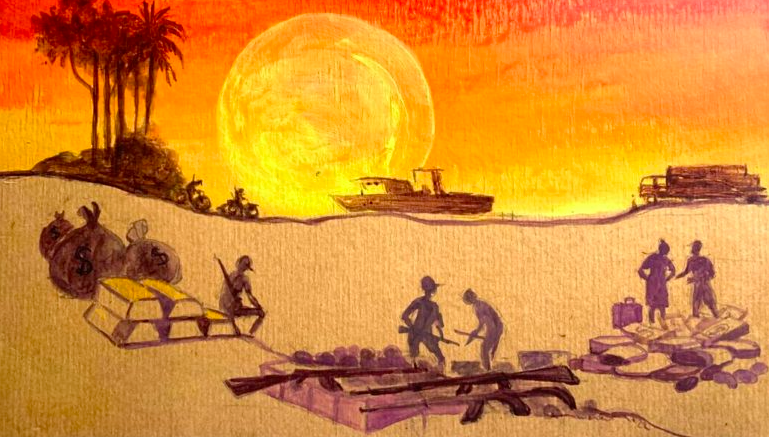
"Africa now has the second highest levels of criminality in the world, behind only Asia, according to the Organized Crime Index."
This guide is intended to help investigative journalists and other public watchdogs shed light on the various forms of organised crime that are devastating the African continent. It offers tips and techniques for investigating a number of distinct areas of organised crime, such as environmental crime, financial crime, arms trafficking, resource looting, drug trafficking and crimes at sea.
As explained in the guide, "Organized crime and corruption are widespread, deeply rooted, and growing in Sub-Saharan Africa, a region with some of the world’s highest rates of poverty and inequality. Powerful criminal groups operate with the help of politicians, government officials, and a 'criminal services industry', including corrupt banks. They make their money through the illegal narcotics trade, human trafficking, wildlife smuggling, illegal mining, the illicit trade in arms, and more. This has led to huge transfers of wealth, increasing immiseration, the rise of extremist groups, the decline of democratic institutions, and the strengthening of kleptocratic regimes."
The Global Investigative Journalism Network (GIJN) believes that watchdog journalists have a critical role to play in tackling corruption. For this reason, the guide is designed to offer a starting point and reference for journalists and to equip them with skills that will help them investigate the various forms of corruption. The guide is based on the experience of a group of veteran African journalists and regional experts who draw on their own reporting as well as those of other specialists across the continent.
The guide includes the following chapters, each of which offers tips, tools, and case studies related to investigating and reporting on the particular issue:
Chapter 1 - Environmental Crimes - Environmental crime is the world's fourth largest form of organised crime, behind only drug trafficking, counterfeiting, and human trafficking, according to the United Nations Environment Programme (UNEP). This is a rich field for journalists, with stories ranging from local polluters and corrupt officials to international smugglers and money launderers.
Chapter 2 - Terrorist and Militia Groups - These groups rely on smuggling, extortion, illicit arms, and other criminal activity to survive. The spread of these groups has led to instability, human rights violations, and terrorism. This chapter offers guidance on how to study the driving forces of these groups, the tactics they use, their funding, and how authorities interact with them.
Chapter 3 - Crimes on the Oceans - There are many types of crimes committed on the world's oceans - corruption, drug smuggling, and human trafficking, for example - but two of the most significant across Africa are maritime piracy and what experts call illegal, unreported, and unregulated (IUU) fishing.
Chapter 4 - Arms Trafficking - The global arms trade is worth more than US$500 billion dollars annually and accounts for as much as 40% of the world's corruption, according to the Stockholm International Peace Research Institute (SIPRI). The industry exacts a heavy economic toll while undermining social accountability and fuelling human misery. To uncover the reality of today's global arms industry, journalists must unravel a web of jurisdictions, intermediaries, and actors.
Chapter 5 - Natural Resources Theft - Many of the brutal and deadly wars in Africa are linked to the battle for control of what are called "extractive resources". Given the extraordinary suffering, rampant corruption, and inequitable development fuelled by plundering these resources, this area offers important stories for journalists in Africa to report on.
Chapter 6 - Drug Trafficking - The illicit drug industry is lucrative and growing across the continent. Africa serves as both a major transshipment centre and, increasingly, a homegrown market, with an annual trade in the billions of dollars. The impacts are far-reaching - it has the potential to incite brutal gang wars, fuels corruption, puts added pressure on healthcare systems, and strains the response from authorities.
Chapter 7 - Financial Crimes - Financial crime is not unique to Africa. But a combination of ample natural resources and digital services, a legacy of colonialism, and cash-strapped governments have for decades enticed corrupt multinational corporations and individual criminals.
Chapter 8 - Kleptocracies - In its full expression, as seen across so much of Africa, kleptocracy is not simply about misappropriating money and power for enrichment. It is also the use of that power for control, repression, and the normalised punishment of dissidents. Perhaps the most powerful opposition to kleptocrats is a robust, free, and independent press.
Chapter 9 - Other Crimes - These include human trafficking and migrant smuggling, tobacco smuggling, antiquities theft, and counterfeiting.
The guide was made possible due to the support of the Global Initiative Against Transnational Organized Crime (GI-TOC), an independent civil society organisation dedicated to seeking new and innovative strategies and responses to organised crime.
Click here (and/or click on the video below) to view a related GIJN webinar, where three senior reporters share tips and resources to investigate financial crime, arms smuggling, and environmental crime.
GIJN website on January 23 2023. Image credit: illustration by Dominique Mwankumi for GIJN
- Log in to post comments