










































A Guide for Exploring Health Worker/Caregiver Interactions on Immunization
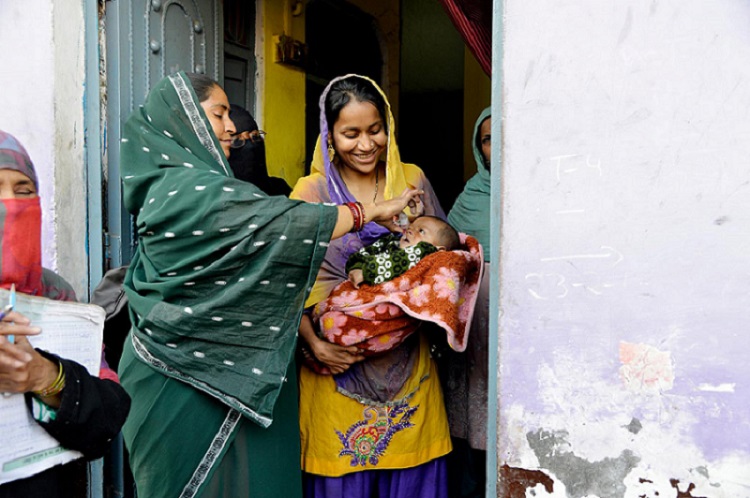
The knowledge, attitudes, and practices (KAP) of health staff are one of the most important and frequently cited factors that can either facilitate or discourage complete vaccination of children. To explore existing KAP as a basis for the design and evaluation of trainings and tools, the World Health Organization (WHO) and partners prepared this guide to support district health management teams and any persons or organisations with whom they may work.
WHO observes that, in the face of emerging vaccine hesitancy, health workers have the potential to serve as trusted advisors and influencers of vaccination decisions. The capacity and confidence of health workers are often stretched, though, as they are faced with time constraints, limited resources, and inadequate information and/or training to respond to certain questions and to discuss the risks and benefits.
One objective of a qualitative study assessing health workers' KAP, particularly their interactions with caregivers and infants, is to understand the conditions under which health workers operate and their related sentiments. Addressing human resource and other health system issues may be necessary to address the root causes of undesirable health worker KAP, which can affect caregivers' willingness to return. Some explanatory factors appear to be as follows:
- In certain cultures, health workers appear to have a sense of superiority and little respect for caregivers who are economically poor, uneducated, from a minority group, and/or do not speak the national language.
- In some cultures, verbal or physical abuse is an acceptable way to teach correct behaviour (such as bringing the immunisation card or coming on time for appointments).
- Health workers may feel overwhelmed by their responsibilities and unsupported by the health system and, therefore, less inclined to put in the maximum effort in dealing with caregivers.
Designed to support the carrying out of a KAP study that might unearth such factors, this document describes the decision points and the pros and cons of various choices at different stages of planning, implementing, and using study findings. It is not a research manual, although there are references to many manuals available. There are also sample question guides, job descriptions, a training plan, and other tools - all of which need adaptation for any specific use.
Specifically, contents include:
- Acknowledgements
- I. Introduction
- II. Rationale for this focus
- III. General findings on health worker/caregiver interactions
- IV. Methods for learning about health worker/caregiver interactions
- V. Considerations in planning the study
- VI. Sampling
- VII. Recording, analysing and sharing findings
- VIII. Ways to improve health worker/caregiver interactions
- Annex A: Studying health workers' KAP at different levels of the health system
- Annex B: Sample study guides (for adaptation)
- Annex C: Job descriptions for research coordinators and field team members
- Annex D: Training outline for a study on health workers' KAP
- Annex E: Skills for interviewers and note-takers
56
WHO Immunization, Vaccines and Biologicals website, July 6 2018; and email from Mike Favin to The Communication Initiative on July 6 2018. Image credit: Lindsay Crethar
- Log in to post comments