










































Guide for Developing an SBC Strategy
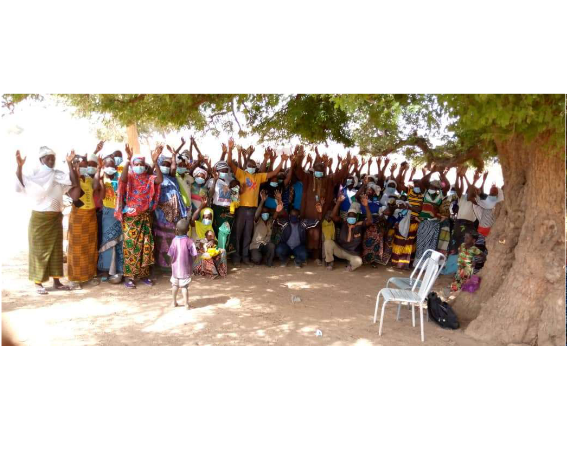
"The SBC [social and behaviour change] strategy and subsequent programming should be people-centered before being behavior-centered; this is why...this SBC guide starts with audience segmentation rather than behavioral prioritization."
Social and behaviour change (SBC) goes beyond improving knowledge through information, education, and communication (IEC) or behaviour change communication (BCC). Acknowledging the limitations of prior efforts, ministries of health in West Africa are focusing more deeply on analysing social and cultural norms to address barriers to improving health practices, supporting the enabling environment with updated policies that encourage improved practices, and assisting individuals and families to gain the self-efficacy to change individual behaviours. To facilitate the design of such robust SBC strategies, Breakthrough ACTION staff created this umbrella guidance document following a series of workshops and coaching efforts with ministries of health and Development Food Security Assistance (DFSA) partners in Burkina Faso and Niger who are implementing the United States Agency for International Development (USAID) Resilience in the Sahel Enhanced II (RISE II) programme.
USAID defines SBC as involving "activities or interventions that seek to change health-seeking behaviors and the social norms that enable them. Such interventions may be grounded in a number of different disciplines, including social and behaviour change communication (SBCC), marketing, advocacy, behavioral economics, or human-centered design". Breakthrough ACTION explains that SBC strategies detail: which platforms can effect behaviour change for different audiences and priority behaviours, when to launch certain activities, who to involve, and how to measure change. This guidance shares the outline for developing such an SBC strategy.
As outlined here, when designing an SBC strategy, it is crucial to know what determinants strongly influence and affect behaviour in both a positive way (as facilitators) and in a negative way (as barriers). Save the Children, a Breakthrough ACTION partner, developed an integrated theory-based SBC framework (see Figure 1 on page 7) to determine the relative weight of specific social and behavioural determinants, which allows identifying tailored and suitable SBC strategies that combine behaviour change with community engagement:
- Based on theories of behavioural change, the set of social and behavioural determinants includes social and gender norms, which have the capacity to affect, reinforce, or hold behaviours in place.
- Community capacity strengthening determinants can be used if the problem is related more to mobilising for collective action, creating demand at the community level, or strengthening the linkage between facility and community.
- If the programme focuses on provider behaviour change or on increasing community health workers' performance, quality service determinants may better describe issues with quality service delivery (e.g., is their information dissemination based on medical protocols; is their communication with clients respectful; is there a linkage with communities to hold services accountable?)
- The programme may be measuring community resilience determinants, raising questions such as: Are information systems in place so that individuals/families and the community can address vulnerabilities? Are there social networks, local community engagement activities, or self-help groups that can help mitigate food and nutrition insecurity?
The key to any well-written strategy is to figure out which determinants are most important for the programme to target to reach the audiences, to move them, and to motivate them to maintain change.
Building on the FOCUS tool developed by Save the Children under the Gates-funded Saving Newborn Lives project, the guide includes short chapters - each of which includes a short introduction, some information tailored to USAID partners, and how-to tips with references to existing SBC modules, tools, and materials for further information and study. Annexes include:
- Integrated SBC framework: Set of determinants
- Suggested resources to help with SBC formative research design
- Training of trainers guides
- List of different SBC approaches
- Different behavior prioritization models
- SBC chart
Programme implementers can refer back and refine this document throughout the life of the project to ensure the activities implemented are spurring behaviour change and that their indicators are effectively measuring change.
Publishers
English; French
47 (English); 53 (French)
Save the Children Child Rights Resource Centre, May 18 2022. Image credit: Breakthrough ACTION
- Log in to post comments