










































Global School Feeding Sourcebook: Lessons from 14 Countries
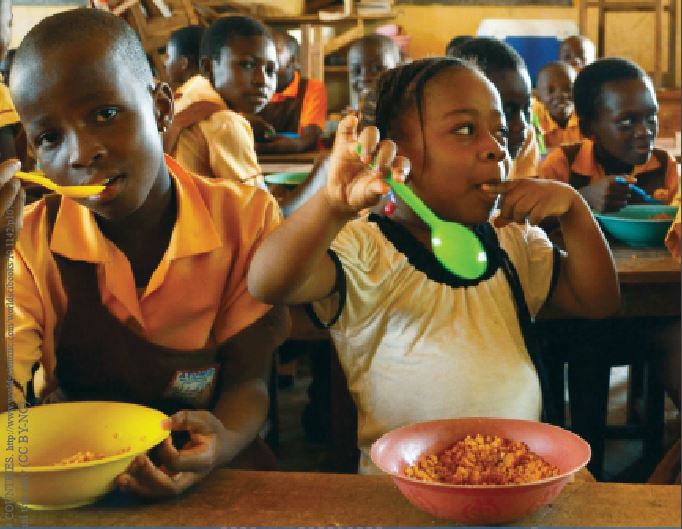
"The Sourcebook documents and analyzes a range of government-led school meals programmes to provide decision-makers and practitioners worldwide with the knowledge, evidence and good practice they need to strengthen their national school feeding efforts."
Imperial College London’s Partnership for Child Development (PCD), the World Food Programme (WFP), and the World Bank (WB) produced this sourcebook in response to demand from governments and development partners for guidance on designing and implementing large-scale sustainable national school feeding programmes that can meet globally approved standards. It documents the "track record" of school feeding programmes to improve health and education of children and support local and national economies and food security through case studies from 14 countries (Botswana, Brazil, Cabo Verde, Chile, Cote D’Ivoire, Ecuador, Ghana, India, Kenya, Mali, Mexico, Namibia, Nigeria, and South Africa.) "It highlights the trade-offs associated with alternative school feeding models and analyzes the overarching themes, trends and challenges which run across them."
Key findings related to communication include:
- Advocacy efforts to show policymakers the positive results and designs of already implemented programmes that, as stated in the sourcebook, increase enrollment, reduce absenteeism, and enhance gender equality.
- The trend towards "Home Grown School Feeding" (HGSF) that encourages participation of local farmers, such as Brazilian federal law, for example, that 30 percent of food for school meals is procured from small family-run farms.
- Communication with government lawmakers to develop well-articulated policy and legal frameworks for school feeding programmes.
- The co-ordination of stakeholders from across multiple sectors; insurance that "there is enough government capacity at national and local levels;" and creation of "mechanisms to ensure quality and accountability of the school feeding programmes."
- Development of a strong political will to ensure budgeting funds, including public and private sector partnerships.
- Community participation: "The strongest and most sustainable programmes are those that respond to community need, are locally-owned and incorporate some form of parental or community contribution. In Namibia, many communities are expected to provide fuel, cooking utensils and storerooms. Indirect benefits of school feeding include employment opportunities for example, in Chile, low-income mothers are given catering training. School feeding can also mean increased income and training for smallholder farmers; as well as complementary school health activities, as in both Mexico and Brazil where parents are taught about the importance of nutritionally balanced diets."
Publishers
507
Email from Francis Peel to The Communication Initiative and Home Grown School Feeding website, on June 9 2016.
- Log in to post comments