










































Flu Vaccination among Patients with Diabetes: Motives, Perceptions, Trust, and Risk Culture - A Qualitative Survey
Aix-Marseille University (Verger, Bocquier, Vergélys, Ward, Peretti-Watel); Southeastern Health Regional Observatory (Verger, Bocquier, Vergélys, Peretti-Watel); Innovative Clinical Research Network in Vaccinology, or I-REIVAC (Verger, Peretti-Watel); Université Paris Diderot (Ward)
Because diabetes is associated with a substantial increase in morbidity and mortality risks linked to seasonal influenza, vaccination against it (SIV) is recommended for people with diabetes. Nonetheless, vaccination coverage among this population does not reach the international - and French - goal of 75%. Most quantitative and qualitative studies of the reasons for refusal behaviours among the general population have referred to the Health Belief Model (HBM) hypotheses. Their results suggest that SIV uptake depends on perceived severity of seasonal influenza, vulnerability to it, and the risks and effectiveness of SIV. This qualitative survey of people with diabetes sought to explore 1) the extent to which SIV-related behaviour is more or less automatic; 2) reasons diabetics in France choose/reject SIV; and 3) their trust/distrust in authorities, science, and medicine.
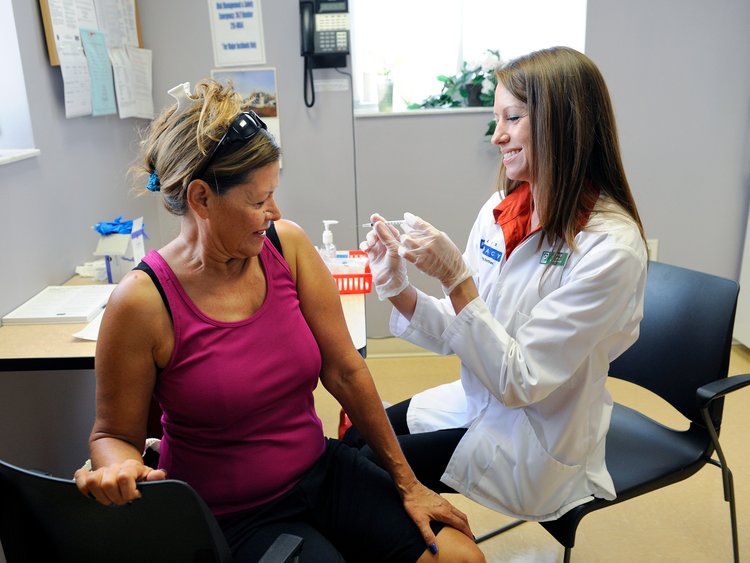
Between May to September 2014, a sociologist conducted in-depth face-to-face interviews of 19 adult patients (18 years or older) with diabetes (types 1 or 2) residing in the south of France; 8 had been vaccinated in the preceding flu season and 11 had not. All but one vaccinated patient had had SIV regularly for the past several years, without hesitation, almost automatically. Several reported that they had followed their physicians' recommendations. Among the unvaccinated patients, the majority had never had a SIV. For one patient, the physician, a homeopath, advised the patient against it. Several patients reported that their physicians had never mentioned SIV and that they had not taken the initiative to talk to the doctors about it. This suggests that the doctors missed opportunities to convince their patients.
Most vaccinated patients mentioned their vulnerability to influenza because of their health status and perceived that influenza can be serious, especially when they had experienced it. Vaccinated patients did not perceive the vaccine as dangerous: side effects were considered banal. Few of the unvaccinated participants also knew the risks of influenza for people with diabetes (one because he had experienced it). Nonetheless, most downplayed influenza with diverse arguments - e.g., not a priority compared with diabetes or not serious compared with other more contagious infectious diseases. Half of the unvaccinated people reported that SIV is not (always) effective: they reported a personal experience of a severe case of influenza after SIV, or such an experience for family members or friends.
Patients trusted their doctors strongly regardless of their SIV behaviour; the transcripts suggest that trust of physicians is built in a close, sustained, and concrete doctor-patient relationship to monitor/treat the diabetes. But distrust in distal stakeholders - the French government and pharmaceutical companies - was more marked in unvaccinated than vaccinated patients. Several unvaccinated participants feared serious side effects or distrusted the vaccine (or both) for diverse reasons. Several unvaccinated patients reported they were deeply concerned about how the public health authorities had conducted the vaccination campaign against the A/H1N1 pandemic in France in 2009; they questioned its utility and, beyond that episode, the utility of systematic vaccination. Several patients reported greater mistrust of SIV since 2009.
This study of patients with diabetes found that SIV-related behaviours are mainly stable, dictated by habit, as previously shown in the general population. In the prevention field, past behaviour is usually predictive of subsequent behaviour, probably because when a behaviour is carried out regularly in a stable context, responses are performed fairly automatically, without either conscious decision-making or thinking.
Some discordances were found between perceptions and behaviour (e.g., remaining vaccinated despite doubts about SIV effectiveness or remaining unvaccinated despite feelings of vulnerability towards influenza complication), suggesting the existence of some vaccine hesitancy among patients.
The researchers conclude by stressing the importance of recommending SIV at every opportunity and of interventions to increase community demand for SIV. Some interventions have proved effective in these situations (e.g., telephone calls from other older peers). Patients' false beliefs and compensatory health beliefs relative to SIV call for better health education to patients by healthcare professionals, who in turn should be better trained to provide it. Restoring trust in health authorities is also necessary.
BMC Public Health (2018) 18:569. https://doi.org/10.1186/s12889-018-5441-6. Image credit: Business Insider
- Log in to post comments