










































Factors Associated with the Utilization of Inactivated Polio Vaccine among Children Aged 12 to 23 Months in Kalungu District, Uganda
Ministry of Health, Uganda Sanitation Fund Programme (Faith); Makerere University (Juliet, Tumuhamye); Bishop Stuart University (Mathias); Johns Hopkins School of Public Health (Sacks)
"[H]ealth caregivers and VHTs [Village Health Teams] have a vital role in promoting such public health interventions, not only to caregivers of young children but to the entire community."
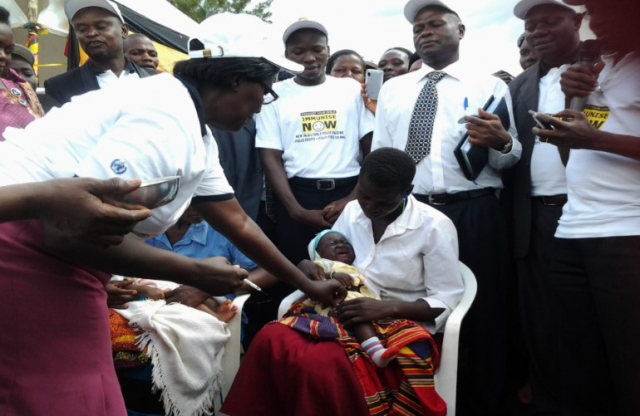
Tackling the last 1% of polio cases globally has proven difficult due to reasons such as conflict, political instability, hard-to-reach populations, community misconceptions, and poor infrastructure. To achieve and sustain a polio-free world, the World Health Organization (WHO) recommended that at least one dose of inactivated polio vaccine (IPV) be given in addition to the oral polio vaccine (OPV). IPV is designed to eliminate the risk of paralytic polio and circulating vaccine-derived poliovirus (cVDPV), which exist with OPV. In May 2016, Uganda - a country at high risk for polio outbreaks due to the frequent cross-border movements of populations - integrated IPV into its routine immunisation programme, yet the coverage as of July 2017 stood at only 60%. This study aimed to determine factors associated with the uptake of IPV among children in Kalungu District so as to support scaling up of the new vaccine to ensure high coverage and achieve the goal of polio eradication.
A community-based cross-sectional study was conducted among caregivers of 406 eligible children aged 12-23 months through multi-stage systematic sampling and a standardised semi-structured questionnaire. Nine key informant interviews were conducted through purposive selection of healthcare providers and members of Village Health Teams (VHTs). In the case of missing or incomplete home-based vaccination records, recall or verbal history of vaccination by the caregiver was used as evidence for immunisation. Of the 406 respondents, 84.6% had child health cards, and 71.0% of the study children had received the single dose IPV.
Bivariate analysis showed that, in addition to caregiver age (with IPV uptake higher among children with caregivers aged 40 and above), prevalence of IPV uptake among children whose caregivers had attained post-primary education was 1.51 times higher than that among children whose caregivers had not attained any form of education (95% confidence interval (CI) 1.3-2.10). Reflecting on this finding, the researchers note that many public health topics are taught in schools, which "may empower future caregivers to protect their children from preventable diseases. Therefore, there is a need to reinforce sharing of health information about immunization in schools so as to widen the knowledge base of future parents."
Prevalence of IPV uptake among children whose caregivers had negative attitudes to IPV was 0.41 times lower than that for those whose caregivers had favourable attitudes (95% CI 0.29-059).
Some studies suggested that religious beliefs in relation to polio immunisation have negatively affected vaccine uptake in countries like Nigeria. However, while the present study did not find a significant association between caregiver religion and IPV uptake among children, "there may still be a benefit in the active involvement of the different religious leaders to increase their awareness about the vaccine and advocate for its uptake among children."
The survey found that being encouraged by health workers and VHTs was significant to children's uptake of IPV (adjusted prevalence ratio (PR) 1.24, 95% CI; 1.22-3.47). Distance to the immunisation point (adjusted PR 0.32, 95% CI; 0.16-0.62) was also associated with IPV uptake: "Caregivers may be discouraged by the long distances or by the transport costs they have to incur in order to access the health centres." These findings were echoed in the interviews; for example, respondents stated that children whose caregivers had been encouraged by the health workers and VHTs were utilising the vaccine more than those who had not been. "When caregivers are confident that health worker or VHT recommendations are for the good of their children, they may have less hesitancy to follow such recommendations."
In conclusion: "There is therefore a need to intensify the health education at health facilities and in the community along with strengthening the traditional home visit system so as to continue encouraging caregivers to take their children for IPV immunization."
Health Policy and Planning, Volume 35, Issue Supplement_1, November 2020, Pages i30-i37, https://doi.org/10.1093/heapol/czaa099. Image credit: WHO AFRO
- Log in to post comments