










































Evaluation of the 'My Rights My Voice' Programme: Synthesis Report
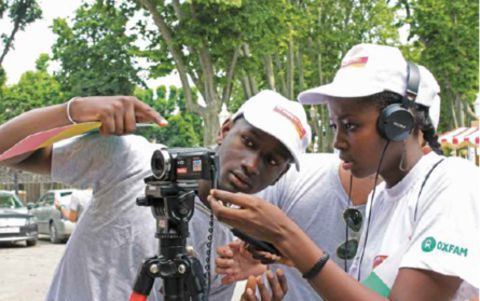
South Research (Van Esbroeck, Verhofstadt); Independent Consultant (Chelladurai)
My Rights My Voice (MRMV) is a multi-country programme implemented by Oxfam GB, Oxfam Novib, Oxfam Québec, and their partners with the aim of engaging marginalised children and youth in their rights to health and education services. (See Related Summaries, below.) This external evaluation aimed to systematically analyse the actual outcomes of the programme and its underlying working mechanisms against the proposed outcomes and MRMV's theory of change.
Launched in 2012 and initially planned to end after 3 years, MRMV was extended by 15 months in 6 of the 8 initial countries and ended in March 2016, with some "global layer" activities continuing until August 2016. Sida funded the programme, which was implemented in 8 countries: Afghanistan, Georgia, Mali, Nepal, Niger, Pakistan, Tanzania, and Vietnam. MRMV's overall goal was to achieve sustainable changes in policies, practices, and beliefs to meet the specific health and education needs and aspirations of children and youth, with a particular focus on the rights of girls and young women, and to contribute to achieving the Millennium Development Goals (MDGs). Central to this goal were 4 key programme outcomes: (i) increasing young people's awareness of - and strengthening their voice in relation to - their health and education rights, needs, and aspirations; (ii) strengthening young people's and their allies' individual and collective skills, knowledge, confidence, and resources to both organise and claim their rights in decision-making spaces; (iii) ensuring that duty-bearers and those with influence engage directly with marginalised young people to improve access to and the quality of health and education; and (iv) strengthening the capacity of Oxfam, partners, and others to work on youth agency in country programmes and facilitating on the part of Oxfam's global campaigning force of youth claiming and accessing better health and education. To support these objectives, the programme had a global-level component to drive and support learning and innovation, to communicate good practice, and to influence and partner with global actors to deliver better outcomes.
An analysis of the programme documents, interviews with key resource persons dealing with the global-level component of the programme, and field research were the main components of the evaluation approach. Youth familiar with the programme were included in the field research as peer evaluators in 3 countries. Key findings are summarised below.
With regard to relevance and appropriateness, the evaluators found that high-quality preparation ensured that the MRMV aims, its choice of education and health as key areas of intervention, and its design and approach were largely adequate in view of the specific needs of young (marginalised) people and communities. However, after 4 years of programme work, it was apparent that putting into practice the key principles of working by and with youth was challenging. In addition, the ambition to work with marginalised youth was not clearly articulated, leaving it to the country programmes to find solutions - some more successfully than others. Furthermore, the complex interplay of empowering youth while at the same time striving towards inclusion of duty-bearers and care-takers in the programme strategy and approach was overlooked to some extent. To the credit of the programme, the evaluation found that most countries have made substantial progress in dealing with these challenges.
In most countries, the programme had to invest in substantial initial efforts to overcome barriers in order to work directly with youth and achieve their effective participation, in particular that of girls. There were instances where local partner non-governmental organisations (NGOs) struggled to create frameworks and spaces to optimise youth participation and involvement, instead continuing to resort to traditional approaches whereby they remained in control of decision-making processes. As such, the recognition of youth (boys and girls) as actors in their own right, with specific rights, needs, and aspirations but also capabilities, is considered the programme's first important achievement.
Most country programmes initially focused on developing knowledge, awareness, and capacity of youth to articulate their needs and aspirations, along with raising awareness of the principles of a rights-based approach. Activities of this nature continued to be important throughout the programme cycle, which explains why a significant number of youth and allies were reached (estimated at 522,000 in total, of which 80% were young people, with representation of women and girls reaching 59% in 2015). In most countries, the increase in awareness and capacity prepared the way for the development of collective skills and resources of youth, whereby the promotion and consolidation of strong leadership (among boys and girls) and the promotion of independent youth organisations was a key strategy. By the end of the programme, an estimated 699 children and youth groups had been established, of which 71 groups were set up in 2015. In total, 574 children and youth groups actively pursued their right to health and/or education in 2015. In these processes, the role of programme partners (Oxfam offices and programme NGOs) was mainly to create adequate frameworks and spaces for the youth to undertake action and to provide, where needed, strategic and capacity-building support.
The evaluation found that achievements in terms of increased youth capacities varied among the countries, which to a significant extent can be attributed to substantial differences among the countries prior to the programme. However, many of these achievements were innovations in their context. Increased youth capacity at the individual and organisational level allowed youth, often in close association with supporting NGOs and programme staff, to engage with government authorities (both at the national and local level), informal leaders, journalists, religious scholars, parliamentarians, getting them interested in MRMV programme issues, ready to take part in dialogue and exchange and, in quite a number of cases, to openly endorse the advocacy and policy agendas of the young people. Based on available monitoring data, in 246 cases, this led to duty-bearers taking specific actions to improve access to and quality of health and/or education services. However, the effectiveness of these efforts was constrained by severe resource limitations at the level of the authorities concerned. It was also hampered by the relatively short duration of lobbying and advocacy efforts.
The programme dynamics went further than the actual programme framework focus on claim-making, lobbying, and advocacy for the fulfilment of youth rights and needs, which also means they went beyond the outcomes and objectives in the global programme framework. Indeed, country programmes have also invested in realising actual changes (in terms of fulfilment of needs and changed behaviour and practices) at the level of children, youth, and their allies, in particular in the area of sexual and reproductive rights (SRH). These achievements often appear to be those most valued by the youth and care-takers.
The fourth programme objective - related to Oxfam's strengthened capacity to work on youth agency in country programmes and its global campaigning force to facilitate youth claiming and accessing better health and education - was not directly addressed in day-to-day implementation of the programme. The aim to include country programmes in global campaigning efforts might have been overly ambitious; country programmes in fact focused mainly on in-country dynamics. In addition, the start of programme implementation coincided with Oxfam's internal reorganisation towards a single management structure; in addition, at that time, experience within Oxfam of multi-country programmes was limited.
The evaluators consider MRMV's contributions to longer-term impacts, pointing to evidence that the MRMV strategy has had an influence beyond the youth who participated. Most country programmes recorded changes in the views and attitude of parents, who, for instance, have become open to discussing SRH issues with their children, have allowed their daughters to participate in youth-led activities and have liaised with authorities to protect the rights of their children. At the level of communities, probably the most fundamental change, reported in various countries, is that young people are now considered as important change agents and able to play an active role in decision-making processes at local and higher levels and to pursue change via their own organisations. Furthermore, it was found that MRMV has made a direct contribution to several MDGs: namely those related to access to education (MDG 2), gender equality and empowerment of girls and women (MDG 3), maternal health (MDG 5), and the fight against HIV/AIDS (MDG 6).
Ensuring efficiency in the implementation of such a complex programme was a challenging task, one that overall was fairly well addressed by MRMV's Steering Committee (SC) and Global Coordination Team (GCT). At the early stages, programme management was successful in streamlining the views and perceptions of the programme actors and slowly but steadily internalising the values and objectives of MRMV at the level of the country implementation teams. Nevertheless, there were constraints to implementation related to Oxfam's internal restructuring processes, the fact that GCT members were based in different geographical locations, weak development of the monitoring and learning function, the turnover in SC membership, and the programme's heavy administrative and financial procedures and requirements.
MRMV was explicitly conceived as a multi-country programme; despite the very different contexts of the countries involved, they have all shared the same youth and rights-based philosophy. Country programmes have, however, continued to focus on in-country dynamics and issues, considering international exchange mostly as an interesting add-on rather than an essential component of programme work. The fact that there was a high level of socio-economic and cultural heterogeneity among the countries certainly played a role in this. From an Oxfam perspective, there have been many benefits. Working together with different Oxfam members generated learning opportunities and internal challenges (e.g., related to the implementation of multi-country programmes by various Oxfam affiliates) and triggered the development of capacities to work with youth.
Sustainability considerations were well addressed in programme design, both at the global and country level. On the other hand, specific sustainability challenges related to working with children and youth were not addressed. In addition, during implementation, sustainability was not systematically built in as a continuous focal point.
The report outlines main lessons learned. For instance, though multi-country programmes are conceptually interesting endeavours, there are serious risks that they will face challenges in implementation, which can only partially be identified beforehand. A key factor of success is the development of a programme identity. MRMV approached this by being firm on key issues (for example, the adoption of a rights-based approach and the focus on activities implemented by youth) while allowing country programmes the flexibility to deal with local priorities and sensitivities. This requires continued efforts, especially in the early stages, and capacity to operationalise key principles through sound and culturally appropriate approaches and strategies. Furthermore, applying in practice the key principle of a programme run by or with youth is a challenge for many traditional development actors and should preferably be supported by a clear change pathway. In addition, a strategy and good practices should be designed to deal with the inevitable rotation in youth participation and leadership, caused by the simple fact that young people eventually become older and enter a new phase of life with other challenges and requirements. Finally, specific approaches need to be worked out to support youth organisations in the post-programme period, as they (unlike well-established NGOs) often lack the experience and networking capacity to ensure continued funding.
The evaluators also point to the dangers of a narrow rights-based approach (RBA); simply engaging with duty-bearers (as happened in many instances) does not in itself lead to altered power relations. In addition, the recognition and general acceptance (by duty-bearers) that young people have the right to particular services does not automatically lead to the fulfilment of these rights and the improvement of conditions for youth. Limiting a RBA to voicing and claim-making (and to the corresponding responsibilities and obligations of the state) also risks not tapping into the full potential of youth and other actors (communities, care-takers, and even duty-bearers) to work out and implement alternatives, thereby missing the opportunity to strengthen their capacities and expertise correspondingly.
The report concludes with several recommendations, such as: Seek clarity and realism on the role and position of marginalised youth, redesign the approach to mainstream gender in the programme, and operationalise strategies and approaches towards genuine "implementation by youth". It is suggested that similar future programmes avoid implementation periods of less than 5 years, as the type of changes aspired to require substantial time to materialise and ensure benefit sustainability. This is particularly the case when the programme includes fragile countries or countries with low levels of institutional development (as is the case for most MRMV countries).
Editor's note: Oxfam's management response to the evaluation report is included as a separate document; click here in order to download it [PDF].
Oxfam website, October 28 2016. Image credit: Oxfam
- Log in to post comments