










































Evaluation of the Confiance Totale Campaign in Togo
Date
Summary
"This evaluation contributes meaningfully to the body of evidence around radio mass media and FP-related ideational and behavioral outcomes."
Social and behaviour change (SBC) campaigns or interventions can provide information about family planning (FP) method safety and benefits, while also challenging the social and gender norms that restrict FP access and use. In order to promote client trust in FP methods and providers, the West Africa Breakthrough ACTION (WABA) project developed a quality assurance brand entitled Confiance Totale ("total confidence" in English). WABA is part of Breakthrough ACTION, the United States Agency for International Development (USAID)'s global SBC flagship project. This report shares the results of a study that examines to what extent Confiance Totale radio messages broadcasted in 2020-2021 reached the desired audience in Togo, the relationship between campaign exposure and reproductive health outcomes of interest, and the extent to which these messages may have affected intermediate and behavioural outcomes. The report includes a discussion about implications for future FP SBC programmes.
As part of the Togo campaign (see Related Summaries, below, for details on the Côte d'Ivoire campaign), WABA disseminated a series of nine 45-second radio public service announcements (PSAs) on seven radio stations in Togo, in the three most commonly used languages, 15 times per day, according to Development Media International (DMI's) Saturation+ methodology. The spots focused on promoting confidence in FP methods and services, couple communication about FP use, postpartum FP, and healthy birth spacing. As the campaign took place in the midst of COVID-19, some of the radio spots encouraged FP access and use in the context of the pandemic. (To that end, the PSAs were developed with a positive, uplifting tone about actions that could be taken to prevent COVID-19 and an unplanned pregnancy, rather than exacerbate the community-level anxiety already present in a situation where there was some degree of unknowns and fear.)
Following the broadcasts, WABA conducted a single-wave, cross-sectional, household-based survey in Lomé (Agoé Nyivè) and Blitta Ville (Blitta) in April 2022 among 2,200 respondents between the ages of 18 and 49. For the outcomes of FP communication, the study team analysed the full sample (n = 2,200) regarding the following: intention to speak to one's partner about FP, FP attitudes, postpartum FP attitudes, perceived social norms, FP knowledge, self-efficacy to talk about FP at the health facility, self-efficacy to talk to partner about FP, and reproductive autonomy. For certain outcomes of interest - including current FP use, intention to use FP, having spoken to a health care provider about FP in the last month, and the intention to go to the health facility to obtain FP - WABA conducted the analysis among a sub-set of the respondents (analytic sample n = 1,610), because these outcomes were relevant for those who did not want to become pregnant.
Approximately 45% of the overall sample reported they had ever heard radio messages with the Confiance Totale jingle. Nearly 62% reported they themselves or their partner were currently using an FP method at the time of the survey. Only 34.7% of respondents reported they had spoken about FP with their primary partner during the previous month, though 53.4% reported they intend to speak with them during the next month. About 72% of respondents perceived community social norms towards FP to be supportive.
In multivariable models controlling for respondent age, sex, district, marital status, religion, educational attainment, and socio-economic status, Confiance Totale exposure was associated with many outcomes of interest, including current FP use (odds ratio [OR] = 1.39, p = 0.023), intention to use FP (OR = 2.17, p < 0.001), intention to go to a health facility to obtain information about FP (OR = 1.77, p < 0.001), having spoken with one's primary partner in the past month (OR = 1.45, p < 0.001), intention to talk to one's partner about FP (OR = 1.47, p < 0.001), an elevated perception of supportive FP social norms (OR = 1.68, p < 0.001), positive postpartum FP attitudes (OR = 1.26, p = 0.02), self-efficacy to speak with one's partner about FP (OR = 1.30, p = 0.008), more supportive FP attitudes (unstandardized beta [B] = 0.45, p < 0.001), higher levels of FP knowledge (B = 0.42, p < 0.001), and increased reproductive autonomy (B = 0.73, p < 0.001).
Compared to women, men had higher odds of several key outcomes of interest, including current FP use and intention to use FP, and intermediary indicators such as FP communication in the last month, supportive FP attitudes, FP knowledge, intention to talk to partner about FP, self-efficacy to talk about FP at the health, self-efficacy to talk to partner about FP, and reproductive autonomy. The only domain where men had lower scores compared to women was for postpartum FP attitudes. Whether these findings reflect men's true experience, a desirability bias, or lack of male awareness of their female partner's contraceptive behaviours remains uncertain, however.
Thus, in combined, controlled models, those who were exposed had higher scores on FP attitudes and social norms, higher levels of knowledge related to FP, and higher levels of reproductive autonomy. In the combined multiple logistic regression model, those who were exposed to the campaign had higher odds of currently using FP as well. Future work could explore, for example, the differential effects among men and women and understand specific messages that resonate with each group.
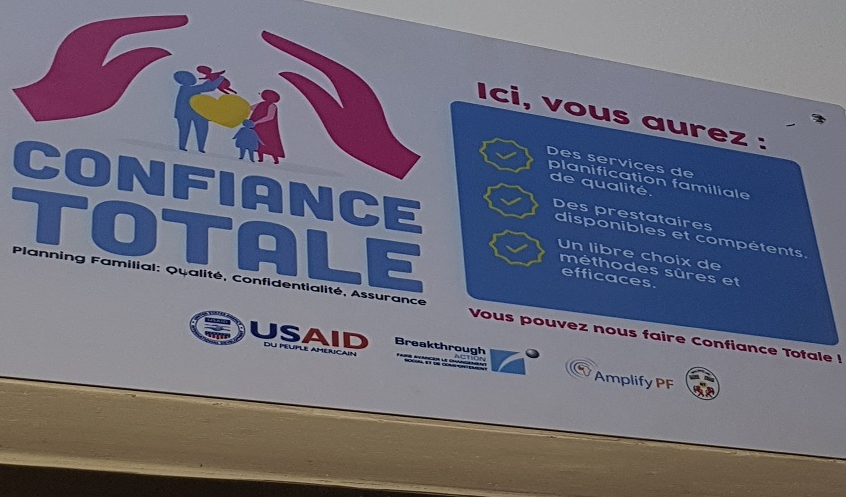
In conclusion, the Confiance Totale campaign "was successful in shoring up the associated behaviors linked to FP use during the COVID-19 pandemic. After the Saturation+ campaigns, these same radio spots again broadcast in Togo in selected areas to promote Confiance Totale-branded FP service delivery sites. The radio spots broadcast in conjunction with other Confiance Totale-branded radio programs and the distribution of branded banners, posters, stickers, and leaflets. The project also conducted service site 'walk-throughs' as well, which included provider recognition and appreciation activities. The continued radio broadcasts of these same PSAs suggest they are a cost-effective element of a multi-channel campaign to accomplish key FP program goals, such as achieving informed, voluntary FP use, even during the disruptive time of the COVID-19 pandemic."
Social and behaviour change (SBC) campaigns or interventions can provide information about family planning (FP) method safety and benefits, while also challenging the social and gender norms that restrict FP access and use. In order to promote client trust in FP methods and providers, the West Africa Breakthrough ACTION (WABA) project developed a quality assurance brand entitled Confiance Totale ("total confidence" in English). WABA is part of Breakthrough ACTION, the United States Agency for International Development (USAID)'s global SBC flagship project. This report shares the results of a study that examines to what extent Confiance Totale radio messages broadcasted in 2020-2021 reached the desired audience in Togo, the relationship between campaign exposure and reproductive health outcomes of interest, and the extent to which these messages may have affected intermediate and behavioural outcomes. The report includes a discussion about implications for future FP SBC programmes.
As part of the Togo campaign (see Related Summaries, below, for details on the Côte d'Ivoire campaign), WABA disseminated a series of nine 45-second radio public service announcements (PSAs) on seven radio stations in Togo, in the three most commonly used languages, 15 times per day, according to Development Media International (DMI's) Saturation+ methodology. The spots focused on promoting confidence in FP methods and services, couple communication about FP use, postpartum FP, and healthy birth spacing. As the campaign took place in the midst of COVID-19, some of the radio spots encouraged FP access and use in the context of the pandemic. (To that end, the PSAs were developed with a positive, uplifting tone about actions that could be taken to prevent COVID-19 and an unplanned pregnancy, rather than exacerbate the community-level anxiety already present in a situation where there was some degree of unknowns and fear.)
Following the broadcasts, WABA conducted a single-wave, cross-sectional, household-based survey in Lomé (Agoé Nyivè) and Blitta Ville (Blitta) in April 2022 among 2,200 respondents between the ages of 18 and 49. For the outcomes of FP communication, the study team analysed the full sample (n = 2,200) regarding the following: intention to speak to one's partner about FP, FP attitudes, postpartum FP attitudes, perceived social norms, FP knowledge, self-efficacy to talk about FP at the health facility, self-efficacy to talk to partner about FP, and reproductive autonomy. For certain outcomes of interest - including current FP use, intention to use FP, having spoken to a health care provider about FP in the last month, and the intention to go to the health facility to obtain FP - WABA conducted the analysis among a sub-set of the respondents (analytic sample n = 1,610), because these outcomes were relevant for those who did not want to become pregnant.
Approximately 45% of the overall sample reported they had ever heard radio messages with the Confiance Totale jingle. Nearly 62% reported they themselves or their partner were currently using an FP method at the time of the survey. Only 34.7% of respondents reported they had spoken about FP with their primary partner during the previous month, though 53.4% reported they intend to speak with them during the next month. About 72% of respondents perceived community social norms towards FP to be supportive.
In multivariable models controlling for respondent age, sex, district, marital status, religion, educational attainment, and socio-economic status, Confiance Totale exposure was associated with many outcomes of interest, including current FP use (odds ratio [OR] = 1.39, p = 0.023), intention to use FP (OR = 2.17, p < 0.001), intention to go to a health facility to obtain information about FP (OR = 1.77, p < 0.001), having spoken with one's primary partner in the past month (OR = 1.45, p < 0.001), intention to talk to one's partner about FP (OR = 1.47, p < 0.001), an elevated perception of supportive FP social norms (OR = 1.68, p < 0.001), positive postpartum FP attitudes (OR = 1.26, p = 0.02), self-efficacy to speak with one's partner about FP (OR = 1.30, p = 0.008), more supportive FP attitudes (unstandardized beta [B] = 0.45, p < 0.001), higher levels of FP knowledge (B = 0.42, p < 0.001), and increased reproductive autonomy (B = 0.73, p < 0.001).
Compared to women, men had higher odds of several key outcomes of interest, including current FP use and intention to use FP, and intermediary indicators such as FP communication in the last month, supportive FP attitudes, FP knowledge, intention to talk to partner about FP, self-efficacy to talk about FP at the health, self-efficacy to talk to partner about FP, and reproductive autonomy. The only domain where men had lower scores compared to women was for postpartum FP attitudes. Whether these findings reflect men's true experience, a desirability bias, or lack of male awareness of their female partner's contraceptive behaviours remains uncertain, however.
Thus, in combined, controlled models, those who were exposed had higher scores on FP attitudes and social norms, higher levels of knowledge related to FP, and higher levels of reproductive autonomy. In the combined multiple logistic regression model, those who were exposed to the campaign had higher odds of currently using FP as well. Future work could explore, for example, the differential effects among men and women and understand specific messages that resonate with each group.
In conclusion, the Confiance Totale campaign "was successful in shoring up the associated behaviors linked to FP use during the COVID-19 pandemic. After the Saturation+ campaigns, these same radio spots again broadcast in Togo in selected areas to promote Confiance Totale-branded FP service delivery sites. The radio spots broadcast in conjunction with other Confiance Totale-branded radio programs and the distribution of branded banners, posters, stickers, and leaflets. The project also conducted service site 'walk-throughs' as well, which included provider recognition and appreciation activities. The continued radio broadcasts of these same PSAs suggest they are a cost-effective element of a multi-channel campaign to accomplish key FP program goals, such as achieving informed, voluntary FP use, even during the disruptive time of the COVID-19 pandemic."
Source
Breakthrough ACTION + RESEARCH website, March 29 2023. Image credit: Breakthrough ACTION via EkinaMag
- Log in to post comments