










































Time to read
less than1 minute
Ebola Communication Network (ECN)
Image
SummaryText
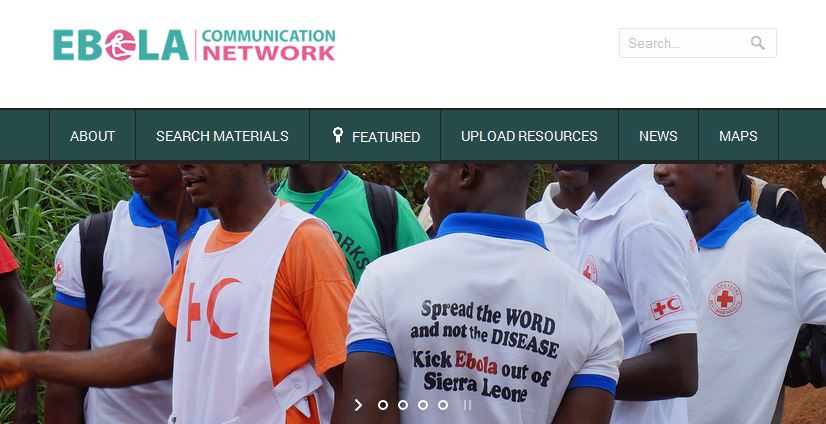
The Health Communication Capacity Collaborative (HC3) has developed the Ebola Communication Network (ECN), which houses Ebola-related social and behaviour change communication (SBCC) materials, as well as other resources and tools intended for people working in the fight against Ebola.
The online portal "is populated with more than 120 resources, including not only SBCC materials like posters, brochures and infographics, but also Demographic and Health Surveys of affected regions, customized maps and peer-reviewed journal articles. The site is responsive to mobile devices and optimized for low bandwidth situations. It includes an RSS feed of Ebola-related news that is updated in real time."
Information can be searched based on language, type (e.g., public service announcements, posters, and fact sheets), topic (e.g., prevention, treatment, safe burial practices), and audience (e.g., community health workers, governments, health care providers); more categories may be added as the collection grows.
The communication resources that are collected come from a variety of sources, including the United States Agency for International Development (USAID), United Nations Children's Fund (UNICEF), the Centers for Disease Control and Prevention (CDC), and the World Health Organization (WHO). Users are encouraged to submit or upload their own materials, which are posted after a brief review process.
The online portal "is populated with more than 120 resources, including not only SBCC materials like posters, brochures and infographics, but also Demographic and Health Surveys of affected regions, customized maps and peer-reviewed journal articles. The site is responsive to mobile devices and optimized for low bandwidth situations. It includes an RSS feed of Ebola-related news that is updated in real time."
Information can be searched based on language, type (e.g., public service announcements, posters, and fact sheets), topic (e.g., prevention, treatment, safe burial practices), and audience (e.g., community health workers, governments, health care providers); more categories may be added as the collection grows.
The communication resources that are collected come from a variety of sources, including the United States Agency for International Development (USAID), United Nations Children's Fund (UNICEF), the Centers for Disease Control and Prevention (CDC), and the World Health Organization (WHO). Users are encouraged to submit or upload their own materials, which are posted after a brief review process.
Source
JHUCCP website on October 13 2014.
- Log in to post comments