










































Conversations with the Earth (CWE)
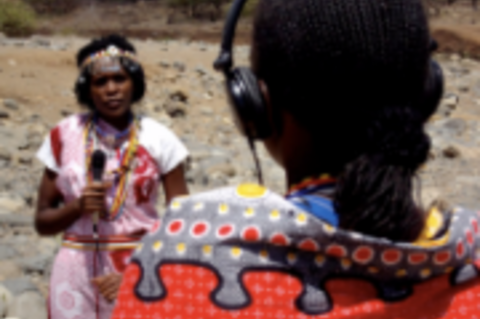
CWE uses professional storytelling and multimedia exhibits to enable indigenous voices to be heard in the global discourse on climate change. CWE conveys a range of narratives: from local accounts of the impacts of climate change on indigenous communities, to stories of the unintended consequences of imposed mitigation efforts on local livelihoods, and examples of traditional knowledge and its value in developing appropriate responses to climate change.
CWE works with a range of indigenous groups living in critical ecosystems around the world. From the Atlantic Rainforest to Central Asia, from the Philippines to the Andes, from the Arctic to Ethiopia, CWE has worked to enable traditional indigenous communities to tell their story on climate change using the participatory video methodology. Cameras in their hands, community members interview their friends and neighbours, men and women, parents and children, youth and elders, to record how climate change affects their daily lives. The community-owned media have produced a series of 10-minute clips, available online (see below). In the process, CWE has fostered a long-term relationship with these communities, based on principles of local control and indigenous media capacity, highlighted by the creation of self-standing autonomous indigenous media hubs in 6 regions.
Featuring live presentations by over 20 representatives of several indigenous communities from the CWE network, the CWE exhibition at the National Museum of Copenhagen intended to provide a multi-sensory narrative portrait - highlighting indigenous stories of climate change through audio, documentaries, participatory video, photo essays, informative captions, and published articles. For instance, select photographs allowed the narrator to actually talk directly to the visitor via hidden MP3 sound boxes or other devices. The voice, usually field recordings in the original native language, was added either through a loudspeaker near the portrait or a stereo headphones by its side. This is only one example of the exhibit's strategy: to immerse the visitor in the sounds and the feel of a site and its people, so that he or she experiences not only a story about climate change but the means by which the communities tell the story (and, indeed, according to CWE, the means by which indigenous communities everywhere share knowledge to address problems: conversation). The exhibit also launched a series of mobile presentations at locations around the world to enhance indigenous communities' capacity to communicate critical perspectives on climate change.
The CWE website, which brings the voices, images, and stories of indigenous peoples on climate change to the global audience beyond the exhibit, was also accessible in Copenhagen. Through a touchscreen, visitors could navigate various indigenous climate-change testimonies around the world, get more in-depth information, access printed articles, and register their own feedback or questions to speakers. The website features an interactive map of the world, which allows the visitor to explore and listen to stories from regional networks near and far. It also includes access to all the films that have been created, along with a series of postcards.
CWC has its own internet channel on IsumaTV, an independent, interactive network of Inuit and Indigenous multimedia that uses the worldwide web to bring people together to tell stories and support change. In addition, one may access a select few CWE videos through this page on the Development in Practice (DIP) website. As part of an endeavour to support and highlight CWE, DIP is enabling - for a limited time (through April 30 2010) - free full-text access and reduced price print copies of a special issue of the journal on the subject of citizens' media.
Environment.
CWE is shaped by the observation that, "[b]ecause traditional and indigenous communities depend on a relationship with healthy ecosystems, they possess a wealth of knowledge, wisdom, and practical experience in adapting to long-term changes in their environment." These same communities are also extremely vulnerable to the current rate of global change. CWE argues that any approach to the common challenges of global warming will fail unless it is grounded in a recognition of such basic human rights as the territorial, land, and resource rights of indigenous peoples - holders of global heritage of adaptation and sustainability strategies.
Editor's note: Nick Lunch (see below) is the contact person for the participatory video and community video hubs elements of CWE. For other inquiries, communicate with Gleb Raygorodetsky and/or Casey Box.
CWE is a collaboration between: Land Is Life, an international indigenous-led advocate for the rights of indigenous peoples; InsightShare, participatory video organisation; and Nicolas Villaume, a Paris, France-based photographer, curator, and specialist in cultural storybases. CWE partner organisations also include United Nations University and the Indigenous Peoples Climate Change Assessment Project. Some support has been provided by the Christensen Fund.
Emails from Richard Sleight and Lynn Barclay to The Communication Initiative on December 2 2009 and February 2 2010, respectively; IsumaTV, January 14 2010; and the CWE website, January 14 2010 and March 18 2013.


- Log in to post comments