










































Considerations for Community Engagement when Conducting Clinical Trials during Infectious Disease Emergencies in West Africa
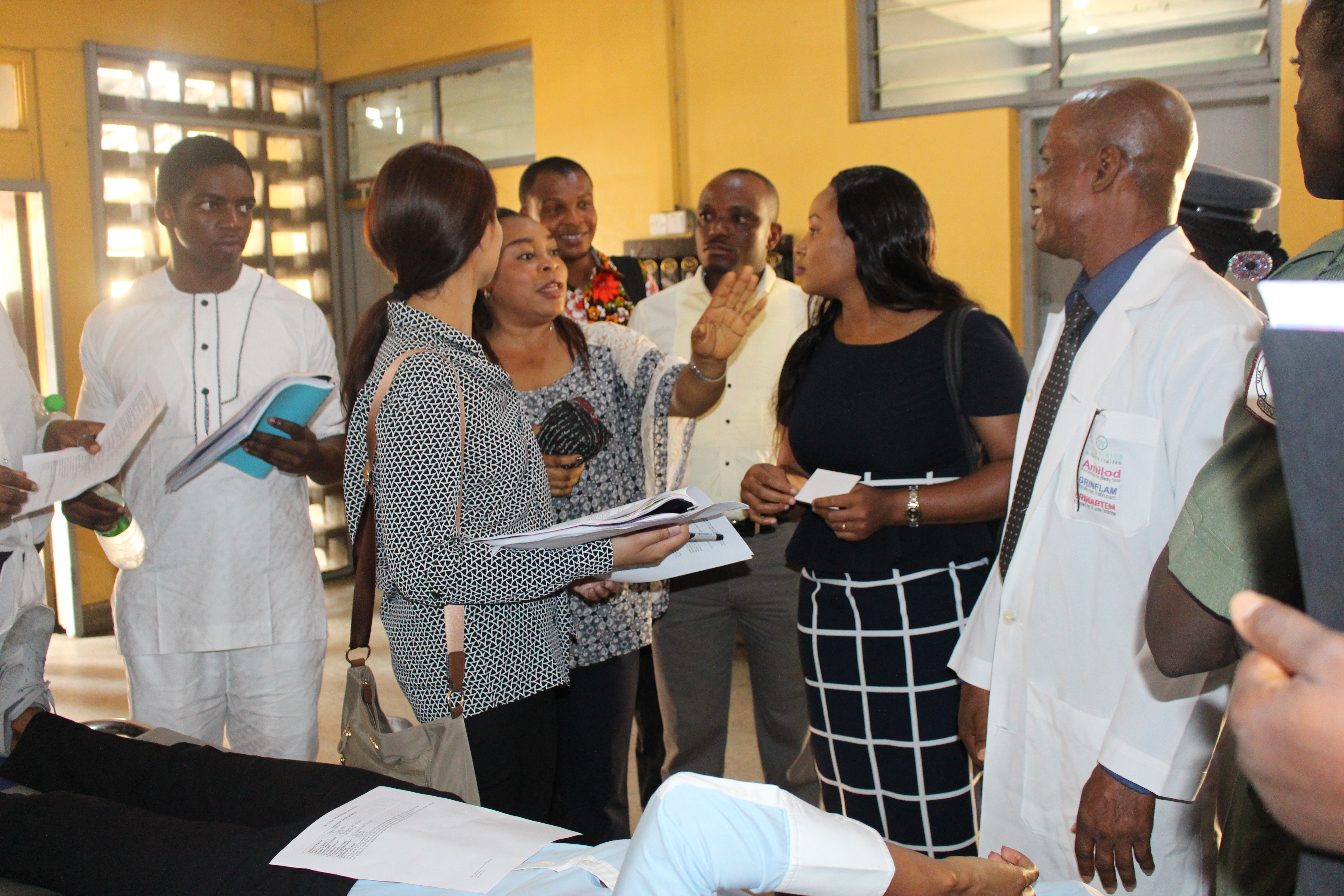
Obafemi Awolowo University (Folayan); University of Toronto (Allman); University of NSW (Haire); Federal Ministry of Health (Yakubu); London School of Hygiene and Tropical Medicine (Afolabi); Ministry of Health of Liberia (Cooper)
"[C]ommunity engagement is an ethical imperative for clinical trials."
Given the magnitude and scale of recent infectious disease outbreaks in West Africa and the need to conduct clinical trials to develop therapies and vaccines for infectious diseases, this group of researchers engaged in a study to consider: 1) what should the objectives of community engagement during infectious disease epidemics be; 2) how should community engagement be conducted during an infectious disease epidemic of the nature like Ebola; 3) how should the histories, politics, and the socio-cultural context of communities inform the design and implementation of such research; and 4) when is the omission of community engagement acceptable for clinical trials conducted in an emergency situation?
For the study, the researchers draw on a 4-phase consultative process that engaged bioethicists, social scientists, researchers, policymakers, and laypersons in a series of meetings and online communications. Participants include persons that work in the field in West Africa, those who work with ethics committees in West Africa, and experts who work on cross-cutting bioethics and community engagement issues in and outside West Africa and at a global level. The perspectives shared are considered in the light of the World Health Organization (WHO) document "Good Participatory Practice for Trials of Emerging (and Re-emerging) Pathogens that are Likely to Cause Severe Outbreaks in the Near Future and for which Few or No Medical Counter-Measures Exist", or GPP-EP for short. This document cements the centrality of community engagement even when there are many potentially conflicting priorities.
According to the researchers, the applicability of the principles laid out in the GPP during the conduct of a public health emergency of the nature witnessed during the 2013 to 2015 West Africa Ebola epidemic is unknown. In the absence of a preventive or curative therapy for Ebola, and in view of the biosecurity threat Ebola poised, a few treatment and vaccine trials were initiated in the countries worst affected by the epidemic. In such a situation, the urgent need for action may be considered a higher priority than a (potentially time consuming) collaborative community engagement processes. Nevertheless, the researchers stress, even in an emergency context, cooperation between local citizens, public health authorities, providers of medical services, and researchers is required.
Outcomes of the deliberations, in brief:
- What should the objectives of community engagement during infectious disease epidemics be?
- "Relationship building for the purpose of facilitating the successful implementation of the research by enhancing public health education, promoting collaboration and dispelling unfounded fear and rumours is a key objective.
- Research should be locally responsive - research aims and processes should serve the interests of people locally and not be merely 'acceptable'.
- Community engagement should build in-depth understanding of how research processes are likely to work out in practice in a given setting, maximize benefits and minimize costs/burdens to participants and communities.
- Community engagement should strengthen scientific outcomes by making sure that research tools are appropriate; and the implementation process will likely result in collection of valid information.
- Priorities of researchers and community advocates might differ: for advocates, the critical role is protecting the rights and integrity of the citizenry, including ensuring the research addresses its needs. For researchers, critical goals are to ensure success and minimize challenges, misconceptions and the fueling of rumours able to jeopardize research."
- How should community engagement be conducted during an infectious disease epidemic in West Africa?
- "Community engagement should occur through a collaborative model that actively involves community stakeholders in discussions and deliberations on the implementation of the research in ways that ensures transparency and accountability.
- Community engagement process should be guided by a context-specific community engagement plan developed in consultation with political leaders and community members.
- The key value that should underpin community engagement processes during research implementation is respect: respect for community values and the competency all parties bring to the deliberations.
- The implementation of the community engagement plans should be fast-tracked. Community emergencies identified in the course of the implementation of the plan should be resolved through notification of appropriate agencies in charge of managing the emergency."
- How should the histories, politics, and the socio-cultural context of communities inform the design and implementation of such research?
- "...When research is situated in contexts where inequities are reflected through facets like political distrust, low research literacy and poverty, community members are at increased risk of a range of harmful events such as exploitation, coercion and undue inducement. Formative research conducted prior to study design and implementation can be used to create historical and socio-cultural maps of communities. The local nuances - culture, norms, values, religion and practices - should be respected..."
- When is the omission of community engagement acceptable for clinical trials conducted in an emergency situation in West Africa?
- "...Consultation participants found no absolute justification for community omission during an epidemic emergency. There are multiple reasons why community exclusion might happen in practice, however..."
According to the researchers, one of the strengths of this research is the extensive consultation with people with a wide range of expertise. They observe that this process revealed insights that are largely in agreement with the ethical framework articulated in the GPP-EP, in that participants identified inclusivity, transparency, accountability, openness to diverse perspectives, and paying attention to diverse vulnerability as critical underpinning values. Further, participants identified the need to develop a community engagement plan based on evidence derived from formative research, which recognises how the nuances of histories, economies, and the socio-cultural contexts of the community may inform research participation.
Community engagement in research needs to take place alongside other critical elements in infectious disease epidemic control, and safety concerns may limit face-to-face community engagement activities, the researchers acknowledge. However, the researchers feel strongly that the community engagement model discussed here is not only an ethical imperative but "may be of use to clinical researchers planning to conduct clinical trials during an infectious disease epidemic in West Africa."
Developing World Bioethics. 2018;1-10. DOI: 10.1111/dewb.12215. Image credit: U.S. Military HIV Research Program
- Log in to post comments