










































Conecta Ideas (Connect Ideas)
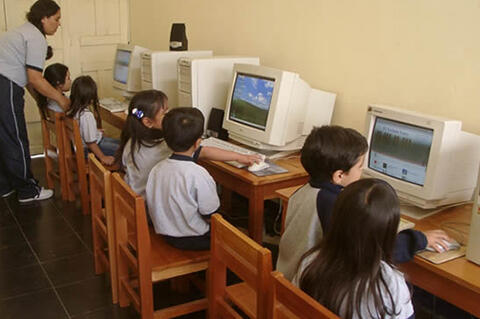
"Conecta Ideas" ("Connect Ideas") is a research programme evaluating a digital learning initiative whose purpose is to improve the quality of primary school education. The information and community technology (ICT)-based programme teaches mathematics in 24 low-performing Chilean schools attended by students with low socio-economic status. The project is: assessing effects on student learning, estimating costs, determining key factors for success, and providing protocols to ensure effective implementation and scale-up of the programme. Evidence gleaned through the project is expected to inform education policies across the Latin America and the Caribbean (LAC) region, particularly in the fields of science, technology, engineering, and mathematics (STEM).
Conecta Ideas was first implemented in 11 schools in the community of Lo Prado in Santiago, Chile, between 2011 and 2016. During this time, the research team streamlined its implementation and developed detailed protocols for what followed: a randomised controlled trial (RCT) in 24 public primary schools across 4 different school districts in Santiago. Students were not only socioeconomically disadvantaged but also lagged in learning: They scored, on average, about 0.7 standard deviations below the math national average. In each of the selected schools, 2 classrooms participate: one was randomly assigned to the control group (traditional math instruction), and the other was assigned the treatment group (Conecta Ideas). At the beginning and at the end of each school year, both groups were evaluated with tests taken by independent centres in order to measure progress in mathematics and language.
Offered to fourth-grade students over a period of 7 months, Conecta Ideas involves 2 weekly 90-minute sessions in a computer lab. (During the school year, students should have about 50 sessions using the platform.) Students solve exercises in an online platform featuring thousands of math exercises that are aligned to the curriculum. They are designed to develop students' conceptual understanding and mathematical fluency. Conecta Ideas is distinct from some other computer-assisted learning programmes because it:
- Provides coordinators who guide the learning sessions and collaborate with regular classroom teachers through weekly meetings to monitor advances, identify problems, and discuss potential solutions;
- Allows real-time monitoring during the session on how many exercises each student is doing and the percent of correct responses - enabling coordinators and teachers to quickly identify students who are lagging behind and also point to exercises that are too difficult for the class; and
- Promotes student engagement and motivation by running bimonthly online inter-school tournaments in which whole classes of students compete in solving mathematical problems.
As an example, a teacher at a municipal school in the municipality of Maipú would ask his or her fourth-grade students: "Francisco bought 250 flowers to sell. At the end of the day, he had 125. What mathematical operation would allow us to know how much was left?" Students who, for example, carried out subtraction instead of answering the actual question would have the exercise returned to them for correction. On the other hand, those who were successful in answering the question from their computer would be rewarded with software-generated applause and flags. Interactivity and collaboration are a crucial part of the project; students who earn more flags can be monitors to guide and support their peers. Matías, a student with more than 200 flags, commented: "Learning like that entertains me."
Children, Education, Technology.
Background:
According to IDRC, LAC countries fare poorly in international comparisons of learning assessments. Weak performance on these tests has been clearly linked to poor economic performance as students become workers. Consequently, many countries in the region have been actively seeking ways to improve learning, such as by increasing students' access to computers and connectivity at school. Emerging evidence suggests that while programmes that focus only on expanding access to technology produce limited gains, those that provide clear guidance on how to use technological resources can generate significant effects on student learning.
The project was born from an Inter-American Development Bank (IDB) research line that seeks to determine the effectiveness of various educational programmes - in particular, computer-aided instruction (CAI) - in mathematics and science for elementary school students in vulnerable schools. The fruit of more than 2 years of work, in collaboration with the Center for Advanced Research in Education (CIAE) of the University of Chile, almost 100 programmes focused on mathematics were reviewed, and the 5 with the greatest impact were analysed, identifying the Conecta Ideas software as the most promising.
Research results:
In addition to qualitative studies carried out with focus groups, for the quantitative evaluation, researchers collected baseline data in March 2017. The main outcome was obtained from the Chilean national standardised examination that was applied at the beginning of November 2017 (after 7 months of programme exposure). This examination, called Sistema de Medición de Calidad de la Educación (SIMCE), is a yearly census-based assessment implemented by the Ministry of Education to monitor learning in math and language.
The evaluation showed that Conecta Ideas generated large positive effects on math learning. Students participating in Conecta Ideas advanced 50% more in their math learning compared to those receiving traditional instruction. Moreover, the large effects documented suggest that Conecta Ideas can be a useful intervention to close achievement gaps. In fact, the programme can close 70% of the math achievement gap between low socioeconomic schools and the average school in the country. Finally, the learning effects of Conecta Ideas are notable also when compared with the effects produced by interventions that governments have traditionally implemented to improve learning outcomes. In particular, Conecta Ideas produced effects on math learning that are 4 times larger compared to the effects of extending the school day from 4 to 7 hours a day.
The programme did not affect achievement in language, though this is not surprising, considering that the focus was on math. The programme seems to have affected some perceptions related to math learning. In particular, the programme seems to have improved students' interest in math and also their own perception regarding math abilities.
The researchers found that 98% of the use happened in school and a mere 2% at home. They observe that these results add to the growing literature pointing to the challenges faced by initiatives that seek to increase academic achievement by promoting the use of technology at home.
Center for Advanced Research in Education (CIAE) of the University of Chile, the Inter-American Development Bank (IDB), and International Development Research Center (IDRC).
Emails from Liane Cerminara to The Communication Initiative on January 16 2019 and February 15 2019; and "Evaluating the impact of digital tools to teach math and science in Chile" on the IDRC website and "Proyecto analizará impacto de software educativo en el aprendizaje de las matemáticas" on the University of Chile website - both accessed on January 17 2019. Image credit: University of Chile
- Log in to post comments